Occasional roasters with an oven
You’d like to roast a bulb now and then and first want to see whether your existing oven will do the job. A published recipe from REWE describes how to roast a whole bulb in the oven.


If you only roast a garlic bulb occasionally and already have an oven, that’s usually a good place to start – there’s no need to buy another appliance just for this. If you regularly cook small portions, a compact mini oven or air fryer could be worth considering. Choose based on the space you have, the type of heat you need and what else you’d like to cook in it. Don’t assume that cooking times or advice on using foil will be the same from one appliance to another.
You’d like to roast a bulb now and then and first want to see whether your existing oven will do the job. A published recipe from REWE describes how to roast a whole bulb in the oven.
You regularly cook small oven dishes and are comparing compact countertop ovens by heating method, features and the space they need. The models documented here differ in capacity and functions.
You’d like to cook small portions of other foods in an air fryer as well as garlic. You’ll need to follow the guidance on using foil and paper for your particular model.
A good fit if: you only roast a bulb occasionally or are already using the oven to cook a meal. A recipe from REWE suggests 200 °C using conventional top and bottom heat for around 45 minutes as a starting point.
Things to consider: You’ll be using the larger oven cavity for a single bulb. Without comparable measurements, though, this doesn’t tell you how much extra energy it uses.
A good fit if: you regularly cook small oven dishes and have a suitable, safe place to put it. Check that the tray or dish will fit the bulb.
Things to consider: Models differ in heating method and timer. The Rommelsbacher BG 950 has a 10 l capacity and a 30-minute timer, while the Severin TO 2052 has a 9 l capacity and a 60-minute timer. These specifications don’t tell you how long roasting will take or how much energy you’ll save.
A good fit if: you’d also like to cook other small portions in the basket. A recipe from Rila suggests 190 °C for around 20–30 minutes, depending on the size of the bulb and how soft you want it.
Things to consider: Recipe timings and the use of foil aren’t automatically suitable for every model. Philips advises against using baking paper and aluminium foil in its air fryers.
| Priority | What to check before buying | Who is this especially important to? |
|---|---|---|
| Avoiding an unnecessary second appliance | Check whether your existing oven is suitable and how often you cook other small oven dishes. | If I only roast a bulb occasionally, I’d like to use the appliance I already own first. Around 33% of consumers prioritise avoiding an unnecessary second appliance. |
| Suitable heat and cooking time | Compare the recipe’s heating method with your appliance and check the garlic towards the end of the cooking time. | When I cook a whole bulb, using the right heating method and keeping an eye on the cooking time are essential. Around 23% of consumers put the right roasting setting first. |
| Available space and appliance size | Measure the space available and check the instructions, as well as whether the tray or dish will actually fit. | If I have limited worktop space, I want to know whether the appliance will fit in its intended spot, including the clearance required by the instructions. Around 22% of consumers prioritise available space and the right appliance size. |
| Basket and cleaning | Check how easy it is to access the basket, the cleaning instructions and whether dishes, paper or foil are approved for that particular model. | If I use the appliance for other single portions too, the basket’s ease of use and cleaning matter to me. Around 22% of consumers put basket use and cleaning first. |
One garlic recipe uses foil, but Philips advises against using it in its air fryers. Foil or paper can disrupt airflow, and loose material may come into contact with the heating element. This advice applies to Philips appliances and doesn’t confirm whether foil is suitable for other models.
Check the instructions for your particular appliance before using foil, paper or a dish.
The power rating alone doesn’t show the total energy used during a cooking cycle, which also includes preheating and thermostat operation.
If you want to compare energy use, only compare complete cooking cycles under similar conditions.
Capacity, shelf positions and external dimensions alone won’t tell you whether a particular dish or garlic bulb will fit inside.
Check the tray or basket, the height of your dish and the clearance required for that particular model.
The German Federal Institute for Risk Assessment advises against making and storing homemade vegetable or herb products in oil at home for later use, as the formation of botulinum toxin cannot be ruled out entirely.
Make small amounts to eat soon rather than preparing a batch to store in oil.
The information below relates to specific model ranges and isn’t a general assessment of each brand.
The BG 950 is a 10-l mini oven with conventional top and bottom heat and two shelf positions.
The TO 2052 is a 9-l countertop oven without a fan function; the TO 2068 has a 20 l capacity and a fan function.
The 2-l mini air fryer is a basket-style appliance for small portions.
The Airfryer NA110/00R1 is listed as a refurbished 3,2-l appliance.
The appliances below include compact mini ovens and air fryers for small portions. Electrical appliances covered by harmonised EU rules requiring CE marking must meet the applicable requirements and carry the marking. The European Commission explains which products are covered. Check the details for the specific appliance on offer, as the CE marking isn’t an independent quality seal.
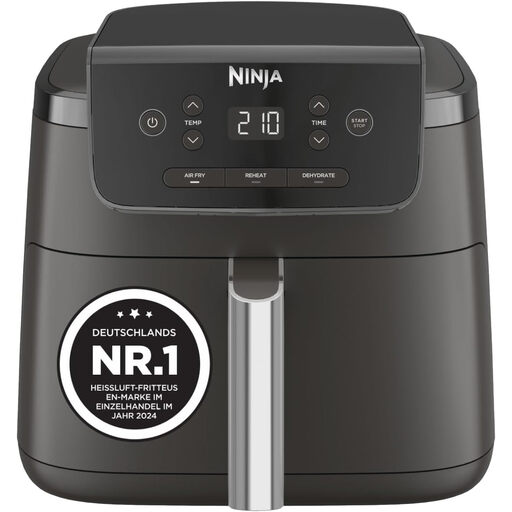 No image available
The product description says this appliance is designed for small portions for 1–2 people. It lists a 4,7-l basket, a temperature range of 30–210 °C, plus Air-Fry and Reheat functions.
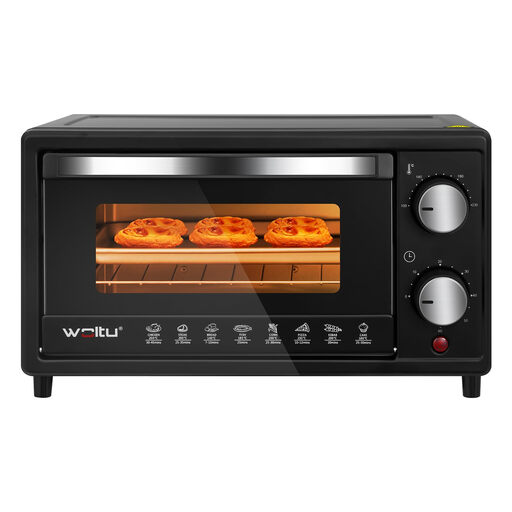 No image available
Designed for small oven dishes, with conventional top and bottom heat; the description lists a temperature range of 100–230 °C. It also specifies a 0–60-minute timer, baking tray and wire rack.
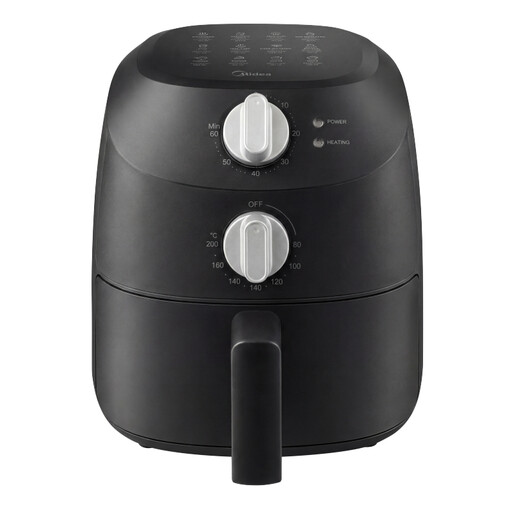 No image available
The product description says the 2-l basket is designed for small portions and 1–2 people. It also lists a 60-minute timer and a non-stick coating.
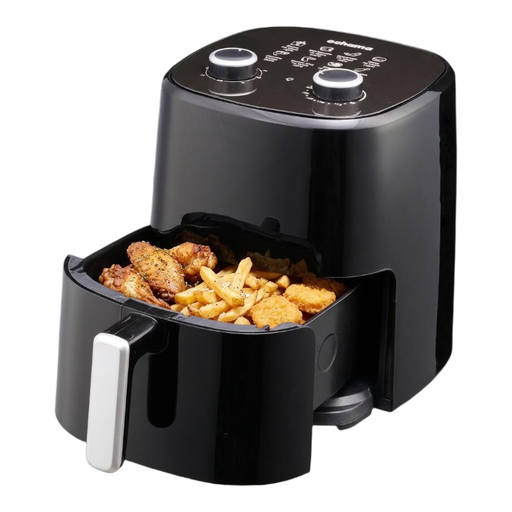 No image available
Designed for small portions using hot air; the description lists a capacity of 3,2 l, plus adjustable time and temperature settings.
 No image available
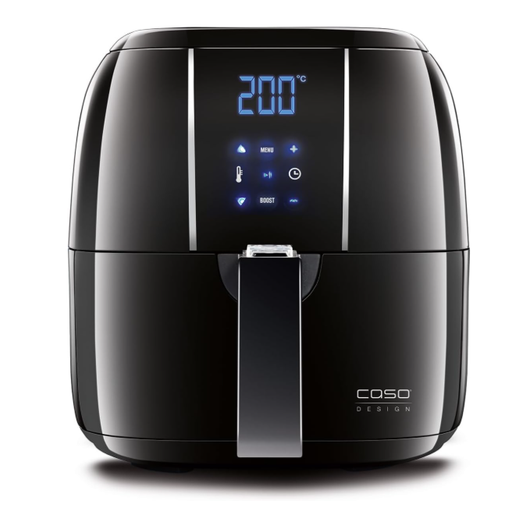
This 3-l appliance offers hot-air cooking for small portions. The listed specifications include manual temperature control from 60–200 °C and a 1–60-minute timer.
As a starting point, an oven recipe from REWE suggests 200 °C using conventional top and bottom heat for around 45 minutes. A recipe from Rila suggests 190 °C for around 20–30 minutes in an air fryer, depending on the size of the bulb and how soft you want it. These are different recipes, not guaranteed settings for every appliance.
Not as a general rule. One garlic recipe uses foil, but Philips advises against using aluminium foil and baking paper in its air fryers, citing disrupted airflow and the risks posed by loose material. Always follow the instructions for your particular appliance.
Follow the instructions for the model you own. For the Severin TO 2052, the manufacturer says to unplug the appliance and let it cool before cleaning. It must not be immersed in liquid.
Yes, if the appliance falls under harmonised EU rules that require CE marking. The European Commission explains which products are covered. The marking is the manufacturer’s declaration, not an independent quality seal. Check the details for the specific appliance on offer.
The German Federal Institute for Risk Assessment advises against making and storing homemade vegetable or herb products in oil at home for later use, as the formation of botulinum toxin cannot be ruled out entirely. It’s better to make small amounts to eat soon.