
Lieferung heute & morgen

Qualitätsgarantie

Willkommens-Angebote freischalten: KOSTENLOSE Lieferung | Bis zu 80 % RABATT | Kostenlose 30-Tage-JoyPlus-Testphase
App herunterladen
The fascination with advanced robotics is growing, and with it, the market for robot dogs. These quadruped robots are no longer just prototypes in research labs; they are becoming accessible to tech enthusiasts, developers, and businesses. However, the market is crowded and full of marketing promises. Before you make a significant investment, it's crucial to separate the wheat from the chaff. As your Joybuy Product Recommendation Officer, I'll help you understand the critical features and avoid common pitfalls.
The decision to purchase a sophisticated robot should be based on facts, not advertising slogans. Here are two common issues that can lead to disappointment:
To avoid a bad purchase, you should focus on objective, measurable performance data. Two areas are of central importance here.
A robot's ability to perceive its environment is fundamental to autonomous operations.
The agility and durability of a bionic robot dog depend directly on the quality of its mechanical components.
Based on these objective criteria, we have identified several models that are well-suited for specific user groups and their requirements.
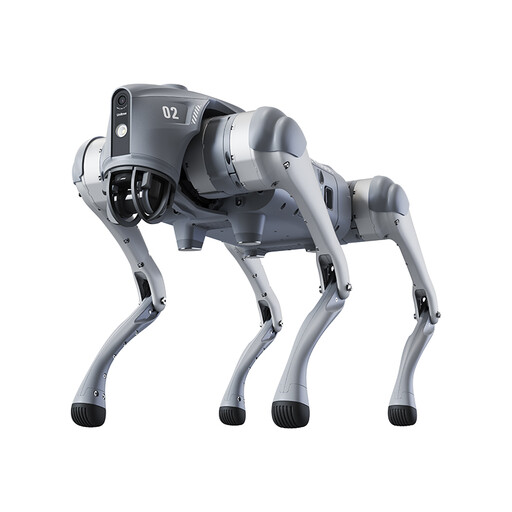
Why This Fits Their Persona: Ideal for users seeking maximum performance and functionality. Perfect for development applications, research, or demanding inspection tasks where precision and autonomy are paramount.
The 4D LiDAR system L2, developed by Unitree, provides hemispherical 360° perception, thus avoiding the pitfall of insufficient all-terrain capability. Its AI is not just programmed; it enables true autonomous navigation.
High joint torque of 45 N.m for superior agility and payload capacity. Features integrated voice control and a maximum speed of up to 4.7 m/s according to the manufacturer.
Why This Fits Their Persona: For hobbyists and users looking for a solid entry into the world of quadruped robots without immediately investing the full budget for a pro model. Ideal for learning the basics of control and interaction.
Offers a solid foundation of AI functions and mobility without advertising exaggerated features. The hardware base is identical to the Pro version, which ensures high mechanical quality.
Equipped with 4D LiDAR L1 for reliable obstacle detection. Offers an excellent price-performance ratio for entering the world of bionic robots.
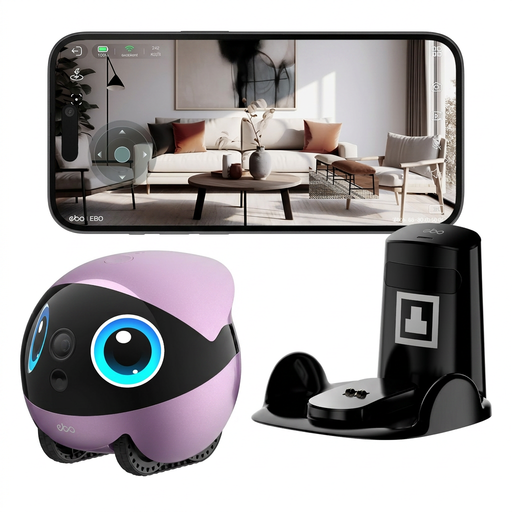
Why This Fits Their Persona: For users looking for an intelligent robot pet for monitoring, communication, and interaction at home. Instead of complex bionics, the focus is on camera quality, AI dialogue, and ease of use.
This model avoids the pitfall of trying to be a jack-of-all-trades. It is a specialised companion robot whose AI functions (ChatGPT integration) offer a clear, practical benefit in daily life.
Equipped with a 3K night vision camera for clear images around the clock. It offers autonomous patrols, motion alerts, and returns to its charging station independently when the battery is low.
We have compiled a complete, real-time list of products that fully meet these strict selection criteria and safety standards.
The main difference lies in the features and the resulting capabilities. The Pro model has a more advanced 4D LiDAR system (L2 instead of L1), a higher maximum speed, and additional functions like voice interaction. The Air model is a more accessible version for beginners, built on the same robust mechanical platform but with reduced sensor and software features.
Yes, models like the Unitree Go2 are explicitly designed for applications such as autonomous inspections and security patrols. Thanks to their advanced sensors, they can follow predefined routes, navigate around obstacles, and send live video feeds to a central hub via the integrated camera. The robust construction also allows for use in industrial environments or on sprawling corporate campuses.
Control is typically managed via a proprietary smartphone app from the manufacturer and an included remote controller. The app allows for a remote camera view, manual control, configuration of autonomous modes, and access to recorded data. For models aimed at developers, there are often additional SDKs (Software Development Kits) that enable deeper programming and integration into custom systems.