
Lieferung heute & morgen

Qualitätsgarantie

Willkommens-Angebote freischalten: KOSTENLOSE Lieferung | Bis zu 80 % RABATT | Kostenlose 30-Tage-JoyPlus-Testphase
App herunterladen
A robot dog can be used as an interactive companion, research platform, autonomous walking robot or industrial inspection robot. Product names often sound similar, but sensors, battery life, controls and limitations can vary significantly. If you focus only on speed or terms such as ‘AI’, you may overlook important cost and safety factors.
A model’s headline may quote a particular top speed, while the detailed specifications give a different speed range. For example, the Unitree Go2 Pro product name states 4,7 m/s, while the listed specifications also give a movement speed of 0 to 3,5 m/s. Before buying, check these figures against the specific variant and what’s included.
A camera, LiDAR sensor or intelligent navigation system can help the robot interpret its surroundings. However, small objects, cables, edges, stairwells and obstacles that are difficult to see may not always be detected reliably. A quadruped robot therefore needs a controlled environment and supervision, particularly around people, pets or sensitive equipment.
The stated battery life depends on gait, speed, inclines, camera use, wireless connection and payload. The Go2 Pro is listed as having a battery life of 1 to 2 hours. Industrial inspections, mapping and longer demonstrations may require an additional charging and battery-swapping plan. So check not only the battery capacity, but also the charger, spare battery and realistic operating cycles.
A robotic dog should be suited to the terrain it will cover. Information about stairs, inclines, jumps and uneven ground matters more than a general claim about ‘dynamic performance’. The Unitree AS2 Air is described as having industrial cross-roller bearings, several gaits and the ability to handle uneven terrain, climbing and stairs. At the same time, its legs and joints move with considerable force. The product information recommends keeping a safety distance of at least three metres.
Look for:
A 360° camera does not automatically provide a complete view in every situation. The Go2 Pro is listed as having a 4D LiDAR sensor with a detection range of 360 × 90°, along with a front camera with 1280 × 720 pixels. This combination may be useful for mapping and obstacle detection, but it does not replace checking the intended operating environment.
Before buying, find out:
Voice control and voice interaction are particularly useful for companion and demonstration scenarios. Research and industrial applications also rely on interfaces, remote control, OTA updates and graphical programming. The Go2 Pro is listed as offering app control, HD map transmission, remote control, OTA updates, Wi-Fi 6 and Bluetooth. However, the product description also states that secondary development is not supported. This is especially important to check before buying for a research project.
Also check whether the package includes a battery, charger, remote control and any required software. For an AI robot dog, it should also be clear which features work locally and which require a network connection.
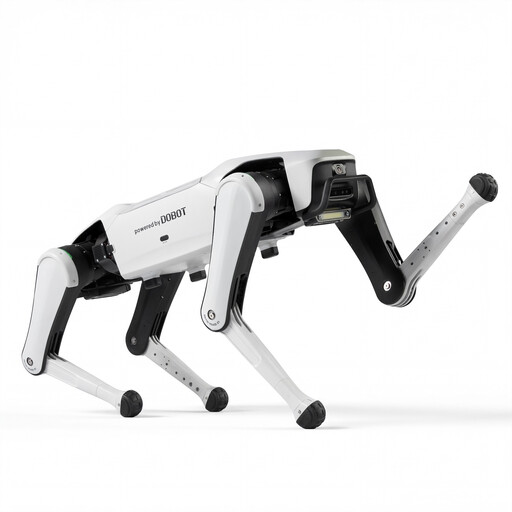
Why this product suits this profile: The Rover X1 is a quadruped robot with Vision Follow, voice interaction and companion features. It’s a good fit for people who want to try a robotic dog at home or in a demonstration setting.
The listed features make it clear that voice and visual interaction are the main focus. You can assess these specific features rather than relying on a broad AI label.
Vision Follow and Voice Interaction, as stated in the product name; designed with companionship and interaction in mind.
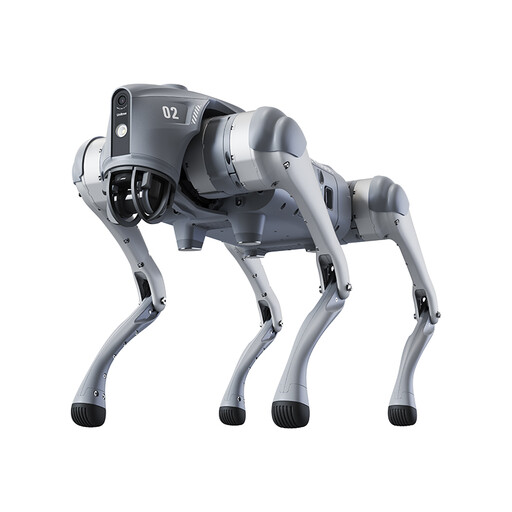
Why this product suits this profile: The Go2 Pro combines 3D LiDAR, a front camera, app control, SLAM navigation, remote control and voice interaction. It’s a good option if you’re looking to bring several technical features together in one system.
The product specifications give specific details about the sensors, battery life and communication standards. However, check the differing speed claims before placing your order.
360-degree LiDAR detection, according to the product details; 8000-mAh battery with a stated battery life of 1 to 2 hours.
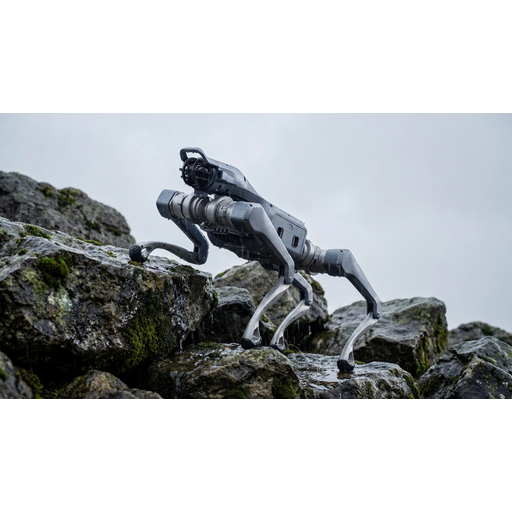
Why this product suits this profile: According to the product information, the AS2 Air is designed for industry, research, inspection and mapping. Its construction is designed to support dynamic movement and a range of gaits.
The guidance explicitly covers terrain limitations, moving parts, moisture and the need for supervision. This helps you plan the operating area and safety distance in advance.
Industrial cross-roller bearings; high-resolution camera; designed for uneven terrain, climbing and stairs.
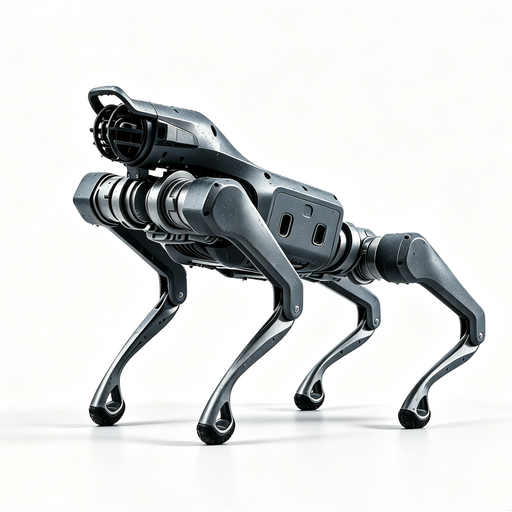
Why this product suits this profile: The product name brings together industrial use, AI features, voice interaction, companionship and obstacle avoidance. This makes the model worth considering if you’re looking for a versatile robot for work and interaction.
Confirm that it suits your needs by checking what’s included, the available software and the permitted operating environment, rather than relying on the model name alone.
The product name mentions voice interaction and obstacle avoidance; designed for industry and intelligent companionship.
We’ve put together a complete, regularly updated list of products that meet these strict selection criteria and fully comply with the safety regulations in force in the EU.
Place it on a flat, clear surface and remove cables, small objects and slippery obstacles. Keep your distance from moving joints and supervise every autonomous run. Avoid water, high humidity and unapproved chargers.
It depends on the model, gait, payload and sensor use. The Unitree Go2 Pro is listed as having a battery life of 1 to 2 hours. Treat this as a guide, rather than a guarantee of battery life under maximum load.
Models such as the Unitree AS2 Air, Unitree AS2 Pro and Go2 Pro are described as offering features for industry, research, inspection or mapping. Before use, however, check sensor coverage, safety distances, environmental conditions, software access and workplace safety requirements.