
Lieferung heute & morgen

Qualitätsgarantie

Willkommens-Angebote freischalten: KOSTENLOSE Lieferung | Bis zu 80 % RABATT | Kostenlose 30-Tage-JoyPlus-Testphase
App herunterladen
A robot vacuum and mop combo promises to be a significant time-saver in any household. However, the market is overwhelming and filled with marketing promises that don't always deliver. Many devices turn out to be a bad investment because crucial details were overlooked. As your Joybuy Product Recommendation Officer, I'll help you separate the wheat from the chaff and find a model that truly fits your needs.
Before we dive into the features worth recommending, it's important to know the typical pitfalls that often lead to disappointment.
To avoid the traps mentioned above, you should focus on three core technical features. These largely determine the performance and convenience in daily use.
Navigation is the robot's brain. While basic models rely on gyroscope or infrared sensors and tend to clean randomly, LiDAR navigation (Light Detection and Ranging) has established itself as the gold standard.
The quality of the mopping function determines whether your hard floor is just superficially dampened or truly clean.
The maintenance effort can significantly reduce the convenience of a robot vacuum. Modern stations take most of the work off your hands. A robot vacuum with an auto-empty dock is just the beginning. Look for the following features:
A self-cleaning robot mop that combines all these functions offers a nearly completely autonomous cleaning experience.
Based on the criteria above, we have identified a few models that are a suitable solution for specific user profiles. This is not a comprehensive robot vacuum review 2026, but a curated selection.
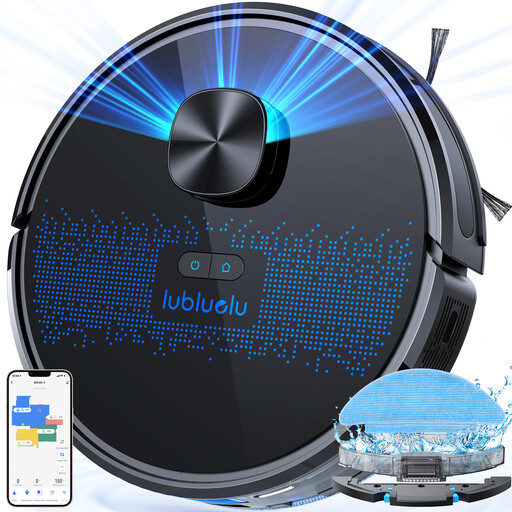
Why This Fits Their Persona: Ideal for users seeking reliable, automated basic cleaning without investing in a high-end model with a fully automatic station. Perfect for apartments or smaller houses.
Avoids the inadequate navigation trap by using Laser Navigation (LiDAR). It creates precise maps and cleans systematically instead of wandering aimlessly.
Offers solid 4000 Pa suction power for hard floors and low-pile carpets. The app control allows for saving up to 5 maps, ideal for multi-story living areas.
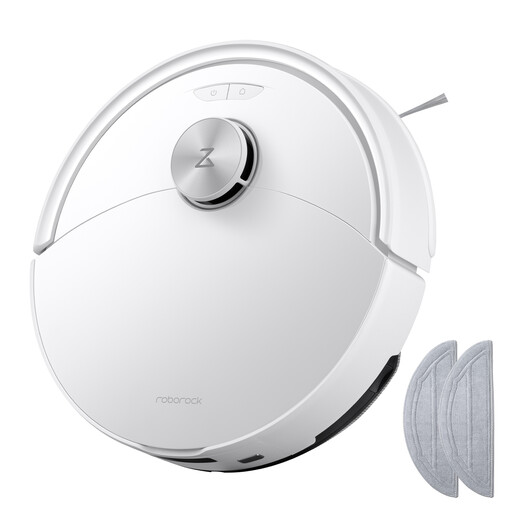
Why This Fits Their Persona: Designed for the challenges of homes with dogs and cats. The combination of high suction power and a special brush system is tailored for efficient pet hair pickup.
Evades the "High Suction Power" trap by combining 10,000 Pa HyperForce suction with a dual anti-tangle system. This ensures power is used effectively to pick up hair without blocking the brush.
The automatic mop lifting reliably protects carpets from getting wet. The rubber brushes are durable and minimise maintenance caused by tangled hair.
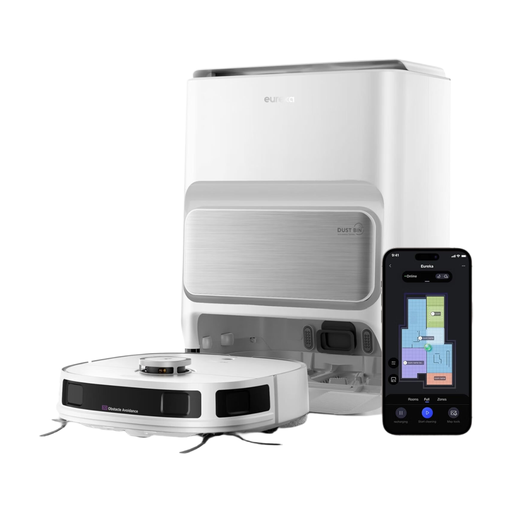
Why This Fits Their Persona: For users who want maximum time savings and minimal maintenance. The all-in-one station handles nearly every task, from emptying the dustbin to drying the mops.
Solves the "superficial mopping" problem with a fully automatic base station. It cleans the rotating mop pads, dries them with 55°C hot air, and empties the dustbin for up to 75 days. This ensures consistently high cleaning quality.
The 3D DuoDetect AI obstacle avoidance and Dual-LiDAR navigation ensure precise and safe cleaning even in complex environments. The ultrasonic carpet detection reliably prevents wet carpets.
We have compiled a complete, up-to-date list of products that fully meet these strict selection criteria and UK/EU safety regulations.
1. How often does the dust bag in an auto-empty station need to be changed? The frequency depends on the size of your living space, the amount of dirt, and whether you have pets. According to manufacturer specifications, the bags in most stations last between 30 and 75 days. A household with multiple pets may need to change the bag more frequently than a single-person household.
2. Can a robot vacuum and mop combo also clean carpets? Yes, modern devices are designed for this. Look for models with automatic carpet detection. These automatically increase suction power on carpets and lift their mopping unit (mop-lifting) to avoid getting the carpet wet. Alternatively, you can define carpets as mop-free zones in the app.
3. How long does a robot vacuum's battery last, and is it replaceable? The battery life varies by model and suction mode, ranging from 120 to 300 minutes. This is more than sufficient for most living spaces, as the devices automatically return to the charging station when the battery is low, recharge, and then resume cleaning. The battery is a consumable part. On many brands, it can be replaced after a few years, extending the device's lifespan. Information on this can usually be found in the manufacturer's specifications or by contacting customer service.