
Lieferung heute & morgen

Qualitätsgarantie

Willkommens-Angebote freischalten: KOSTENLOSE Lieferung | Bis zu 80 % RABATT | Kostenlose 30-Tage-JoyPlus-Testphase
App herunterladen
A clean home without the daily effort—that's the promise of robot vacuums with a mopping function. However, as the selection of models grows, so does the risk of falling for marketing traps and buying a device that doesn't live up to expectations. As your Joybuy Product Recommendation Officer, I'll help you separate the contenders from the pretenders and understand the technical features that truly matter.
Many buyers are quickly disappointed when their new device fails to detect obstacles, soaks carpets, or inadequately picks up pet hair. Before you make a decision, you should be aware of the three most common pitfalls:
To avoid a bad purchase, you should focus on three core technical aspects. These determine how autonomously, thoroughly, and reliably a robot vacuum and mop will function in your daily life.
Navigation is the robot's brain. Here, Laser Navigation (LiDAR) is the leading technology. A rotating laser sensor continuously scans the surroundings and creates a precise map of your home.
The combined performance of vacuuming and mopping must suit your household.
A robot vacuum with an auto-empty station takes convenience to the next level. After each cleaning cycle, the robot returns to the station, which automatically empties the device's small dustbin into a large bag or container in the station. This means you don't have to worry about emptying it for weeks or even months. Not only is this convenient, but it's also a significant relief for allergy sufferers, as contact with dust is minimised. Some newer models even offer bagless auto-empty stations, which eliminates the ongoing cost of dust bags.
Here are some models that represent a considered choice for specific user groups, based on objective technical features.
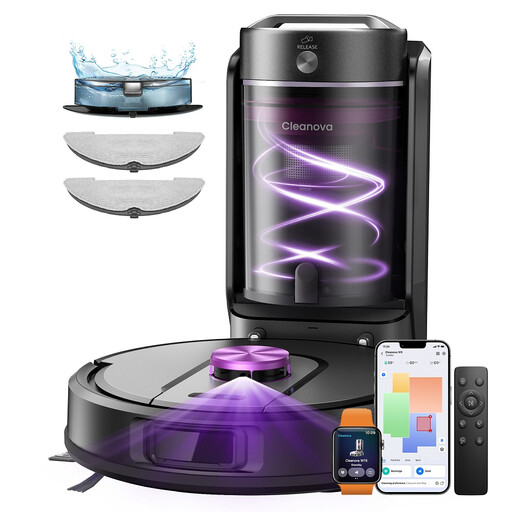
Why This Fits Their Persona: Ideal for busy pet owners seeking maximum autonomy. The high suction power effortlessly handles pet hair, while the bagless auto-empty station significantly reduces maintenance and running costs.
The high suction power of 10000 Pa is combined with precise LiDAR navigation, ensuring that power is applied effectively. The auto-empty station provides weeks of autonomy, bypassing the problem of constant manual emptying.
Bagless 4-litre auto-empty station for up to 90 days of hands-free cleaning. Long battery life of up to 180 minutes, suitable for large areas up to 200 m?.
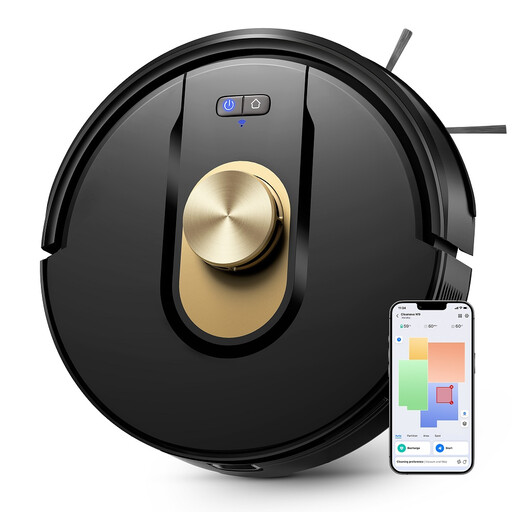
Why This Fits Their Persona: Perfect for users who need full control and customisation options for complex living situations. The ability to save up to five maps makes it ideal for multi-storey homes.
This model bypasses the chaotic navigation trap by using 360° Laser Navigation. It creates precise maps and allows you to define up to 15 no-go zones, preventing uncontrolled movement.
Stores up to 5 floor maps with individual cleaning zones. Strong suction power of 8000 Pa and 3-level water control for customisable cleaning.
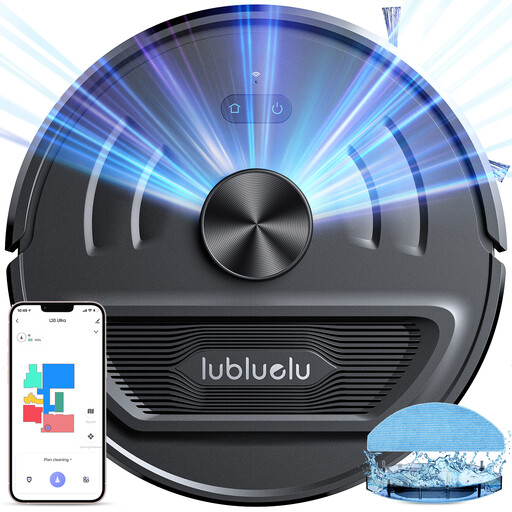
Why This Fits Their Persona: An excellent choice for beginners who don't want to compromise on the most important premium feature—laser navigation. It offers structured and efficient cleaning at an accessible price point.
This model offers Laser Navigation in a price segment often dominated by chaotically navigating devices. Its suction power of 4000 Pa is perfectly adequate and realistically rated for hard floors and low-pile carpets.
Features advanced LiDAR navigation and map storage for up to 5 floors. At 55 dB in quiet mode, it's exceptionally low-noise and won't disturb daily life.
We have compiled a complete, up-to-date list of products that fully meet these strict selection criteria and all relevant safety standards.
1. Can a robot vacuum and mop combo detect and avoid carpets? Yes, many modern devices with LiDAR or camera sensors have carpet detection. In vacuuming mode, they often automatically increase suction power. In mopping mode, some advanced models will lift their mopping pad to avoid wetting the carpet. For simpler models, you can set up no-go zones for your carpets in the app, which the robot will then avoid while mopping.
2. How often does the auto-empty station of a robot vacuum need to be emptied? This depends on the station's capacity, the size of your home, and the amount of dirt (e.g., from pets). On average, the dust bag or container in the station needs to be emptied every 30 to 90 days. This is a significant advantage over models without a station, whose small internal bin often needs to be emptied after every one or two cleaning cycles.
3. Is Laser Navigation (LiDAR) really necessary? For efficient, fast, and reliable cleaning, LiDAR is the crucial technology. While simpler navigation methods may suffice for very small, simple apartments, only LiDAR enables structured cleaning, precise mapping, and the use of smart features like no-go zones and room selection. For most households, especially those with more complex layouts or multiple rooms, investing in a model with LiDAR is highly recommended.