
Lieferung heute & morgen

Qualitätsgarantie

Willkommens-Angebote freischalten: KOSTENLOSE Lieferung | Bis zu 80 % RABATT | Kostenlose 30-Tage-JoyPlus-Testphase
App herunterladen
A robot vacuum cleaner with a mopping function and self-emptying station should do more than simply pick up dust. It needs to recognise carpets, deal with pet hair, avoid obstacles and clean its mopping pads as independently as possible. This is where common purchasing mistakes arise: many models look similar on paper, but their maintenance requirements, navigation and station functions can differ considerably in everyday use.
The Pa figure describes the maximum negative pressure generated by the suction unit. A robot vacuum cleaner with high suction power can therefore pick up more dirt from gaps or carpet fibres. However, the figure alone does not tell the whole story. Brush design, airflow, filters, travel speed and the number of cleaning passes also affect the result.
A model with 20,000 Pa is therefore not automatically more suitable for every household than a device with 8,000 or 12,000 Pa. What matters is whether it also has a low-tangle main brush and suitable carpet strategies.
A self-emptying station usually empties the dust container. This does not necessarily mean that the mopping pads are also washed and dried. If you are looking for a self-cleaning robot vacuum cleaner, you should check specifically whether the station offers functions such as mop cleaning, hot-air drying, clean- and dirty-water tanks, and an automatic water supply.
Even with a largely automated station, some tasks remain: refilling the water, disposing of dirty water, checking the filters and removing occasional residue from the brushes.
A robot vacuum cleaner with obstacle detection can identify cables, shoes or toys, depending on its sensor system. However, very small, flat or shiny objects are not reliably detected in every situation. Before using the robot for the first time, remove loose cables, socks, pet bowls and fragile objects from the floor.
For households with pets, the Pa figure is not the only relevant factor. Look for:
A robot vacuum cleaner for pet hair should also be maintained regularly in line with the manufacturer’s care instructions. Even cutting or untangling mechanisms reduce the amount of maintenance required, but they do not eliminate the need for checks.
An automatic mop-lifting mechanism is practical in homes with mixed flooring. The device lifts the pads when it detects a carpeted area or avoids defined no-go zones. The lifting height should suit the carpet structure; a specified height of 10 or 15 mm is a verifiable technical parameter, but it is not a guarantee for every type of carpet.
A robot mop with hot-water cleaning washes the pads in the station using heated water. Some models specify 75 °C, while others state approximately 80 °C. Temperature figures come from the respective product information and should not be equated with a medical or hygiene effectiveness guarantee. Warm-air drying after washing is advisable, as damp pads can develop unpleasant odours.
A robot vacuum cleaner with LiDAR navigation uses a laser to create maps of the rooms and can support cleaning schedules, restricted areas and room sequences. Additional cameras, structured-light sensors or infrared sensors can help with obstacle detection.
Before buying, you should also check:
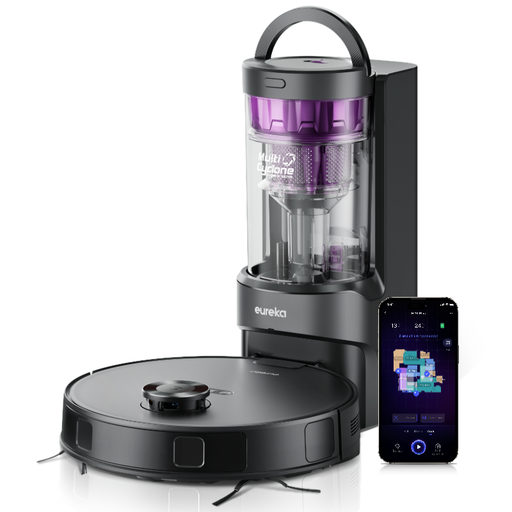
Why this product suits this profile: With 8,000 Pa, 180 minutes of runtime and a bagless station, this combination is aimed at households that prefer automatic dust emptying without dust bags.
The station is equipped with a 2-litre dust container. The 10 mm mop lift can avoid or protect carpets while mopping.
DuoDetect AI 3D obstacle detection, app and voice control, and automatic return to the station.
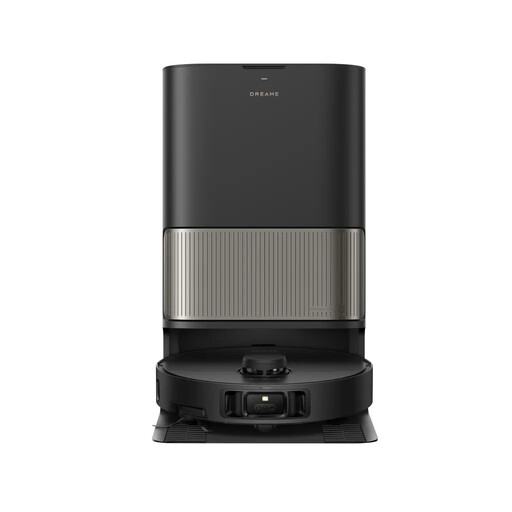
Why this product suits this profile: According to the product information, this model combines 19,000 Pa of suction power with an 8-in-1 station, extendable mopping functions and several carpet strategies.
The station washes the mops with water heated to 75 °C, dries them with warm air and empties the dust into a 3.2-litre bag.
Pathfinder navigation, 3DAdapt obstacle detection and a stated runtime of up to 180 minutes.
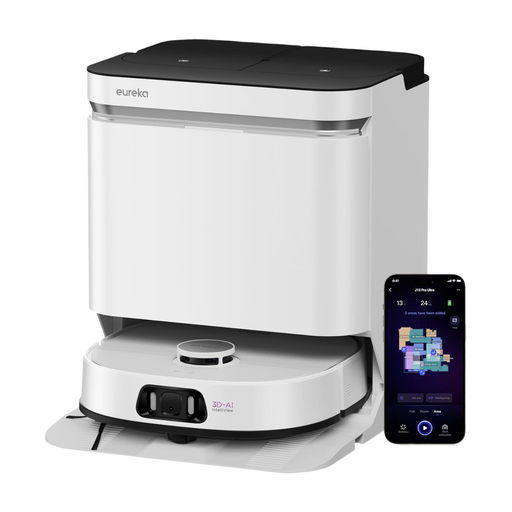
Why this product suits this profile: Designed for pet hair and frequent mopping cycles, the model offers 16,200 Pa, FlexiRazor anti-tangle technology and an automated cleaning station, according to the product description.
The station handles dust emptying, pad washing with water heated to 75 °C, drying and cleaning the base plate.
Extendable mopping technology for edges, plus stated detection and classification of different types of dirt.
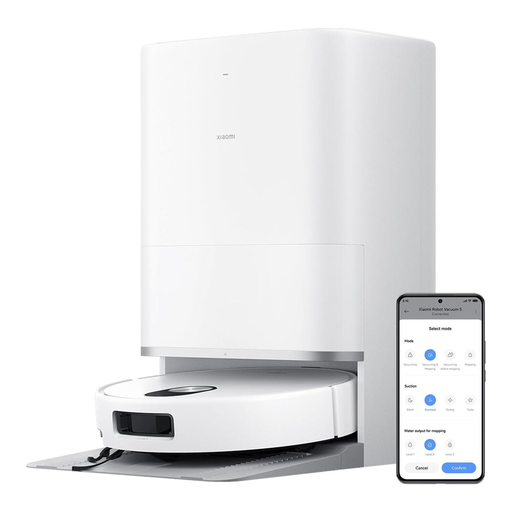
Why this product suits this profile: The 20,000 Pa robot vacuum is aimed at users who want to combine high stated suction power, LiDAR mapping and automated station functions.
The stated 15 mm mop lift can help protect carpets. Automatic dust emptying and a self-cleaning station are also listed.
LiDAR navigation, app and voice control, no-go zones and a stated dust-bag capacity of 2.5 litres.
We have put together a complete, regularly updated list of products that fully meet these strict selection criteria and the safety regulations applicable in the EU.
Even a robot vacuum cleaner with automatic dust emptying remains a household appliance with wear parts. Before buying, check the prices and availability of:
With bagless stations, there is no need to buy dust bags regularly. However, the container must be emptied manually and cleaned occasionally. Stations with bags are generally cleaner to dispose of, but they create ongoing costs.
This depends on the floor area, level of dirt and amount of pet hair. The dust container, brushes and filters should be checked regularly. Dirty-water tanks are usually emptied after a mopping cycle or when prompted by the app. Although the station handles many processes, it does not replace a visual inspection.
For frequent mopping and households with several pets, a station with pad washing and drying can reduce the amount of manual work. An anti-tangle brush and a suitable suction setting are also important when dealing with pet hair. Hair can still collect around axles or side brushes despite anti-tangle technology.
Its service life depends on battery use, maintenance, moisture, floor type and the availability of replacement parts. Keeping the charging station dry and clear, cleaning the sensors and replacing worn brushes can help support reliable operation. Liquids, sharp objects and blocked airways should always be avoided.