
Lieferung heute & morgen

Qualitätsgarantie

Willkommens-Angebote freischalten: KOSTENLOSE Lieferung | Bis zu 80 % RABATT | Kostenlose 30-Tage-JoyPlus-Testphase
App herunterladen
The selection of robot toys is huge and constantly growing. From simple dancing figures to complex kits that teach basic programming skills, finding the right model can be a challenge. Many products overpromise and underdeliver, quickly leading to frustration instead of fun. As your Joybuy Product Recommendation Officer, I'll help you spot the common pitfalls and make an informed decision.
Before we look at the best features, it's important to know the most common problems, which often only become apparent after unboxing.
To avoid these traps, you should check three core aspects. These will help you separate the wheat from the chaff and find a durable, suitable robot toy for kids.
The type of control is the most important criterion for age-appropriateness.
The choice between a building kit and a pre-built robot depends on the child's interests.
The power source has a direct impact on running costs and convenience.
Here are a few models that represent a considered choice for different user profiles, based on objective features.
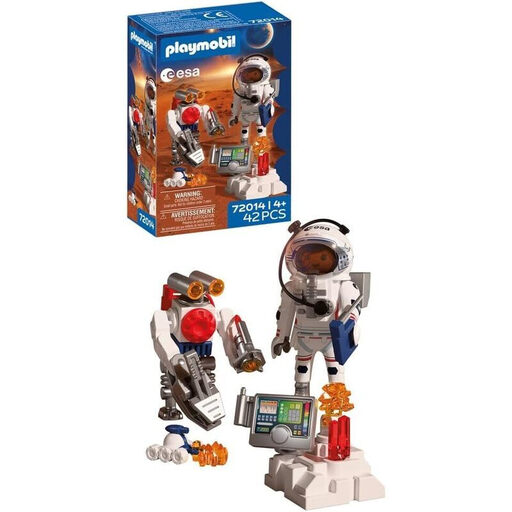
Why This Fits Their Persona: Ideal for imaginative, screen-free role-playing without complex tech. The set fosters creativity and an interest in space themes in a tangible, playful way.
Completely bypasses the complexity trap. It requires no app, no programming, and no batteries. The focus is on tactile play and storytelling.
Robust, durable PLAYMOBIL quality. Official cooperation with the European Space Agency (ESA) ensures an authentic design.

Why This Fits Their Persona: Perfect for kids who love to build and bring their creations to life. This set combines building with blocks and the functionality of a remote-controlled vehicle.
Tackles the complexity trap with dual controls (a simple remote and advanced app functions). The integrated rechargeable battery avoids the running-cost trap.
High versatility with 5 different models to build from one set (604 pieces). The rechargeable battery is included in the box.
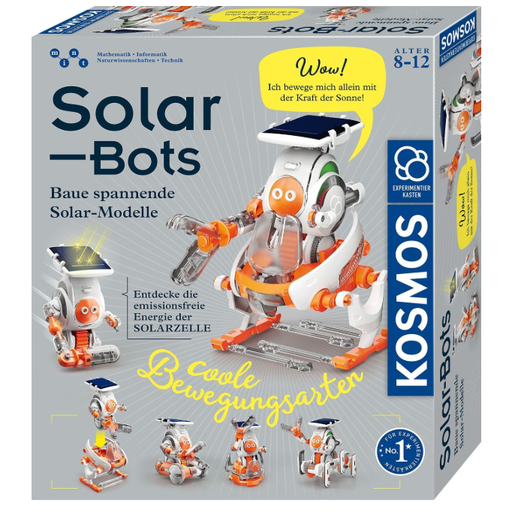
Why This Fits Their Persona: For tech-savvy kids who want to understand how things work. This set focuses on mechanical principles and renewable energy instead of software.
Completely avoids the dependency and cost traps, as it's powered by a solar cell and requires no batteries or apps. The focus is on the build and the physical principle.
Playfully teaches the fundamentals of solar energy and mechanics. 8 different models can be built from one kit, ensuring long-lasting play value.
We've compiled a complete, up-to-date list of products that fully meet these strict selection criteria and all relevant safety standards.
It heavily depends on the specific model. Simple, robust robots that dance or move at the push of a button are suitable for children as young as 4. A robot building kit is generally appropriate for ages 6 to 8 and up. Complex, freely programmable robots are aimed at children aged 10 and older who already have some experience with logic and technology.
STEM is an acronym for Science, Technology, Engineering, and Mathematics. A STEM toy is designed to playfully foster skills and interest in these fields.
Not necessarily. Some models can be programmed using buttons on the device itself or with an included remote control. However, robots that offer visual block-based programming (similar to Scratch) usually require an app on a smartphone or tablet, as the screen is needed to display the programming logic. A quick look at the product description will clarify this.