
Lieferung heute & morgen

Qualitätsgarantie

Willkommens-Angebote freischalten: KOSTENLOSE Lieferung | Bis zu 80 % RABATT | Kostenlose 30-Tage-JoyPlus-Testphase
App herunterladen
As a Joybuy Product Recommendation Officer, I analyse market information to provide you with objective and practical buying advice. This guide will help you understand the essential features of robot vacuums and mops and make an informed decision.
Modern robot vacuums promise fully automated floor cleaning: vacuuming, mopping, and even self-emptying at a docking station. However, the market is flooded with devices whose real-world performance often falls short of their marketing promises. Before you invest, it's crucial to be aware of common pitfalls that can lead to disappointment.
Common Pitfalls When Buying:
To avoid the issues mentioned above, you should check three core technical parameters before buying. These determine whether a device will be a genuine help or a hindrance in your daily life.
Suction power, measured in Pascals (Pa), is a key indicator of the robot's ability to pick up dirt. A robot vacuum with strong suction power (typically over 5,000 Pa) is especially relevant for households with carpets or pets. Look for models with at least 5,000 Pa to 8,000 Pa to ensure that even deep-seated dirt and pet hair are reliably removed from carpet fibres. The design of the main brush is equally important. Rubberised or V-shaped brushes with anti-tangle technology significantly reduce maintenance, as long hairs are less likely to get caught in them.
Navigation is the robot's brain. While older models move randomly or in simple patterns, modern devices use advanced systems:
The combination of LiDAR and 3D detection is currently the gold standard for complex homes with a lot of furniture. A robot vacuum with app control is also essential. A good app allows you to set up virtual walls and no-go zones, create cleaning schedules, and track cleaning progress live.
An advanced robot mop with an auto-empty dock should do more than just mop. The crucial feature for homes with mixed flooring is a robot vacuum with mop lifting. Sensors detect when the robot moves onto a carpet and automatically raise the mopping module. This protects the carpet from getting wet and allows the cleaning process to continue without interruption. Models with a lifting height of at least 7-10 mm are suitable for most carpet types, from low-pile to medium-pile.
Based on these objective criteria, we have identified products for different user profiles and needs.
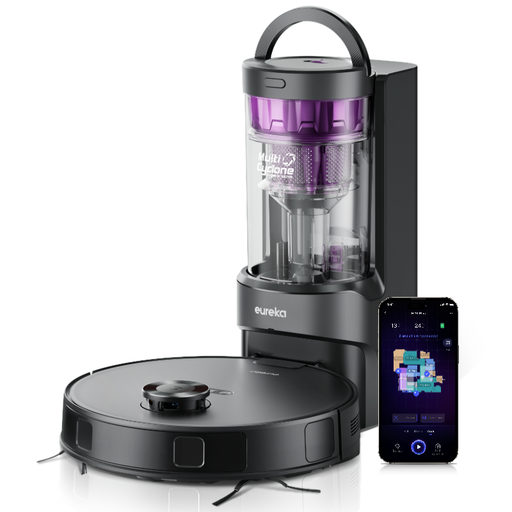
Why it's a match: Ideal for users seeking maximum automation for mixed floor types. The combination of vacuuming, mopping, self-emptying, and intelligent navigation covers all the requirements for modern, low-maintenance cleaning.
Its DuoDetect AI 3D Obstacle Avoidance reliably navigates around low-profile objects. The 10 mm mop lift prevents wet carpets. The bagless station avoids recurring costs for dust bags.
Fully automated cleaning cycle: Vacuums with 8000 Pa, mops, lifts the mop, and self-empties into a bagless station for up to 45 days.
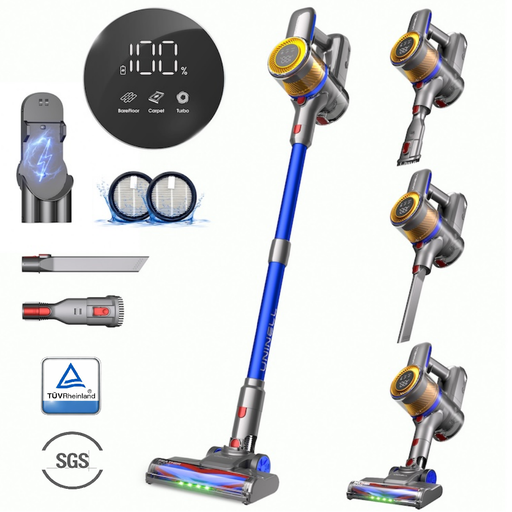
Why it's a match: For users who prioritise targeted, high suction power over full automation. Ideal for quickly removing pet hair from upholstery, stairs, or cars—areas a robot can't reach.
Instead of relying on a robot that might be overwhelmed by large amounts of hair, this device offers direct, controllable power exactly where it's needed. It bypasses the "one robot can't do it all" trap.
High suction power (450 W / 45,000 Pa) and an anti-tangle V-roller brush specifically designed to pick up pet and human hair without tangling.
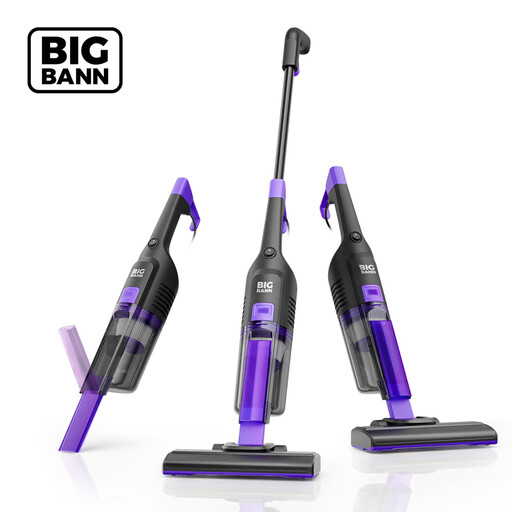
Why it's a match: An effective cleaning solution without the high investment of a premium robot system. Suitable for smaller apartments, students, or as a secondary device for quick clean-ups.
This model avoids the high initial cost and potential complexity of an advanced robot. It's a simple, corded, and reliable tool that does one job—vacuuming—well.
Very lightweight (approx. 1.2 kg) and 3-in-1 flexibility (stick, handheld, and floor vacuum) at a fraction of the price of a robot system. The 18 kPa suction power is sufficient for hard floors and lighter messes.
We have compiled a comprehensive, up-to-date list of products that fully meet these strict selection criteria and rigorous quality and safety standards.
The frequency depends on the model and usage. For bagless stations, like the one with the Eureka E20 Plus, the manufacturer states a capacity of up to 45 days. However, this is an estimate that can vary depending on the amount of dirt (e.g., from pets). Regular cleaning of the station's filters is also important to maintain suction power. For stations with bags, a change is typically needed every 30 to 60 days.
Yes, modern devices with a mop-lifting feature can. When the robot detects a carpet, it raises the wet mopping pad. The Eureka E20 Plus, for example, has a lifting height of 10 mm, which is sufficient to avoid touching most low- and medium-pile carpets. For high-pile or shaggy carpets, it is still advisable to set up a "no-mop zone" in the app.
A high Pa number is a good indicator of a robot vacuum with strong suction power, especially on carpets. However, it is not the only decisive factor. The overall performance depends on a combination of suction power, the design of the brush roll (to prevent tangles), the efficiency of the navigation (so no spots are missed), and the quality of the filter system. A high Pa value alone does not guarantee a perfect cleaning result.