
Lieferung heute & morgen

Qualitätsgarantie

Willkommens-Angebote freischalten: KOSTENLOSE Lieferung | Bis zu 80 % RABATT | Kostenlose 30-Tage-JoyPlus-Testphase
App herunterladen
A robot vacuum that not only vacuums and mops but also cleans itself sounds like the ultimate household convenience. However, the market is flooded with devices whose marketing promises often fall short in practice. Many buyers discover after just a few months that their expensive gadget requires more manual maintenance than expected or fails at simple obstacles.
As your Joybuy Product Recommendation Officer, I'm here to help you distinguish the crucial features from the superfluous ones. This guide will reveal the three most common purchasing traps and highlight the technical parameters you truly need to focus on to make an informed decision.
To avoid a poor purchase, you should concentrate on the technical specifications that determine practical, everyday usability.
A robot vacuum and mop with a cleaning station should do more than just empty dust. Look for the following station functions to genuinely minimise maintenance:
High suction power is the foundation, but the mechanics are just as important.
The precision of the clean depends directly on the navigation technology.
Based on the criteria above, we have identified a few models that represent a considered choice for specific user profiles. This is not a comprehensive Robot Vacuum Test 2026, but a curated selection.
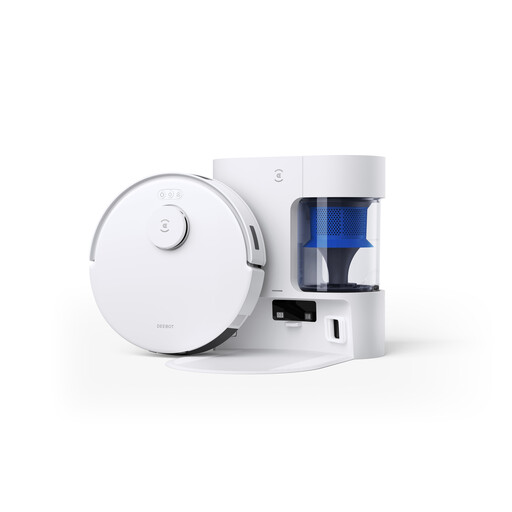
Why It's a Match: This model is tailored to the core problems of pet owners and allergy sufferers. The combination of high suction power and specialised brush technology tackles pet hair at the source, while the filtration system keeps the air clean.
Sidesteps the "Maintenance Illusion" with its ZeroTangle Anti-Hair Tangle Technology, which, according to the manufacturer, minimises the manual removal of hair from the brush.
8,000 Pa suction power for picking up pet hair. A sealed 4-stage filtration system that the manufacturer claims captures 99.9% of particles.
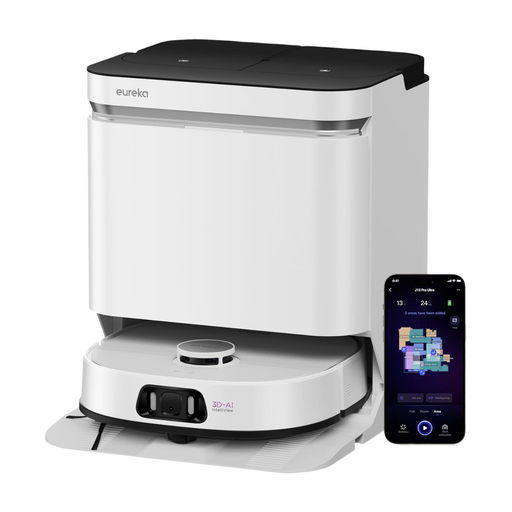
Why It's a Match: For busy individuals seeking a true "set-it-and-forget-it" solution. The focus is on maximum automation and minimal maintenance, thanks to a highly functional station.
Directly addresses the "Maintenance Illusion" with an 8-in-1 station that, according to the manufacturer, washes mops with 75°C hot water and dries them with 55°C hot air.
Flex-Arm Design for improved edge cleaning. FlexiRazor Anti-Hair Tangling Technology that actively cuts hair to reduce tangles.
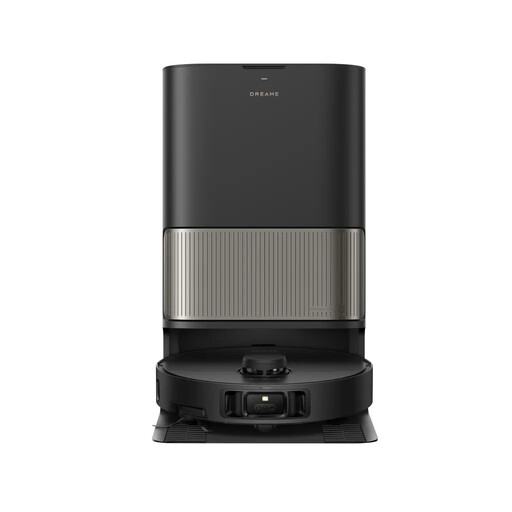
Why It's a Match: For users who value the latest technological innovations and maximum cleaning performance. This device combines extremely high suction power with advanced mechanical solutions for a comprehensive clean.
Combats the "Navigation Trap" and unclean edges with a Dual Flex Arm, an extendable mop designed specifically for cleaning corners and edges.
Very high suction power of 19,000 Pa. The station washes the mops with 75°C hot water. 3DAdapt obstacle avoidance for objects like cables and furniture.
We have compiled a complete, real-time updated list of products that fully meet these strict selection criteria and German safety regulations.
1. How often does a robot vacuum's self-emptying station need to be emptied? The frequency depends on the size of the dust bag in the station (typically 2.5 to 3.5 litres) and the amount of dirt in your home. With average use in an apartment with pets, you might need to empty it every 30 to 90 days. Most apps will notify you when the bag is full.
2. Can a robot vacuum with a mopping function detect and avoid carpets? Yes, most modern devices in this category use ultrasonic sensors to identify carpeted floors. Once a carpet is detected, they automatically lift their mop pads (usually by 7 to 15 mm) to prevent the carpet from getting wet. At the same time, the suction power is often increased to remove deep-seated dirt from the fibres.
3. Is Laser Navigation (LiDAR) really necessary? For a structured, efficient, and reliable clean, LiDAR navigation is a highly recommended feature. It allows for quick and precise mapping of your living spaces, which is the foundation for features like single-room cleaning, setting no-go zones, and saving maps for multiple floors. Models without LiDAR often clean less systematically and take longer.