
Lieferung heute & morgen

Qualitätsgarantie

Willkommens-Angebote freischalten: KOSTENLOSE Lieferung | Bis zu 80 % RABATT | Kostenlose 30-Tage-JoyPlus-Testphase
App herunterladen
A robot vacuum and mop with a self-emptying station promises a high degree of autonomy and household convenience. However, the market is flooded with devices whose advertised features don't always deliver in practice. Before making a purchase, it's crucial to distinguish key performance indicators from mere marketing promises. This guide highlights critical aspects and helps you select a model that fits your needs.
Investing in an advanced home assistant can be disappointing if the device fails to meet expectations. Three common problems often lead to dissatisfaction:
To avoid these pitfalls, you should examine three core technical parameters. These largely determine the device's everyday efficiency and reliability.
The type of navigation determines how systematically and completely a robot cleans your living spaces.
The combination of suction power and brush mechanics is crucial for dirt pickup on various surfaces.
For unobtrusive daily use, noise level and runtime are important factors.
Based on the criteria mentioned, we have compiled a selection of models suitable for different user profiles and requirements.
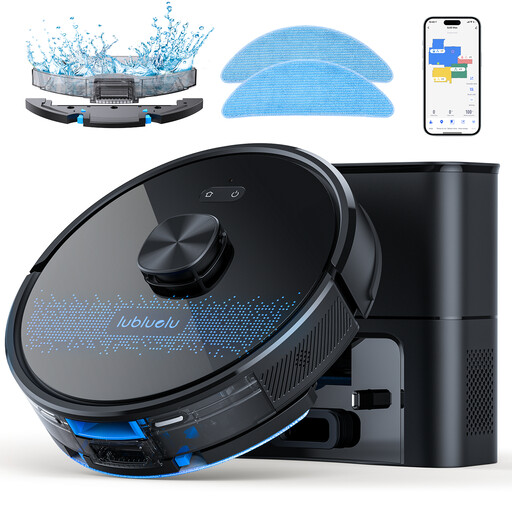
Why This Fits Their Persona: This model offers the core functions—vacuuming, mopping, and an auto-empty station—at a very accessible price point. It's a great choice for users who want to experience the benefits of a fully automated system for the first time without a large investment.
The device avoids the pitfall of poor navigation by using Laser Navigation (LiDAR), which is not a given in this price range and ensures structured cleaning.
Offers a comprehensive 3-in-1 system (vacuum, mop, self-empty) with precise navigation at an attractive price-performance ratio.
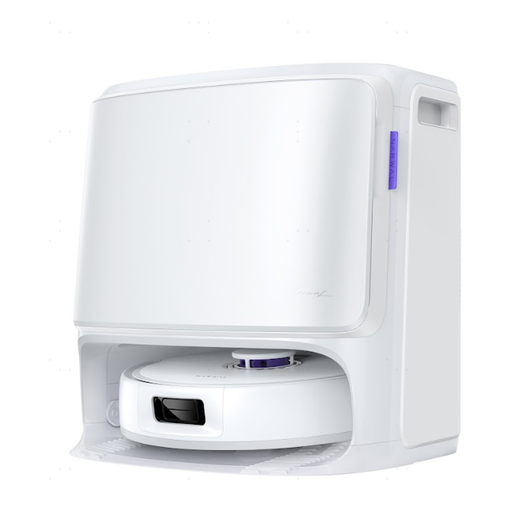
Why This Fits Their Persona: For households with pets, hair removal is a key challenge. This model is equipped with a very high suction power of 11,000 Pa and a special anti-tangle brush to effectively remove pet hair and deep-seated dirt from hard floors and carpets.
It tackles the "Pa-value only" problem by combining high suction power with a dual anti-tangle brush. This ensures that hair is not just suctioned up but also reliably transported into the dustbin.
Very high suction power and a brush system specialised for pet hair. The station also cleans and dries the mopping pads.
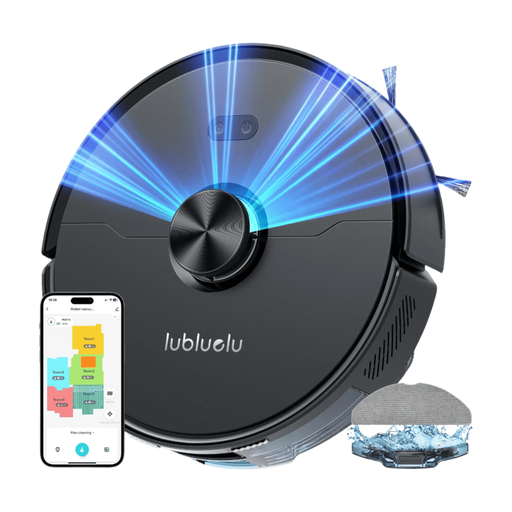
Why This Fits Their Persona: For busy individuals or households with large living areas seeking a nearly hands-free cleaning solution. The all-in-one station not only empties the dust but also washes and hot-air dries the mopping pads, reducing manual maintenance to a minimum.
This model addresses the pitfall of complicated maintenance by automating the entire mopping process. The automatic mop washing and drying prevents odours and ensures consistently hygienic mopping results.
Fully automated all-in-one station with large water tanks and mop drying. The 5200 mAh battery is well-suited for large areas.
We have compiled a complete, up-to-date list of products that fully meet these strict selection criteria and all required safety standards.
The frequency depends on the size of your home, the amount of dirt, and whether you have pets. On average, the dust bags in the stations hold 30 to 60 days' worth of debris. Most apps will notify you when a replacement is needed.
Yes, models with automatic carpet detection and a liftable mopping module can do this. When the robot moves onto a carpet, it lifts the wet mop pad to avoid dampening the carpet and continues cleaning in vacuum-only mode. It lowers the module again on hard floors.
The initial setup is usually straightforward. After downloading the manufacturer's app, you are guided step-by-step through the process of connecting the robot to your Wi-Fi network (usually 2.4 GHz). During its first cleaning run, the device creates a map of your home, which you can then edit in the app to name rooms or set up no-go zones, for example.