
Lieferung heute & morgen

Qualitätsgarantie

Willkommens-Angebote freischalten: KOSTENLOSE Lieferung | Bis zu 80 % RABATT | Kostenlose 30-Tage-JoyPlus-Testphase
App herunterladen
A robot vacuum cleaner can make everyday floor care easier on hard floors and carpets. However, models vary considerably in their navigation, maintenance requirements and ability to handle pet hair. A high Pa rating or a feature-packed app alone doesn’t mean a model will suit your home.
A figure such as 8,000, 12,000 or 20,000 Pa describes the maximum suction pressure under certain conditions. It’s also important to consider how well the brushes, airflow and filter work together. For pet hair, an anti-tangle main brush and an easy-to-access brush cover are often more important than the highest possible number.
Also check whether the stated suction power applies to every cleaning mode or only the maximum setting. The latter can use more battery power and may be noisier.
A robot vacuum cleaner with a mopping function can tackle light dirt, but it won’t necessarily replace manual cleaning when it comes to dried-on stains. Key things to consider include the water tank capacity, the type of mop pads, automatic carpet detection and whether you can set no-mop zones in the app.
An automatic mop lift can help prevent the robot from going over a carpet with a damp pad. Check that the stated lift height is suitable for your carpet.
A robot vacuum cleaner with an auto-empty station empties the dust container automatically. Depending on the model, it may also wash and dry the mop and refill the water tank. You’ll still need to check the filters, brushes, sensors, dirty water tank and clean water tank regularly.
Remember to factor in ongoing costs, too. Dust bags, cleaning solution, replacement pads and filters can all add to the cost over the product’s lifetime. A bagless station may need to be emptied manually more often.
A robot vacuum cleaner with laser navigation usually uses a LiDAR or LDS sensor to map rooms and plan efficient cleaning routes. This is especially useful in larger homes. Additional cameras, infrared or structured-light sensors can help it detect cables, shoes and toys.
No navigation system works perfectly in every situation. It’s best to pick up thin cables, dark objects and loose textiles before starting the robot. Also check whether it supports multiple maps, no-go zones and room-by-room cleaning.
If you’re looking for a robot vacuum cleaner for pet hair, these features are worth considering:
Even an anti-tangle brush won’t prevent every problem. Long hair can still collect around the side bearings or on the side brush.
The stated battery life depends on the cleaning mode, floor surface and layout of your home. Features such as automatic recharging and resuming cleaning are handy in larger homes. Before buying, measure the clearance beneath your lowest sofa or cupboard.
When it comes to door thresholds, maximum climbing height isn’t the only thing that matters. The shape of the edge, tyre tread and approach angle all affect whether the robot can get over it. The docking station also needs enough space in front of it and on either side.
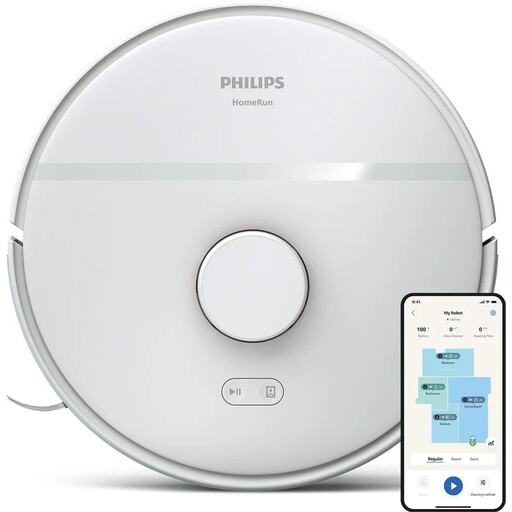
Why this product suits this profile: This model focuses on everyday dry cleaning and can be controlled via the app or compatible Alexa devices. At 97 mm tall, it can fit under many pieces of furniture.
The product specifications list 6.000 Pa, a 0,38-litre dust container and EPA filtration. This gives buyers clear, easy-to-understand essentials rather than an overloaded list of features.
6.000 Pa suction power, up to 120 minutes’ run time, app control and automatic return to the charging station.
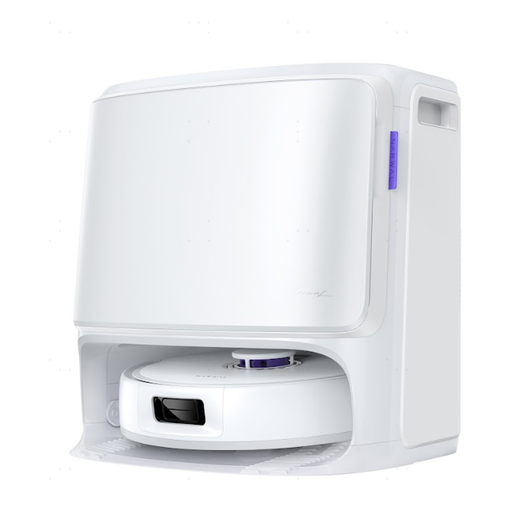
Why this product suits this profile: Designed for homes with hard floors, carpets and pets, this model combines laser navigation and a mopping function with a station that washes, dries and empties the robot.
According to Narwal’s product specifications, the device has anti-tangle main and side brushes, carpet detection and a 10-mm mop lift. These features address common problems with hair and damp carpets.
11.000 Pa according to the product specifications, a 5.200-mAh battery, a 2,5-litre dust bag and a stated run time of up to 220 minutes.
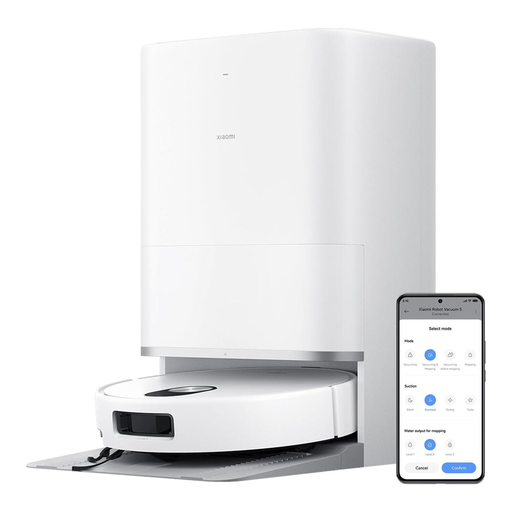
Why this product suits this profile: This model is aimed at larger households looking for an automated station, precise mapping and a comparatively high stated suction power.
Features include LiDAR navigation, automatic mop washing with warm water and hot-air drying. It also has a stated 15-mm mop lift for carpets.
20.000 Pa according to the product specifications, a 2,5-litre dust bag, LiDAR mapping and an integrated cleaning station.
We’ve put together a comprehensive, regularly updated list of products that meet these strict selection criteria and the safety regulations in force in the EU.
Its lifespan depends on the battery, brushes, sensors and maintenance. Clean the filters and brushes as recommended by the manufacturer, remove hair from the bearings and keep the charging contacts dry. A battery is a consumable part and may lose capacity after several years.
It depends on your floors and what you need it to clean. A mopping function can be useful for regular light cleaning on tiles, laminate or sealed hard floors. It’s less suitable for carpets, larger spills or dried-on stains.
As well as electricity, you may need to pay for dust bags, filters, side brushes, main brushes and mop pads. Stations that wash the mop also require cleaning solution. So compare more than just the purchase price: check the availability and cost of consumable parts, too.