
Lieferung heute & morgen

Qualitätsgarantie

Willkommens-Angebote freischalten: KOSTENLOSE Lieferung | Bis zu 80 % RABATT | Kostenlose 30-Tage-JoyPlus-Testphase
App herunterladen
A robot vacuum cleaner with a mopping function can make everyday floor care much easier. However, models vary considerably in terms of navigation, maintenance requirements and mopping technology. Households with children, pets or large living spaces should therefore look beyond a high Pa rating.
Three common buying misconceptions are particularly likely to lead to disappointment:
The technical values and feature information below are based on the respective manufacturers’ product details. Before buying, you should also check the current items included in the delivery, the availability of spare parts and the warranty terms.
A robot vacuum cleaner for carpets and hard floors should be able to adjust its suction power according to the surface. Automatic carpet detection with mop lifting prevents damp mops from travelling over carpets. Other relevant features include:
Anti-tangle technology is particularly important for pet owners. Systems such as ZeroTangle or FlexiRazor can reduce maintenance. Such claims should be understood as manufacturer specifications and do not replace regular checks of the brush, filter and wheels.
A robot vacuum and mop usually works with one or two dampened mop pads. Depending on the model, the pads may simply be moistened or automatically washed and dried after cleaning.
If you want to minimise manual work, look for the following features:
A robot vacuum cleaner with hot-water mop washing still requires maintenance: the dirty-water tank, cleaning tray and filters must be checked according to the instructions in the user manual. Hot-water functions are also no substitute for manually cleaning heavily dried-on dirt.
A robot vacuum cleaner with laser navigation generally creates systematic maps and can manage rooms, no-go zones and cleaning schedules. Cameras, structured-light sensors or additional obstacle-detection systems can be helpful when dealing with cables, furniture and small objects. However, very small objects are not always detected.
Before ordering, you should measure:
Even an intelligent robot vacuum cleaner needs a prepared floor. Cables, small items, fragile objects and pools of liquid should be removed before starting.
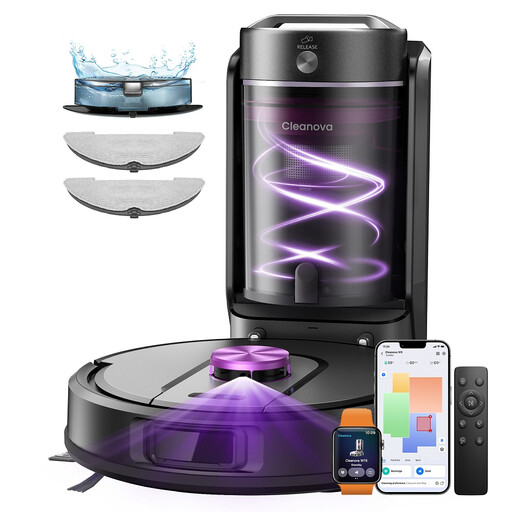
Why this product suits the profile: This model combines vacuuming and mopping, offers LiDAR navigation and multiple maps, and features a bagless emptying station for those starting out with automated floor care.
The manufacturer’s specifications list three suction levels, three water levels and a bagless 4-litre station. This eliminates dust bags as a regular consumable.
According to the product details: 10,000 Pa, up to 180 minutes of runtime, LiDAR navigation and up to five storable maps.
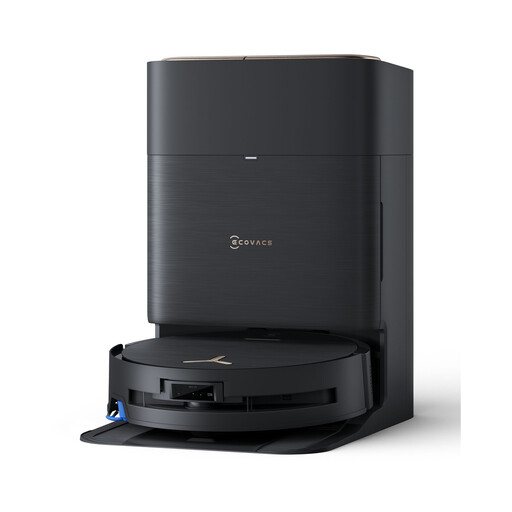
Why this product suits the profile: The combination of a roller mopping system, automatic station maintenance and adaptive obstacle detection is designed for households with different floor types and regular cleaning needs.
According to the manufacturer’s specifications, the roller mop is continuously cleaned with fresh water. The system also lifts the mopping components when it moves onto carpets.
According to the product details: 16,600 Pa, up to 200 minutes of runtime, hot-water mop washing at up to 75 °C and warm-air drying.
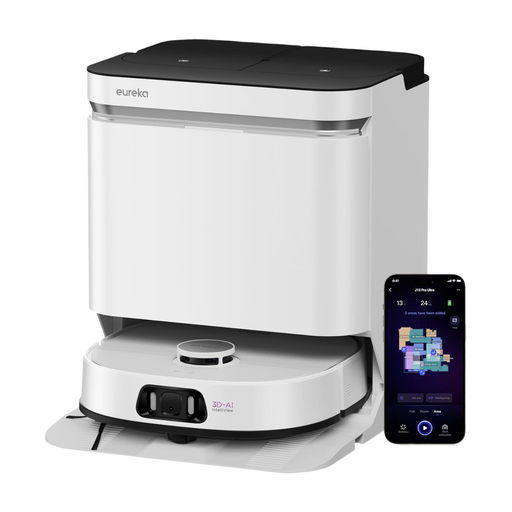
Why this product suits the profile: Designed for pet hair, larger spaces and frequent cleaning cycles, this model offers automatic emptying, water management and mop washing in a single base station.
The manufacturer’s specifications list an anti-tangle system with a cutting mechanism, as well as automatic detection of dry and wet dirt. The brush should still be checked regularly.
According to the product details: 16,200 Pa, up to three hours of runtime, 75 °C mop washing and drying with air heated to 55 °C.
Even a robot vacuum cleaner with an auto-empty station is not completely maintenance-free. Plan for regular expenses and tasks:
A station with hot-water and warm-air functions also uses more electricity than a basic robot mop. However, it can reduce the amount of daily maintenance. The key consideration is which tasks you actually want to outsource.
We have put together a complete, regularly updated list of products that fully meet these strict selection criteria and the safety regulations applicable in the EU.
Place the base station on a level, dry surface with sufficient clearance around it. Fully charge the device, connect it to the app and initially start a mapping run. Cables and small objects should be removed beforehand. For carpets, set no-go zones in the app or activate automatic mop lifting.
Its lifespan depends on usage, maintenance, the battery and the availability of spare parts. Regularly cleaning the brushes, filters and sensors helps prevent loss of performance. The battery is a consumable component; you should check the specific replacement options and warranty terms before buying.
In addition to electricity consumption, there are costs for filters, mop pads, cleaning solution and, where applicable, dust bags. Bagless stations can avoid ongoing bag costs, while stations with automatic mop washing and drying require more water and energy. Therefore, do not just check the purchase price, but also the consumables available.