
Lieferung heute & morgen

Qualitätsgarantie

Willkommens-Angebote freischalten: KOSTENLOSE Lieferung | Bis zu 80 % RABATT | Kostenlose 30-Tage-JoyPlus-Testphase
App herunterladen
A robot vacuum cleaner with mopping function and self-emptying station can make daily floor care much easier. The robot vacuums up crumbs and dust, mops hard floors and then returns to the station on its own. Depending on the model, the station automatically collects the dust; more advanced stations also wash and dry the mop pads.
However, product specifications vary considerably. A high suction power figure alone says little about navigation, carpet detection or the actual maintenance required. Before buying, you should therefore check three common pitfalls.
The figure in Pa describes the maximum negative pressure generated by the vacuum unit. It does not automatically show how well a robot removes hair from carpets or how thoroughly it cleans along edges. Brush design, airflow, filters and the ability to adapt to different floor types are also important.
When choosing a robot vacuum cleaner with high suction power, buyers should therefore also look for an effective main brush, anti-hair technology and adjustable suction power. Pet owners in particular should check whether the manufacturer provides specific information about hair pick-up and brush maintenance.
A basic mopping module distributes water over a cloth. This is not the same as a station with pad washing, drying, fresh-water supply and a dirty-water tank. Without these features, the pads need to be removed, cleaned and dried manually more often.
Automatic carpet detection is also important. A liftable mopping module can prevent damp pads from travelling over carpets. Check the technical specifications for the lifting height and the types of carpet supported.
A station with automatic emptying reduces the need to empty the dustbin every day, but it does not eliminate all maintenance tasks. Filters, side brushes, the main brush, sensors and mop pads still need regular checking. Stations with water functions also have fresh- and dirty-water tanks.
The space required is also often underestimated. Before buying, allow enough clearance from the wall and sufficient free space in front of the station. Cables, socks, toys and thin cords can remain potential sources of problems, even when obstacle detection is available.
For households with pet hair or carpets, several specifications are important:
A robot vacuum cleaner for pet hair should also have easily accessible brushes and replacement parts. High suction power without straightforward maintenance can become impractical in everyday use.
A robot vacuum cleaner with LiDAR navigation uses a laser to create maps and plan systematic routes. This is particularly helpful in homes with several rooms. DToF and similar systems also use distance measurement. Cameras, structured-light sensors and impact sensors can supplement obstacle detection.
Look out for the following features:
App control is convenient, but it should be compatible with your existing Wi-Fi network. Some models support only 2.4 GHz Wi-Fi. App permissions and voice assistants such as Alexa or Google Assistant should also be checked before buying.
Rotating mops, vibrating pads and mopping rollers differ in contact pressure, movement patterns and maintenance needs. A station with hot-water washing and warm-air drying can reduce the amount of manual work required. Even so, tanks still need to be emptied and consumables used according to the manufacturer’s instructions.
For carpeted areas, an automatic mopping robot with a liftable mopping module is more suitable than a model that merely switches the pad off. The specified lifting height and the type of carpet detected are key factors.
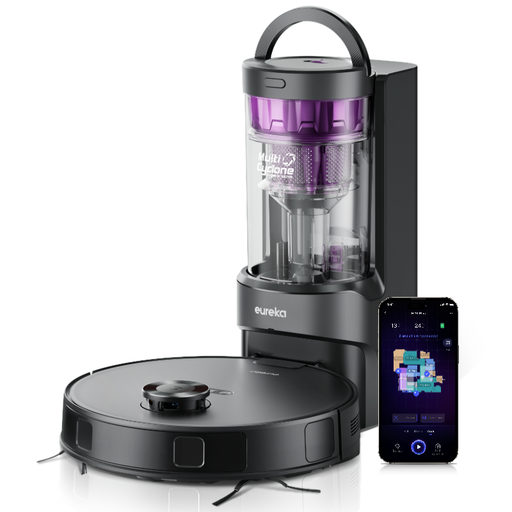
Why this product suits the profile: According to the product name, the combination of 8,000 Pa, 180 minutes of runtime and a bagless station is aimed at households looking for basic automation without the cost of dust bags.
The product description specifies a 10 mm mop lift when carpets are detected, as well as LiDAR navigation. This explicitly addresses carpet protection and predictable cleaning routes.
2-litre station dust container, app and voice control, plus virtual no-go zones according to the product details.
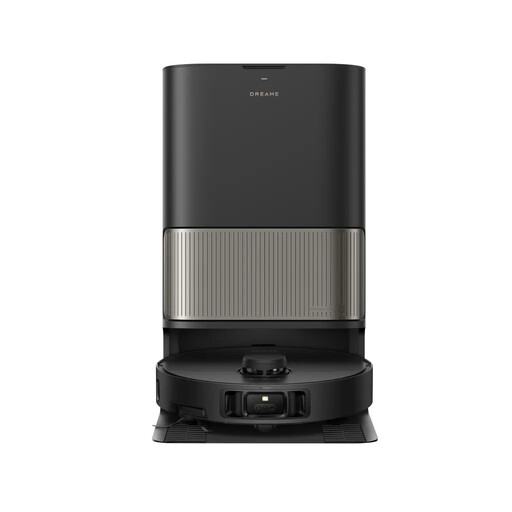
Why this product suits the profile: According to the product description, this model combines 19,000 Pa suction power with an all-in-one station for dust collection, water management, mop washing and drying.
Several carpet strategies and a DuoBrush with an untangling function address the typical challenges posed by mixed flooring and hair.
3.2-litre dust bag, 4.5-litre fresh-water tank and 4-litre dirty-water tank according to the product data.
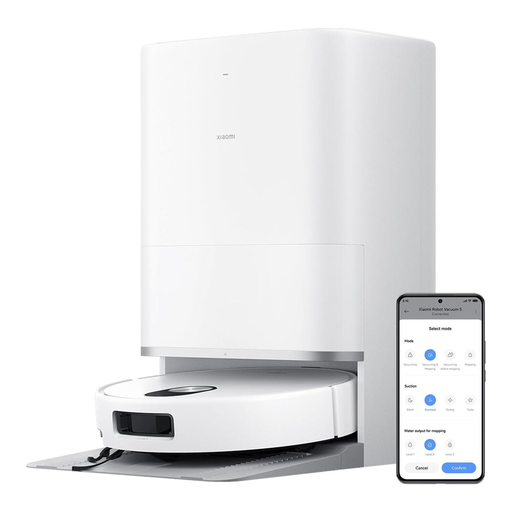
Why this product suits the profile: With LiDAR navigation, app and voice control, plus a specified 15 mm mop lift, this model is suitable for large homes with hard floors and carpets.
The product data specifies carpet detection, a 15 mm mop lift and an all-in-one station. This covers the key requirements for homes with mixed flooring.
20,000 Pa according to the product details, a 2.5-litre dust bag and mop washing with water heated to approximately 80 °C.
We have put together a complete, regularly updated list of products that fully meet these strict selection criteria and the safety regulations applicable in the EU.
Depending on its features, the station takes care of emptying the dustbin and possibly cleaning the mop pads. Brushes, filters and sensors should still be checked regularly. With mopping stations, the dirty-water tank must also be emptied and the fresh water topped up.
That depends on the carpet pile height and the mop lift. A model with carpet detection and at least the lifting height specified by the manufacturer can avoid mopping over carpets. With very deep-pile carpets, check the product’s limitations and set up no-go zones if necessary.
Its lifespan depends on usage, care, the battery and the availability of replacement parts. Regularly removing hair, cleaning the sensors and replacing filters and brushes in good time can help keep it running reliably. Before buying, it is worth checking whether consumables and accessories are available separately.