What should you look for when buying?
If you’re choosing a robot vacuum for a home with an awkward layout, the most important factor is the main physical or navigation challenge you need to overcome.
| Buying criterion |
What to look for |
Who it matters most to |
| Getting under low furniture |
Measure the lowest opening, allowing for uneven surfaces, and compare it with the height of the exact model variant. Roborock Deutschland lists 7,98 cm for both the Saros 10 and Saros 10R, while ECOVACS DE lists 81 mm for the DEEBOT T50 OMNI. These are device heights, not guaranteed clearance measurements. |
If I want to clean under a sofa or cupboard, the lowest point of the opening is what matters. Around 36% of consumers identify low furniture openings as their main buying challenge. |
| Navigating between chair legs |
Measure the narrowest passage the robot needs to use and compare independent observations about the exact model. Heise reports that the Saros 10R navigates well, but sometimes struggles with small obstacles; an older review of the S7 Max Ultra can’t be applied to other models. |
If chair legs or objects that move around narrow the route, I want to know how the specific model will cope. Around 29% of consumers say narrow or changing passages are their main challenge. |
| Keeping the robot away from problem areas |
Check that maps and no-go zones are available for the exact model variant. An ECOVACS guide documents a “No Entry Area”; the older guide specifically covers the OZMO 920/950/T5 and requires a map to have been created. |
If an alcove regularly causes problems, I want to be able to mark it as off-limits, even if that means cleaning it myself. Around 21% of consumers prioritise these kinds of problem areas. |
| Checking thresholds and the docking station location |
Measure the shape of the threshold and the space needed for the station, including room to use it. MOVA says the Mobius 60 can climb obstacles up to 8 cm high; eufy recommends at least 85,0 cm of total clearance above the X10 Pro Omni station. Both figures apply to the respective models and don’t replace checking the intended location. |
If a threshold or the space needed for a station limits where I can place it, I want to check these measurements before choosing. Around 14% of consumers put these spatial requirements first. |
Matching products at Joybuy
The Joybuy products below are relevant to low furniture openings and navigating awkward areas or keeping the robot away from them. Compare the details for the exact model variant with the measurements in your home.
 No image available
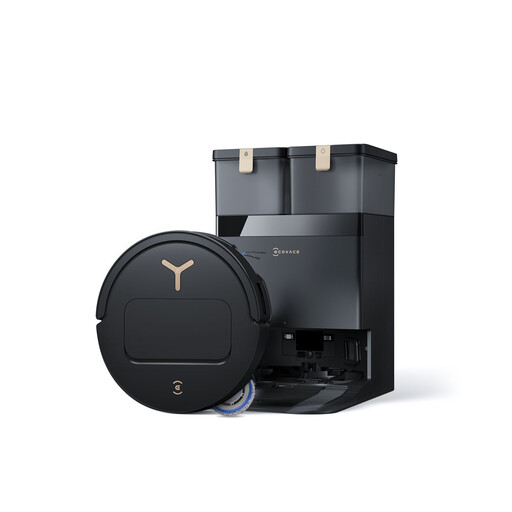
ECOVAC DEEBOT T50 PRO OMNI Gen 3 Black
If you’re considering this model for low furniture, compare the height of the exact variant with the opening you measured earlier.
The product name lists TrueMapping 2.0 and AIVI 3D 3.0. These feature names alone don’t prove the robot can pass through safely or detect obstacles in every home.
Joybuy
 No image available
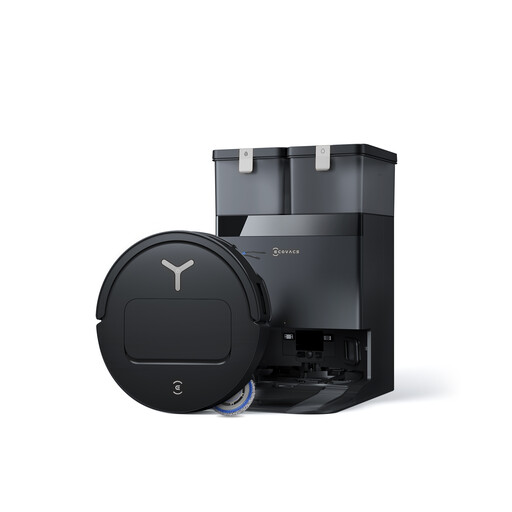
ECOVACS DEEBOT T50 OMNI Gen3 Black
If low furniture is a factor, check the dimensions of this exact variant and compare them with the lowest opening in your home.
The product name lists TrueMapping 2.0 and AIVI 3D 3.0. Feature names alone don’t tell you whether the model will reliably detect small obstacles in the specific passage in your home.
Joybuy
 No image available
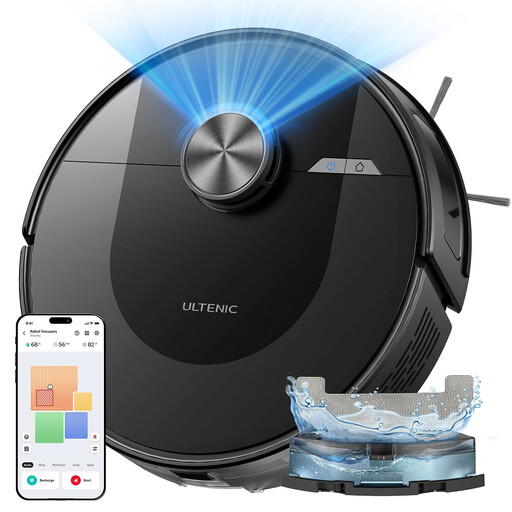
Ultenic D1O robot vacuum with mopping function
If you want the robot to avoid problem areas, compare the listed mapping and no-go zone features with your needs.
The product name lists LiDAR navigation, 5 maps and 10 no-go zones. Check the details for the exact variant to see how these features are set up and used.
Joybuy
Frequently asked questions
Will a stated robot height of 7,98 cm fit through a furniture opening that’s the same height?
No. The device height alone doesn’t guarantee a minimum clearance. Measure the opening at its lowest point and check the details for the exact model variant. Roborock Deutschland lists 7,98 cm as the device height for the Saros 10 and Saros 10R, not as the minimum clearance needed to pass under furniture.
How do I mark an area for the robot to avoid?
If your model supports mapping, create a map first, then set up a no-go zone or virtual boundary using the method for that model. ECOVACS documents a “No Entry Area”; its older guide for the OZMO 920/950/T5 requires a map to have been created. Check the instructions for your specific device.
What should I check when choosing a location for a mop and vacuum station?
As well as the floor space, check that there’s room to open and remove the tanks. eufy recommends at least 85,0 cm of total clearance above the X10 Pro Omni station; other models may have different requirements.
What rights do I have if I buy a faulty device online in Germany?
When you buy from a trader, European Union consumer information says you’re entitled to at least two years of legal guarantee from the date you receive the goods. A voluntary manufacturer’s guarantee doesn’t replace this. Online purchases are also generally covered by a 14-day right to cancel, subject to statutory exceptions.
What product and data protection details should I check before buying?
Look for clear product identification, manufacturer details and a German instruction manual. The Bundesnetzagentur lists these as market surveillance checks, not as proof relating to a specific model. If the device is controlled by an app, check how your data is processed too: the Verbraucherzentrale points out that device data is often sent to third-party servers or the cloud.


