
Lieferung heute & morgen

Qualitätsgarantie

Willkommens-Angebote freischalten: KOSTENLOSE Lieferung | Bis zu 80 % RABATT | Kostenlose 30-Tage-JoyPlus-Testphase
App herunterladen
The idea of a consistently clean home without the daily chore of vacuuming and mopping is a desirable goal for many. A robot vacuum with a mopping function and an auto-empty station promises just that: a high degree of automation that gives you back valuable time. However, the market is filled with models whose technical specifications and features can seem overwhelming at first glance.
This article serves as your guide. We will highlight the crucial features of modern robot vacuums and mops and present a selection of models that cater to different needs. Our goal is to provide you with an objective basis for your purchasing decision.
Selecting the right device depends on your individual needs and the layout of your home. Three main criteria are particularly relevant.
A fully automatic cleaning station is the centerpiece of convenience. Basic models are limited to emptying the robot's dustbin. More advanced stations, often marketed as robot vacuums and mops with a cleaning station, offer a much wider range of functions. They clean the robot's mop pads with fresh water, collect the dirty water in a separate tank, and then dry the mops, often with hot air. This mop-drying feature is essential for preventing the growth of odours and bacteria. A self-cleaning robot vacuum can therefore range from simple dust disposal to complete maintenance of the mopping unit.
Precise navigation is critical for complete and efficient cleaning. Most high-end models use LiDAR (Light Detection and Ranging) technology to create detailed maps of your living spaces and clean them systematically. A further advancement is the robot vacuum with AI obstacle avoidance. These devices use additional cameras and artificial intelligence to detect and navigate around smaller, unexpected objects like shoes, cables, or pet toys in real-time. This minimises the risk of the robot getting stuck or moving items around.
The cleaning performance must match your home. For households with carpets or pets, high suction power, measured in Pascals (Pa), is a significant advantage. A robot vacuum for pet hair should have a suction power of at least 4000 Pa and ideally a rubber main brush to reduce hair tangles. For large homes, battery capacity and the resulting runtime are crucial. Models with a runtime of over 150 minutes can clean even expansive areas without interruption.
Based on the criteria mentioned, we have compiled a selection of models that stand out for their technical specifications and range of features.
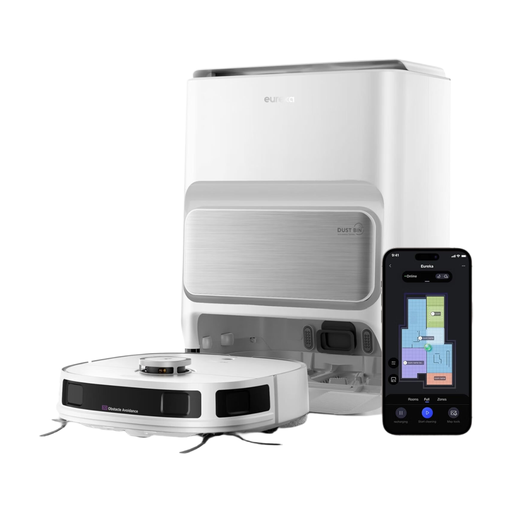
Why this model stands out: The Eureka J12 Ultra offers a comprehensive automation package. The all-in-one station not only empties the dust but also washes and dries the rotating mop pads with 55°C hot air. The combination of Dual-LiDAR navigation and 3D AI obstacle avoidance ensures precise and safe cleaning.
Pros:
Who is it for?: This model is an excellent choice for users in large apartments or houses who are looking for maximum automation. The advanced obstacle avoidance is particularly beneficial in households with pets or children.
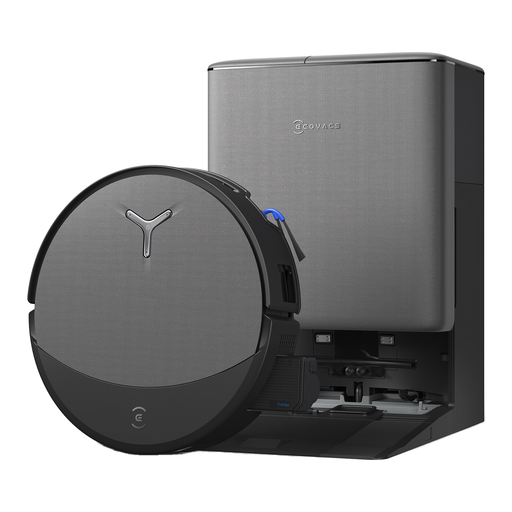
Why this model stands out: The DEEBOT T90 PRO OMNI sets a remarkable benchmark in the market with a manufacturer-stated suction power of up to 30,000 Pa. The combination of the OZMO ROLLER 3.0 self-cleaning mopping system and ZeroTangle 4.0 technology makes it exceptionally powerful at removing stubborn dirt and pet hair.
Pros:
Who is it for?: Ideal for demanding households with high levels of dirt, numerous carpets, or multiple pets. Anyone looking for maximum suction power and an effective solution for pet hair will find this to be a suitable device.
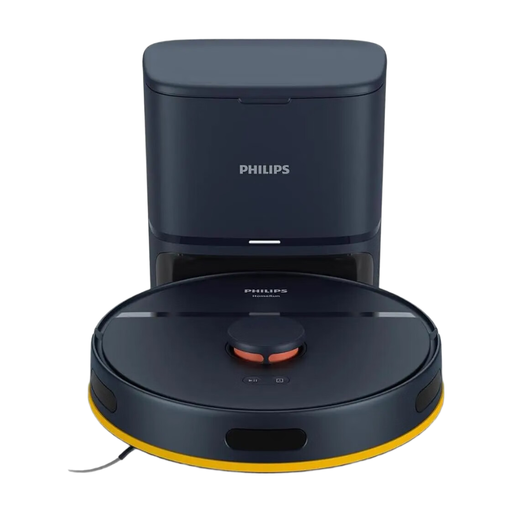
Philips HomeRun 2000 Series Aqua Robot Vacuum & Mop XU2100/10 Midnight Blue with Auto-Empty Station
Why this model stands out: The Philips HomeRun 2000 focuses on the core functions of automated cleaning. It offers reliable LDS radar navigation for systematic cleaning and an auto-empty station that automatically empties the dustbin for up to 70 days. The Carpet Boost function automatically increases suction power on carpets.
Pros:
Who is it for?: This model is suitable for users who prefer solid and reliable vacuuming automation with a convenient auto-empty station from a well-known brand. It is a great choice for households with predominantly hard floors and some carpets, where complex obstacle detection is not required.
The models presented here already cover a broad spectrum of functions. However, if your requirements are different or you are looking for other alternatives, there is a wide variety of other devices with different specialisations and in various price categories.
Discover our entire range of robot vacuums and mops to find the perfect model for you.
The frequency depends on the size of the dust bag in the station, the size of your home, and the amount of dirt. For most modern devices, the capacity is sufficient for a period of 30 to 75 days. The corresponding smartphone app will usually notify you when the bag is full.
Yes, modern robot vacuums and mops are equipped with carpet detection. When the robot detects a carpet in mopping mode, it either automatically lifts the mopping module or navigates around the carpet to prevent it from getting wet. In vacuum-only mode, they travel over carpets as normal.
AI-powered obstacle avoidance is not essential for every household. In tidy homes with few obstacles, good LiDAR navigation is often sufficient. However, in dynamic environments, such as those with children or pets where objects are frequently left on the floor, it offers significant added value. It reduces the likelihood of the robot getting stuck or sucking up small objects.