
Lieferung heute & morgen

Qualitätsgarantie

Willkommens-Angebote freischalten: KOSTENLOSE Lieferung | Bis zu 80 % RABATT | Kostenlose 30-Tage-JoyPlus-Testphase
App herunterladen
The search for a fully automated cleaning assistant can quickly become overwhelming. Manufacturers advertise ever-increasing suction power figures and "intelligent" features. However, not every device lives up to its marketing promises. A robot vacuum and mop with an auto-empty station should make daily life easier, not become a burden through constant maintenance or inadequate performance. Before you make a decision, it's crucial to understand the common pitfalls that often only become apparent after the purchase.
Common Pitfalls to Avoid:
To make an informed decision, you should focus on verifiable technical features rather than pure marketing claims. Three parameters are critical for performance and convenience.
The way a robot navigates determines its efficiency and thoroughness.
A truly useful station does more than just empty dust. Look for the following features for a genuine robot vacuum and mop with self-cleaning:
For households with mixed flooring or pets, the brush system is of great importance.
Based on these objective criteria, we have identified several models that are well-suited for different user profiles and their specific requirements.
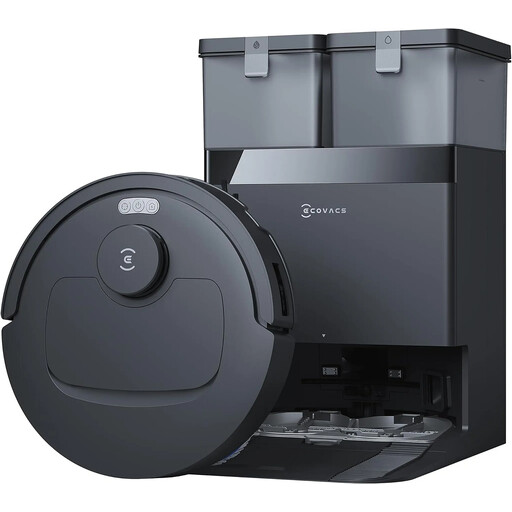
Why This Fits Their Persona: Ideal for pet owners and discerning users looking for a low-maintenance solution. The combination of powerful suction, advanced obstacle detection, and a fully automated station covers all the bases.
The OMNI station offers true mop self-cleaning and hot-air drying, which prevents odours. The ZeroTangle 3.0 technology effectively reduces hair tangles, and TrueDetect 3D navigation avoids collisions with objects left on the floor.
Comprehensive automation via the OMNI station (dust emptying, mop washing, drying, water tank refilling). Precise edge cleaning and reliable obstacle avoidance.
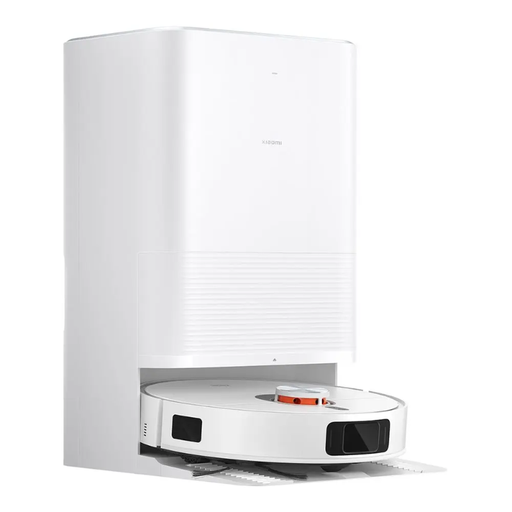
Why This Fits Their Persona: For users who value high performance and smart features. The combination of powerful suction, rotating mop pads, and a fully-equipped station delivers a technologically advanced cleaning experience.
The advertised suction power of up to 7000 Pa is complemented by a dual mopping system with rotating pads, ensuring effective stain removal. The station washes and dries the mops to prevent hygiene issues. LDS laser navigation ensures precise and complete cleaning coverage.
All-in-one base station with automatic mop washing, hot-air drying, and dust collection. Smart carpet detection with automatic mop lifting.
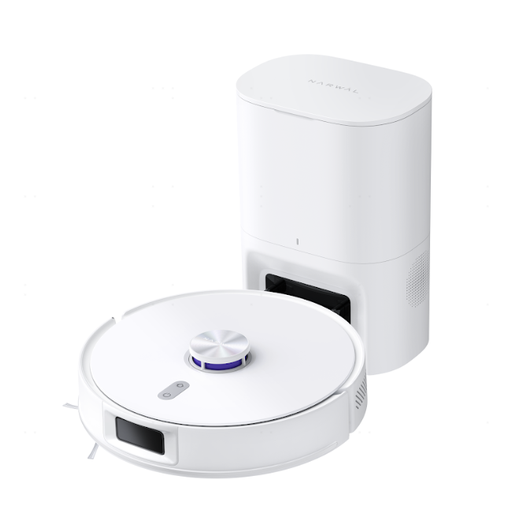
Why This Fits Their Persona: A great choice for users who want the benefits of automatic dust collection and solid cleaning performance without investing in a premium model. It offers the core features for a significant increase in daily convenience.
This model focuses on reliable automatic dust collection with a large 3.5-litre dust bag, reducing maintenance to just a few times a year. The LDS laser navigation ensures systematic cleaning, which is superior to basic gyroscope models.
Long maintenance intervals thanks to the automatic dust-emptying station. Solid suction power of 8000 Pa and precise LDS laser navigation for efficient coverage.
We have compiled a complete, real-time list of products that fully satisfy these strict selection criteria and UK safety regulations.
The frequency depends on the size of the dust bag in the station and the amount of dirt in your home. With most modern devices featuring a 3 to 5-litre capacity, the bag only needs to be changed approximately every 60 to 180 days. In households with pets or multiple people, a more frequent change may be necessary.
Yes, advanced models are designed for mixed floor types. They feature automatic carpet detection. When the robot moves onto a carpet, it lifts its mop pads to avoid getting the carpet wet and simultaneously increases suction power for a deeper clean of the fibres.
Although these devices are marketed as "fully automatic," some minimal maintenance is still required. This includes: