
Lieferung heute & morgen

Qualitätsgarantie

Willkommens-Angebote freischalten: KOSTENLOSE Lieferung | Bis zu 80 % RABATT | Kostenlose 30-Tage-JoyPlus-Testphase
App herunterladen
The idea is tempting: a single device that vacuums, mops, and then cleans itself. A robot vacuum with a mopping function and a self-emptying station promises just that—a permanently clean home with minimal effort. But the market is filled with marketing claims that often fail to deliver in practice. Many buyers find after a few months that their expensive device requires more manual follow-up than expected or consistently misses certain areas.
As your Joybuy Product Recommendation Officer, I'm here to help you separate the wheat from the chaff. Instead of falling for exaggerated advertising, we'll focus on the technical facts that truly matter. In this guide, we'll highlight the most common pitfalls and show you what to look for to make an informed decision.
Before you invest, you should be aware of the typical weaknesses that often only become apparent after the purchase and lead to frustration.
To avoid the pitfalls mentioned above, you should focus on three core parameters that determine a device's real-world, day-to-day performance.
The way a robot maps and orients itself in your home is fundamental to a complete clean.
For most households, especially those with more complex layouts, laser navigation offers more reliable and thorough cleaning performance.
The main brush is crucial for picking up dirt. There are significant differences here, which are particularly relevant for pet owners.
Look for models that explicitly advertise an anti-tangle system or a special brush design for robot vacuums for pet hair.
Modern stations are true multifunctional hubs. The range of functions determines how autonomous your self-cleaning robot vacuum really is.
A model that combines all four functions offers the highest degree of automation and convenience.
Instead of making a one-size-fits-all recommendation, we have selected models tailored to specific needs and households.
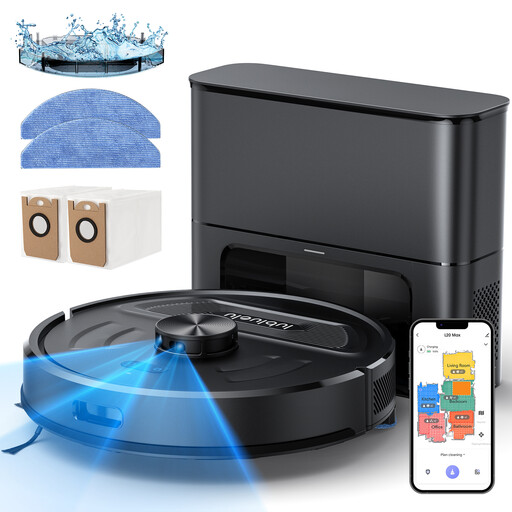
Why This Fits Their Persona: Ideal for users seeking a reliable, automated cleaning solution without paying extra for premium features. It offers the core functions—vacuuming, mopping, and a self-empty station—in a solid overall package.
This model relies on proven Laser Navigation (LiDAR), which ensures precise mapping and systematic cleaning. It avoids the "Pascal Trap" by combining a solid 4000 Pa suction power with efficient navigation, rather than just focusing on a high number.
Good value for a 3-in-1 system. The ability to save up to 5 maps is practical for multi-story homes.
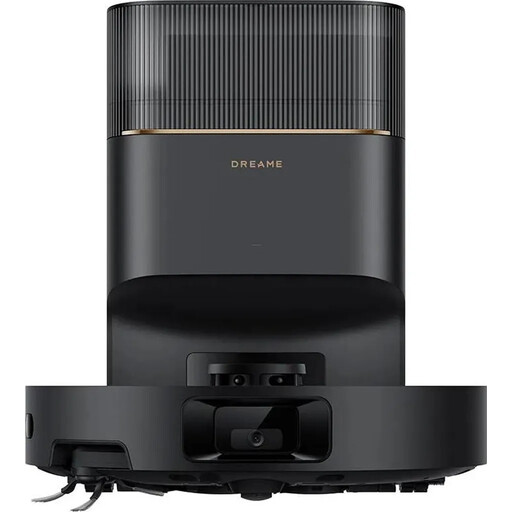
Why This Fits Their Persona: Designed for households where high cleaning performance and minimal maintenance are a priority, especially with pet hair. The combination of high suction power and special brush technology is crucial here.
The HyperStream Detangling DuoBrush is a direct answer to the maintenance pitfall: according to the manufacturer, it is 100% tangle-free and minimises manual cleaning of the brush roll. The high suction power of 13,000 Pa is functional here to effectively remove deep-seated dirt and pet hair.
Up to 150 days without emptying the dust bag, thanks to the 5-litre bag in the station. The extendable side brush improves edge cleaning.
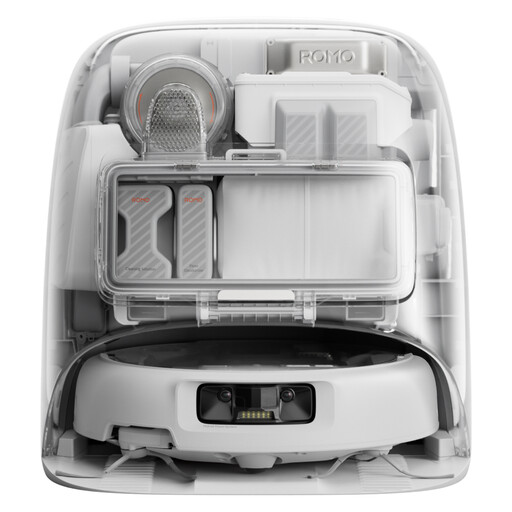
Why This Fits Their Persona: For tech enthusiasts who want a no-compromise cleaning solution with innovative features and are willing to invest in the highest level of automation and design.
The dual extendable robotic arms are a direct technical solution to the problem of poor edge cleaning, a core issue for many round robots. The claim of up to 200 days of maintenance-free operation addresses the myth of "complete autonomy" and promises a real reduction in manual effort.
Unique edge and corner cleaning thanks to robotic arms. "Drone-level" obstacle avoidance promises precise navigation around small objects. Very high suction power of 25,000 Pa.
We have compiled a complete, up-to-date list of products that fully meet these strict selection criteria and UK safety regulations.
1. How often does the self-empty station of a robot vacuum need to be emptied? This largely depends on the size of the dust bag in the station and the amount of dirt in your home. Most models offer a capacity for 30 to 60 days. Some premium models, like the Dreame D20 Pro Plus, advertise up to 150 days before the bag needs changing. The device's app will usually notify you when it's time for a change.
2. Can a robot vacuum and mop detect and avoid carpets? Yes, most modern robot vacuums and mops have carpet detection. When the device is in mopping mode, it will either automatically lift its mop pads or avoid carpeted areas completely to prevent them from getting wet. In vacuum-only mode, it often automatically increases suction power on carpets for a deeper clean.
3. What role does laser navigation (LiDAR) play in a robot vacuum? LiDAR technology is crucial for efficiency and thoroughness. It allows the robot to create a precise map of your home, even in the dark. This enables it to follow systematic paths instead of wandering chaotically. The result is faster, more complete coverage of the entire area and allows you to select specific rooms for cleaning or set no-go zones in the app.