
Lieferung heute & morgen

Qualitätsgarantie

Willkommens-Angebote freischalten: KOSTENLOSE Lieferung | Bis zu 80 % RABATT | Kostenlose 30-Tage-JoyPlus-Testphase
App herunterladen
The search for the right robot vacuum with mopping and an auto-empty dock can quickly become overwhelming. Manufacturers advertise ever-higher suction power figures and a multitude of automatic features. However, not every new innovation provides real-world value. This guide will help you identify the crucial features and avoid common purchasing pitfalls, ensuring you find a model that truly fits your household's needs.
Before making a decision, you should be aware of some common marketing promises that often suggest more than they deliver.
To make an informed decision, you should focus on a few core technical parameters that directly impact daily performance and user convenience.
Navigation technology determines how systematically and completely a robot cleans. Models with robot vacuums with LiDAR navigation (Light Detection and Ranging) scan their environment with a laser to create precise maps. This enables structured cleaning in straight lines, efficient mapping of multiple floors, and reliable operation even in low-light conditions. Compared to simpler gyroscope or camera-based models, LiDAR robots avoid obstacles more reliably and clean areas faster.
For effective dirt pickup, especially for robot vacuums for pet hair and on carpets and hard floors, the brush system is critical.
A robot vacuum and mop with an auto-empty station only achieves a high degree of autonomy when the station handles multiple tasks:
Instead of making a one-size-fits-all recommendation, we have identified models tailored to specific user profiles.
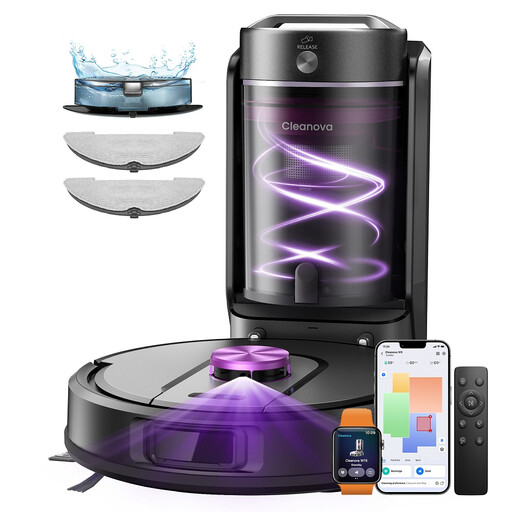
Why it's a good fit: This model focuses on the core functions: solid 10,000 Pa suction power, LiDAR navigation, and a self-emptying station. The key advantage for budget-conscious users is the bagless station, which eliminates the recurring cost of dust bags.
The bagless multi-cyclone station bypasses the pitfall of hidden recurring costs associated with stations that use disposable bags.
Offers solid automation with LiDAR navigation and automatic dust disposal, without the ongoing cost of consumables.
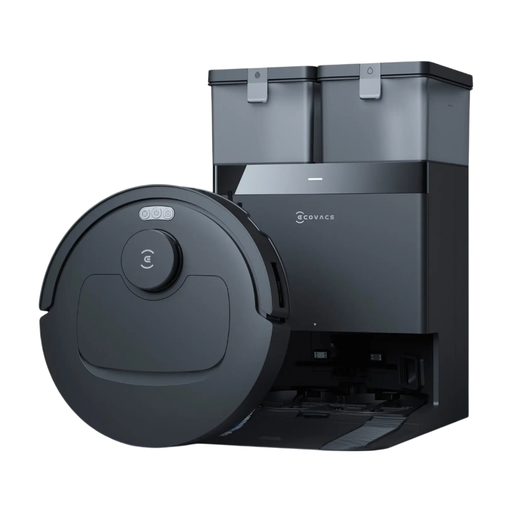
Why it's a good fit: For families and pet owners, hygiene and powerful cleaning performance are crucial. This model combines a very high suction power of 25,000 Pa with ZeroTangle 3.0 anti-tangle technology and a station that washes the mops with 75°C (167°F) hot water.
The hot-water mop cleaning is not a gimmick. It effectively dissolves grease and stubborn dirt from the mopping pads, ensuring a more hygienic cleaning result.
The combination of high suction power, effective anti-hair technology, and hygienic mop cleaning makes it a powerful solution for demanding conditions.
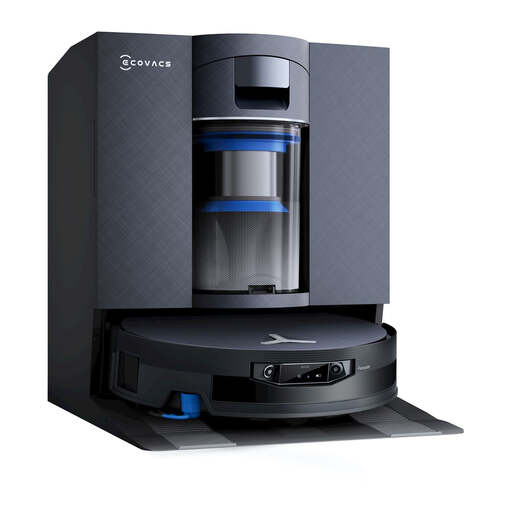
Why it's a good fit: This device is aimed at users who value maximum technological innovation. With AIVI 3D 4.0 navigation for advanced obstacle avoidance, ZeroTangle 4.0, and a fully automated station that even dispenses cleaning solution, it offers the highest level of convenience and intelligence.
The advanced AI-powered navigation (AIVI 3D 4.0) minimizes the risk of the robot getting stuck on cables or small objects—a common problem with less intelligent models.
Delivers comprehensive automation, from intelligent obstacle avoidance to self-dispensing cleaning solution, for a nearly maintenance-free experience.
If the models featured here don't perfectly match your needs, our complete overview includes other devices that have been vetted for their technical parameters and features.
The maintenance frequency depends on the model. For stations with dust bags, the bag needs to be replaced every 30 to 90 days, depending on household size and dirt levels. The fresh and dirty water tanks should be emptied or refilled after each mopping cycle or every few days. A regular cleaning of the station itself, especially the mop-washing basin, is recommended every few weeks to prevent buildup and odours.
Yes, this is one of the key advantages of LiDAR technology. Since it relies on laser beams for distance measurement and not on visible light like camera systems, robot vacuums with LiDAR navigation can navigate and clean precisely even in complete darkness.
Modern robot vacuums for pet hair are very well-suited for this purpose, provided they have the right features. High suction power is important, but even more crucial is a brush system that detangles and directly ingests hair instead of wrapping it. Models with rubber rollers (e.g., from Roborock or ECOVACS Deebot) often have an advantage here over traditional bristle brushes.