
Lieferung heute & morgen

Qualitätsgarantie

Willkommens-Angebote freischalten: KOSTENLOSE Lieferung | Bis zu 80 % RABATT | Kostenlose 30-Tage-JoyPlus-Testphase
App herunterladen
It's an appealing vision: a single device that not only vacuums and mops but also cleans itself, empties its own dustbin, and dries its mop. A robot vacuum with a mopping function and an auto-empty station promises exactly that—a high degree of household autonomy. But the market is flooded with marketing promises that don't always hold up to reality. Before you invest, it's crucial to understand the common pitfalls that can lead to disappointment.
1. The Pascal (Pa) Trap: Manufacturers often advertise extremely high suction power figures, measured in Pascals (Pa). However, a high number alone is no guarantee of clean floors. Real-world cleaning performance depends on the entire system: the design of the roller brush, the airflow engineering, and the efficiency of the navigation. A device with a moderate Pa rating but a well-designed brush system can pick up pet hair more effectively than a model with a high Pa rating and a poorly designed brush.
2. The "Token Mop" Function: Many budget-friendly models simply drag a damp cloth behind them. While this might remove light dust from hard floors, it's ineffective against dried-on stains or grime in grout lines. Effective mopping requires mechanical action, such as rotating or vibrating mops that apply downward pressure.
3. The Navigation Maze: A robot vacuum that moves chaotically through rooms, repeatedly bumps into furniture, or misses entire areas is more of a nuisance than a help. Simple gyroscope sensors are prone to error. For efficient, comprehensive coverage, precise mapping of your living space is essential.
To avoid a bad purchase, you should focus on objective technical parameters that have a direct impact on daily use.
A high-quality robot vacuum with intelligent navigation is the foundation of autonomous operation. Look for the following technologies:
A modern robot vacuum and mop with a cleaning station offers far more than just emptying the dustbin. The crucial functions of a fully automated station include:
A good self-cleaning robot vacuum must be able to adapt to different floor types.
Here are some recommendations tailored to specific user profiles and their requirements.
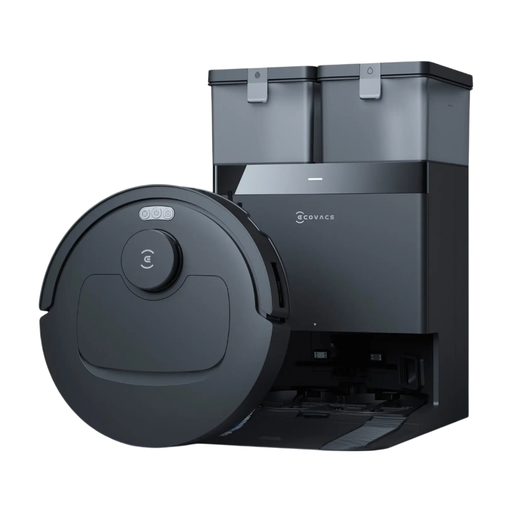
Why it's a match: For users seeking maximum autonomy and a thorough wet clean. Ideal for large living spaces with both hard floors and carpets, where hygienic cleaning is a top priority.
The OMNI station washes the mops with 75°C hot water and then dries them—the exact opposite of a token mopping function. Its TruEdge 2.0 edge cleaning and TrueMapping 2.0 navigation prevent the navigation maze.
The fully automatic station handles almost all maintenance tasks. The combination of high suction power (25,000 Pa, according to the manufacturer) and the OZMO Turbo 2.0 mopping system ensures high-performance cleaning.
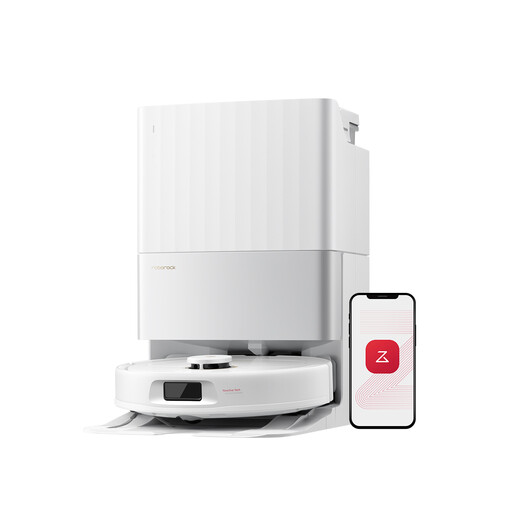
Why it's a match: For pet owners whose priority is hair removal and minimal brush maintenance. The intelligent navigation reliably steers clear of pet toys or bowls.
This model avoids the Pascal trap by combining high suction power (12,000 Pa, according to the manufacturer) with a dual anti-tangle system. This ensures effective pet hair pickup without tangles.
The extendable mopping arm (FlexiArm) cleans edges thoroughly. The station offers hot air mop drying and intelligent obstacle avoidance tailored specifically to the needs of pet owners.
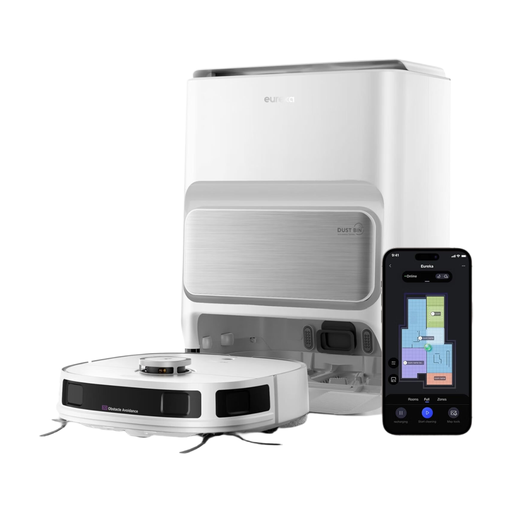
Why it's a match: For budget-conscious buyers looking to upgrade from a basic robot vacuum and experience the convenience of a fully automatic station without stretching the budget for a top-of-the-line model.
Despite its accessible price, this model offers an all-in-one station with mop washing and drying, as well as Dual-LiDAR navigation. This allows it to consistently avoid the typical pitfalls of simpler models (token mopping, chaotic navigation).
Offers a comprehensive automation package, including auto-emptying for up to 75 days (according to the manufacturer). Its ultrasonic carpet detection ensures reliable cleaning on mixed flooring.
We have compiled a complete, up-to-date list of products that fully meet these strict selection criteria and all relevant safety regulations.
The frequency depends on the capacity of the dust bag or bin in the station (typically 2-4 litres), the size of your home, the number of pets, and how often you clean. For most models, manufacturers state a range of 30 to 75 days before manual intervention is required.
Yes, modern devices with automatic carpet detection and liftable mopping pads are capable of this. When the robot moves onto a carpet, it lifts the mop assembly to keep the carpet dry while simultaneously increasing suction power for a deep clean. After leaving the carpet, it lowers the mop again and resumes wet cleaning on the hard floor.
Although the station automates many tasks, regular maintenance is still necessary to ensure optimal performance. This includes: