
Lieferung heute & morgen

Qualitätsgarantie

Willkommens-Angebote freischalten: KOSTENLOSE Lieferung | Bis zu 80 % RABATT | Kostenlose 30-Tage-JoyPlus-Testphase
App herunterladen
It's an appealing prospect: a single device that vacuums, mops, and then cleans itself autonomously. Modern robot vacuums and mops with fully automatic cleaning stations promise exactly that. However, the market is flooded with technical jargon and marketing claims that don't always deliver. An uninformed choice often leads to a device that requires more manual intervention than you'd hope.
As a Joybuy Product Recommendation Officer, I'm here to filter out the noise and provide the relevant information you need to make an informed decision and avoid common buying mistakes. This guide focuses on the crucial features that separate a low-maintenance robot from a high-maintenance one.
Many devices look powerful on paper but reveal their weaknesses only in daily use. Three problems are particularly common:
To avoid these problems, you should closely examine three core technical areas. These define the degree of automation and the actual cleaning quality.
Suction power, measured in Pascals (Pa), indicates the negative pressure the device can generate. While values around 2,500 Pa may be sufficient for hard floors, levels above 15,000 Pa are recommended for homes with carpets or pets to effectively pick up deep-seated dirt and function as a true robot vacuum for pet hair.
Even more important, however, is the brush system. Look for models with anti-tangle technology. This often involves special combs, blades, or a combination of rubber and bristle rollers that actively cut or guide hair to prevent it from wrapping around the brush. This significantly reduces manual maintenance.
A modern docking station is more than just a dustbin for the robot. A truly self-cleaning robot vacuum has a station that performs multiple tasks:
Precise navigation using LiDAR (Light Detection and Ranging) and AI-powered obstacle avoidance is now standard in high-end devices. It enables systematic cleaning and allows the robot to navigate around objects like shoes and cables.
For the critical task of edge cleaning, manufacturers have developed innovative solutions. Look for technologies like extendable mops or side brushes (Flex-Arm or Swing-Arm systems), which allow the robot to physically reach into corners and clean directly along baseboards.
Based on these criteria, we have compiled a selection of devices suitable for different needs and households in the UK and Europe.
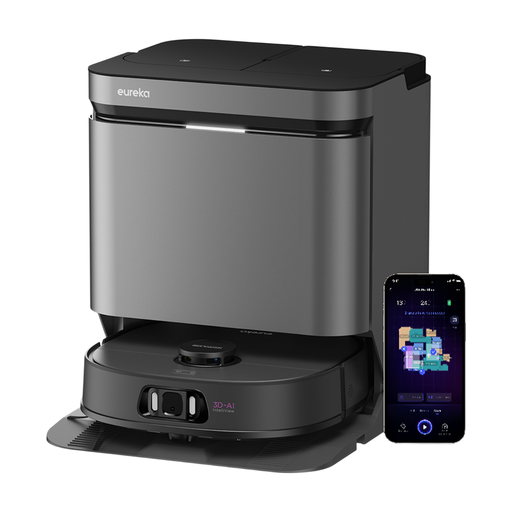
Why This Fits Their Persona: This model offers a balanced mix of price and advanced features. It's ideal for users who want a high degree of automation but don't want to pay a premium for every cutting-edge technology.
The 75°C hot water mop washing in the station combats the hygiene shortcomings of conventional systems. The ScrubExtend technology with its extendable mopping arm addresses the problem of edge cleaning.
Offers premium features like hot water cleaning and an anti-hair-tangle technology (FlexiRazor) in a competitively priced package. Its 16,200 Pa suction power is more than sufficient for most households.
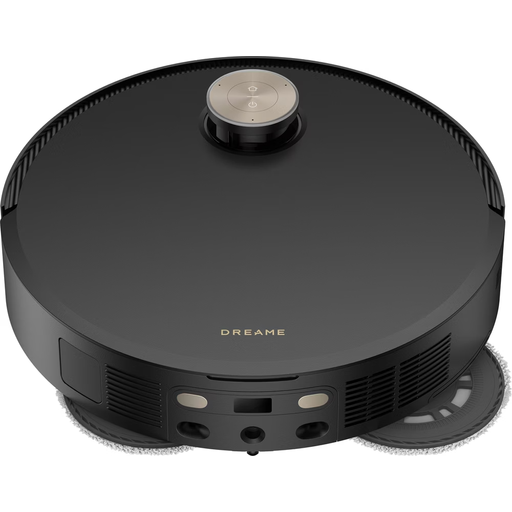
Why This Fits Their Persona: For users seeking the most advanced technology available. This device integrates multiple mechanical innovations for maximum cleaning coverage and autonomy, where price is a secondary consideration.
The Dual Flex Arm technology extends both the side brush and the mop to comprehensively solve the edge cleaning problem. The ProLeap system overcomes obstacles up to 6 cm high, preventing the robot from getting stuck on door sills.
Unique mechanical systems for obstacle traversal and edge cleaning. The retractable VersaLift navigation tower enables cleaning under very low furniture. The station provides 80°C hot water mop washing and UV light for disinfection.
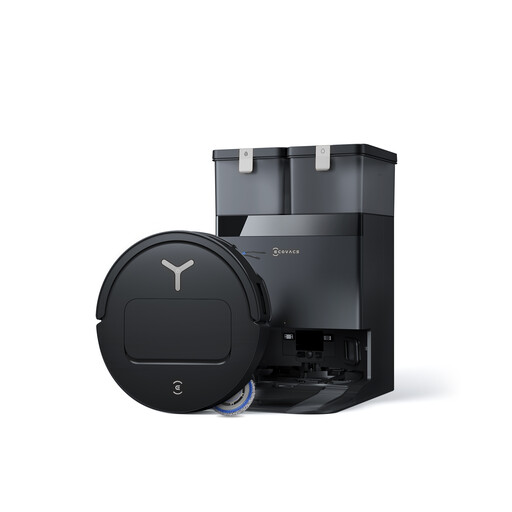
Why This Fits Their Persona: This device is designed for maximum dirt and hair pickup. The combination of very high suction power and a specialised anti-tangle system is crucial for households with pets and high hygiene standards.
The ZeroTangle 3.0 technology actively counteracts the problem of tangled brushes. Its manufacturer-stated suction power of 25,000 Pa tackles poor performance on carpets and with pet hair pickup.
Very high suction power for a thorough deep clean. The OMNI station washes the mops with hot water and dries them, which promotes hygiene. The TruEdge 2.0 technology improves cleaning performance along edges.
Some of the most advanced models use hot water not just for mop cleaning, but also for direct stain removal on the floor. We've compiled a list of products that meet these strict selection criteria.
1. How often does the dust bag in the self-empty station need to be replaced? The frequency depends heavily on usage intensity, the size of your home, and the presence of pets. On average, the bag needs to be replaced every 60 to 90 days. Most devices will notify you via the companion app when a replacement is needed.
2. Can a robot vacuum with hot water cleaning damage my wooden floors? Generally, no. The hot water is used exclusively inside the station to clean the mopping pads. The robot itself only dispenses room-temperature water from its internal tank onto the floor during the mopping process. Nevertheless, you should always follow the manufacturer's instructions and ensure your wooden floors are sealed.
3. What is the difference between rotating mops and a vibrating/static mopping plate? Rotating mops (usually two round pads) apply an active scrubbing motion to the floor, making them more effective at removing dried-on stains. A vibrating or static mopping plate is well-suited for lighter, daily damp cleaning. The choice depends on your floor type and the typical level of dirt in your household. As a rule, rotating mops offer superior cleaning performance on hard floors.