
Lieferung heute & morgen

Qualitätsgarantie

Willkommens-Angebote freischalten: KOSTENLOSE Lieferung | Bis zu 80 % RABATT | Kostenlose 30-Tage-JoyPlus-Testphase
App herunterladen
A robot vacuum with mopping and a fully automatic cleaning station promises the ultimate in convenience: floors that practically clean themselves while you focus on more important things. But the market for premium models is filled with marketing promises that don't always hold up in practice. Before you make a significant investment, it's crucial to cut through the noise.
As your Joybuy Product Recommendation Officer, I'll help you identify the critical features and avoid common pitfalls. This guide focuses on the three most frequent problems that arise when choosing a high-end device and shows you what to look out for.
To avoid these traps, you should carefully examine three core technical parameters. These are the primary determinants of cleaning performance and the true level of day-to-day automation.
Suction power, measured in Pascals (Pa), is an indicator of the robot's ability to pick up dirt.
This is where the top-performing models separate themselves from the average. Look for devices with active systems for edge cleaning.
A robot vacuum with an auto-empty station is standard today, but the differences lie in the details of the mopping function.
Based on the criteria above, we have identified a few models that are particularly well-suited for different households and needs.
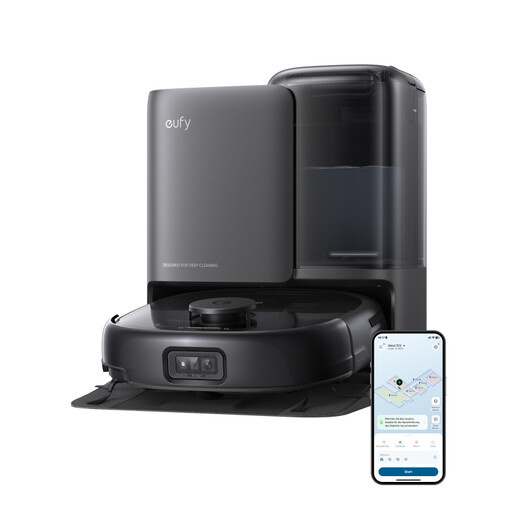
Why it's a good fit: This device combines very high suction power with special brushes that reduce hair tangling. The HydroJet system cleans the mop pads in real-time, making it well-equipped to handle spills or food messes common in family households.
The DuroSpiral Anti-Tangle Brushes address the "maintenance-free" trap by significantly reducing the need to manually remove hair from the brush roll.
According to the manufacturer, the device offers a turbo suction power of 20,000 Pa and a CornerRover arm for improved corner cleaning.
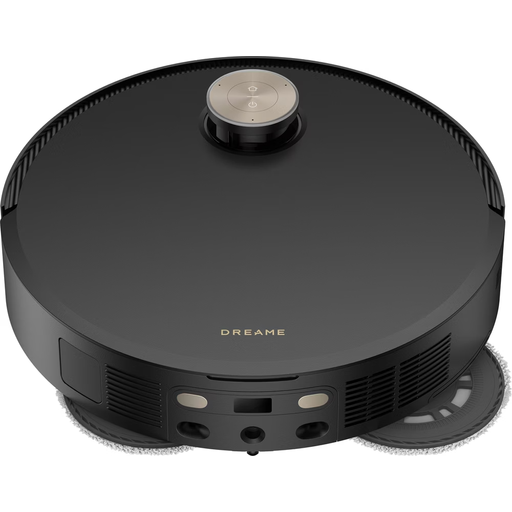
Why it's a good fit: This model was specifically designed for gapless cleaning. It features an extendable robotic arm for edges and a station that cleans the mops with hot water, promising high cleaning performance even on stubborn dirt.
The Dual Flex Arm technology solves the "blind spot" problem by actively extending both the side brush and the mop to reach corners and edges that round robots often miss.
According to the manufacturer, the station cleans the mops with 80°C hot water and then dries them, which improves hygiene. The suction power is rated at up to 20,000 Pa.
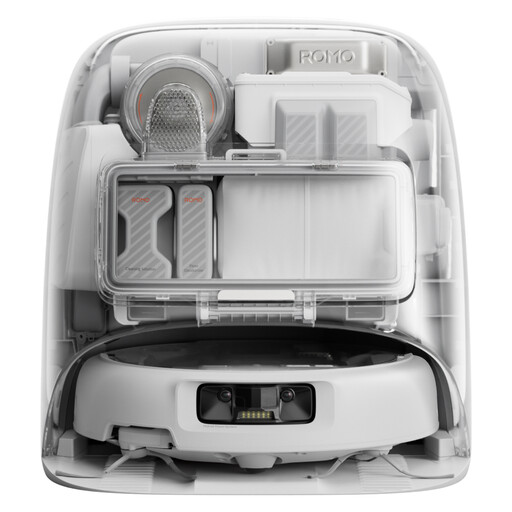
Why it's a good fit: This device combines extremely high suction power with advanced sensor technology derived from the manufacturer's drone development. The transparent housing and dual robotic arms make it a statement piece for tech-savvy users.
The "Drone-Level" obstacle avoidance addresses the "overhyped AI" trap by enabling precise navigation even around small, hard-to-detect objects.
According to the manufacturer, the model has a suction power of 25,000 Pa and dual, extendable robotic arms for 100% edge coverage.
The featured models use advanced mechanical systems for superior cleaning performance. We have compiled a complete, up-to-date list of products with similar robotic arm technology that meet strict selection criteria.
The maintenance frequency depends heavily on usage and the amount of dirt. As a rule of thumb, the dirty water tank should be emptied and the fresh water tank refilled every 2–4 days. The dust bag in the station needs to be replaced approximately every 30 to 75 days, depending on its size and the presence of pets. Regular cleaning of the station's sensors and self-cleaning mechanisms is also recommended to maintain performance.
That depends on the technology used. Systems based on LiDAR (Light Detection and Ranging) or structured light also work reliably in complete darkness. Purely camera-based systems (vSLAM), on the other hand, require ambient light to orient themselves. However, some of these models have integrated LEDs that automatically turn on in low-light conditions to ensure navigational capability.