
Lieferung heute & morgen

Qualitätsgarantie

Willkommens-Angebote freischalten: KOSTENLOSE Lieferung | Bis zu 80 % RABATT | Kostenlose 30-Tage-JoyPlus-Testphase
App herunterladen
A robot vacuum that not only vacuums but also mops and then empties itself sounds like the ideal solution for a spotless home, effortlessly. However, the market is flooded with models whose marketing promises often shine brighter than the floors they clean. Before you make a purchase, it's crucial to understand the common pitfalls that can quickly turn a supposed convenience into a source of frustration.
As your Joybuy Product Recommendation Officer, I'll help you objectively evaluate technical specifications and find a device that truly fits your needs.
Many devices look impressive on paper but reveal their weaknesses only in daily use. Pay close attention to these three points to avoid buyer's remorse:
To avoid these problems, you should carefully examine three core technical parameters. These determine whether a robot vacuum can perform its tasks efficiently and autonomously.
Suction power, measured in Pascals (Pa), is a key indicator of the robot's ability to pick up dirt, dust, and especially pet hair. While 2,500–4,000 Pa is often sufficient for hard floors, a robot vacuum with powerful suction of 5,000 Pa or more is recommended for homes with carpets or pets. Also, pay attention to the brush system: all-rubber brushes are often more resistant to hair tangles than those with traditional bristles, making them ideal for robot vacuums for pet hair.
The most precise and reliable method for room mapping is found in robot vacuums with Lidar navigation. A Laser Distance Sensor (Lidar) rotates and scans the environment to create an exact map of your home. This enables systematic, gap-free cleaning, the ability to set no-go zones (e.g., around a pet's food bowl), and efficient route planning that works flawlessly even in the dark. Simpler models with gyroscope or camera-only navigation are often less precise and struggle in more complex living spaces.
The station is the heart of the automation. A simple auto-empty function is already a great help. For even more convenience, look for a mopping robot with self-cleaning. Such stations not only wash the mop pads but often dry them with hot air to prevent odours and bacteria growth. For homes with mixed flooring, a robot vacuum with mop lifting is a crucial feature. The device detects carpets and automatically raises the mopping module to prevent the carpet from getting wet.
Instead of making a one-size-fits-all recommendation, we have identified models tailored to specific user profiles and their needs.
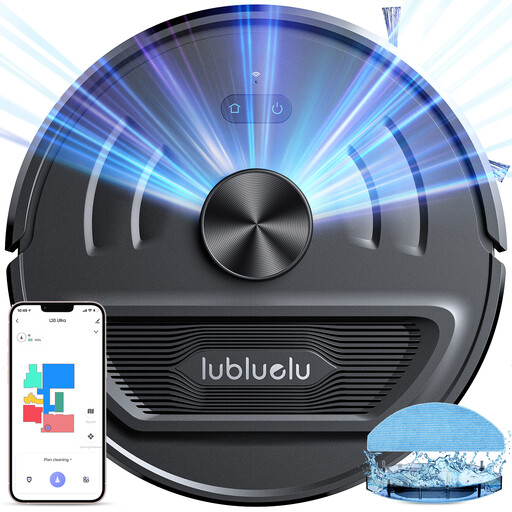
Why This Fits Their Persona: This model offers a well-rounded package for users seeking reliable automation without the premium price tag. It combines the most important core functions for daily use in homes with predominantly hard floors.
Thanks to Lidar navigation, it avoids unreliable and incomplete cleaning. The robot creates precise maps and cleans systematically instead of moving around chaotically.
The 3-in-1 functionality (vacuum, mop, auto-empty) and the ability to save up to 5 maps make it flexible for multi-story homes. The 4000 Pa suction power is solid for hard floors and low-pile carpets.
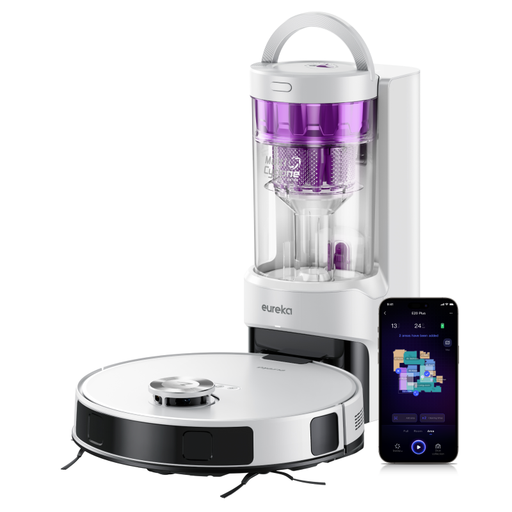
Why This Fits Their Persona: Ideal for demanding households with pets and a mix of hard floors and carpets. The combination of high suction power and intelligent carpet detection features solves specific problems for this user group.
The automatic 10 mm mop-lifting prevents wet and dirty carpets—a common annoyance with hybrid devices. The anti-tangle brush system significantly reduces maintenance caused by pet hair.
The 8,000 Pa suction power ensures a deep clean for carpets. The bagless auto-empty station is more environmentally friendly and saves on the recurring cost of dust bags.
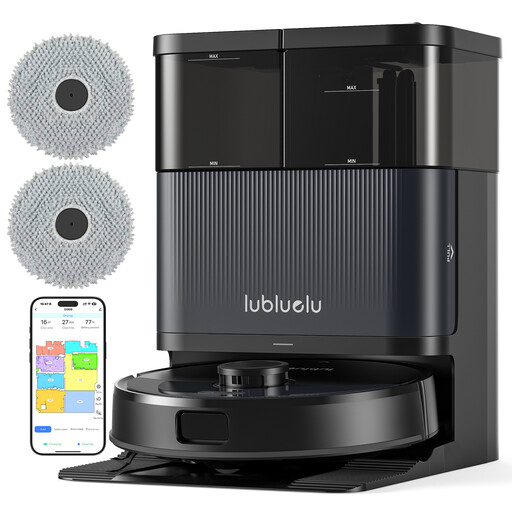
Why This Fits Their Persona: For users who demand maximum cleaning performance and the highest level of convenience. This model is designed to eliminate deep-seated dirt in carpets and fully automate floor care.
The all-in-one station not only empties the dustbin but also handles complete mop maintenance. The precise Lidar navigation ensures that the enormous suction power is used in a targeted and efficient manner.
The suction power of 10,000 Pa is among the highest available and is particularly effective for cleaning high-pile carpets and removing stubborn dirt.
We have compiled a complete, real-time list of products that fully satisfy these strict selection criteria and UK safety regulations.
This largely depends on the size of your home, the amount of dirt, and whether you have pets. For most models with 2-3 litre bins or bags in the station, you can expect a maintenance-free interval of 30 to 60 days. With bagless systems, you also save on the recurring cost of replacement bags.
Automatic mop lifting is a key feature for homes with both carpets and hard floors. When the robot detects a carpet, it raises the wet mopping module. This prevents the carpet from getting wet, which could lead to stains, odours, or damage. It allows for seamless cleaning of the entire home in a single run.
Yes, this is one of the major advantages of Lidar technology. Since it uses its own laser light to scan the environment, it is completely independent of the room's lighting conditions. Therefore, a robot with Lidar navigation can easily clean at night or in darkened rooms without losing any precision.