
Lieferung heute & morgen

Qualitätsgarantie

Willkommens-Angebote freischalten: KOSTENLOSE Lieferung | Bis zu 80 % RABATT | Kostenlose 30-Tage-JoyPlus-Testphase
App herunterladen
By Joybuy Product Recommendation Officer, August 30, 2026
The search for a robot vacuum and mop with an auto-empty station can quickly become overwhelming. The market is flooded with technical specs and marketing promises that often create more confusion than clarity. Many buyers invest in a premium device, only to find after a few months that it fails to meet their expectations. Before you make a decision, it's crucial to understand the most common pitfalls that can lead to a costly mistake.
This guide is designed to help you cut through the noise. We focus on the critical features that define a truly autonomous and effective cleaning assistant, and we highlight which advertising claims should be treated with caution.
Manufacturers often promote impressive numbers and features. But not everything that glitters is practical in daily use. Pay special attention to these three points:
To avoid the pitfalls mentioned above, you should focus your attention on three core technical areas. These are the primary determinants of cleaning performance and user convenience in everyday life.
The robot's ability to move intelligently and efficiently through your home is fundamental.
The auto-empty station is the core of its convenience. Its functionality determines how much manual work is actually taken off your hands.
The mechanics of the cleaning unit are crucial for the final result, especially for demanding tasks like picking up pet hair or cleaning along baseboards.
Based on the criteria above, we have identified a few models that are particularly well-suited for specific user profiles.

Why This Fits Their Persona: Pet owners need a solution that consistently picks up hair without manual intervention. The ZeroTangle 3.0 technology is specifically designed to minimise the tangling of long hair in the main and side brushes, drastically reducing maintenance frequency.
This model avoids the "Pascal Trap" by combining very high suction power (25,000 Pa according to the manufacturer) with a sophisticated anti-hair brush system. This ensures that the power is effectively used to pick up pet hair.
ZeroTangle 3.0 Anti-Tangle System: Reduces manual cleaning of the brushes.
OMNI Station: Offers 75°C hot-water mop washing for hygienic cleanliness.
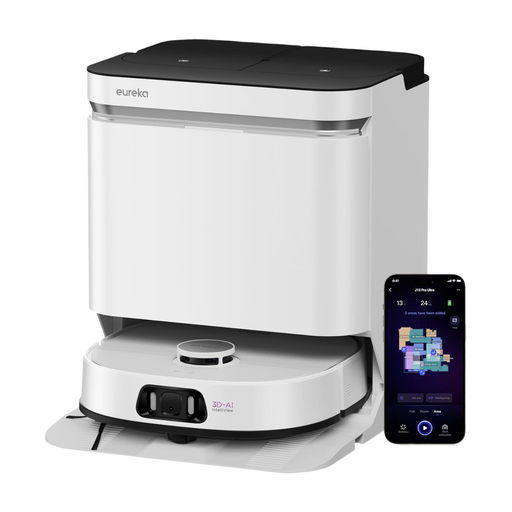
Why This Fits Their Persona: Busy professionals and families seek a "set-it-and-forget-it" solution. This model's 8-in-1 station, which washes the mop with 75°C hot water, dries it, empties dust, and refills water, embodies the highest level of automation.
This device exposes the "pseudo self-cleaning" trap. It offers a fully comprehensive maintenance station that not only empties the dustbin but also hygienically cleans the mop pads with hot water and dries them with hot air to prevent germ growth.
75°C Hot-Water Mop Washing: Dissolves stubborn stains and ensures hygienic cleaning.
FlexiRazor Anti-Hair Technology: Active cutting system to combat tangled hair.
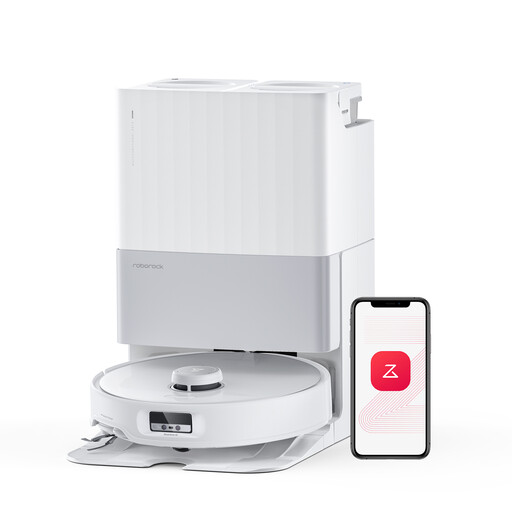
Why This Fits Their Persona: For users who are frustrated by dirty edges and have a mix of hard floors and carpets. The FlexiArm Design is specifically engineered for edge cleaning, while the liftable mopping system enables a seamless transition onto carpets.
This model solves the "edge-cleaning dilemma" with its extendable mop arm, which brings cleaning right up to the baseboards. At the same time, it avoids the problem of wet carpets by adaptively lifting the mopping module.
FlexiArm Design: Ensures precise cleaning of corners and edges.
Adaptive Mop Lifting: Keeps carpets dry during mopping and increases suction power on them.
We've compiled a complete, up-to-date list of products that fully meet these strict selection criteria and safety standards.
The frequency depends on the size of the dust bag in the station and the amount of dirt in your household. With a typical 3-litre dust bag and average use in a home without pets, this might be every 60 to 90 days. In homes with pets or on larger floor plans, emptying may be required every 30 to 45 days. The clean and dirty water tanks for the mopping function, however, need to be refilled or emptied much more frequently, usually every few days.
Yes, modern devices are designed for use as robot vacuums for carpets and hard floors. They feature ultrasonic carpet detection. As soon as the robot moves onto a carpet, it automatically lifts its mop pads to avoid getting the carpet wet (Auto-Lifting Mopping). Simultaneously, the suction power is increased to remove deep-seated dirt and dust from the carpet fibres.
The suction power, specified in Pascals (Pa), is a measure of the negative pressure the motor can generate. High suction power is particularly beneficial for removing fine dust from the crevices of hard floors and deep-seated dirt from carpets. However, it is not the sole factor for good cleaning performance. Equally important are the design of the main brush (e.g., a floating rubber brush that adapts to the floor), the efficiency of the navigation system, and the overall airflow within the device. A balanced interplay of these components leads to a superior cleaning result.