
Lieferung heute & morgen

Qualitätsgarantie

Willkommens-Angebote freischalten: KOSTENLOSE Lieferung | Bis zu 80 % RABATT | Kostenlose 30-Tage-JoyPlus-Testphase
App herunterladen
A home that virtually cleans itself—that's the promise of modern robot vacuums with mopping functions and self-emptying stations. But the market is flooded with devices boasting impressive technical specs and marketing claims. If you don't look closely, you can easily invest in a device that creates more work than it saves. As your Joybuy Product Recommendation Officer, I'll help you identify the crucial features and avoid common purchasing traps.
Many devices advertise features that disappoint in practice. Pay close attention to these three points to make an informed decision:
To avoid these traps, you should focus on three core technical parameters that distinguish a gimmick from a genuine home assistant.
The navigation technology determines how efficiently and reliably the robot does its job. A robot vacuum with Lidar (Light Detection and Ranging) is the current gold standard.
A thorough clean depends on more than just suction power.
A fully-equipped mopping robot with a self-empty station offers the highest degree of autonomy. Look for the following features:
Based on these criteria, we have identified several models that represent a considered choice for different needs and budgets.
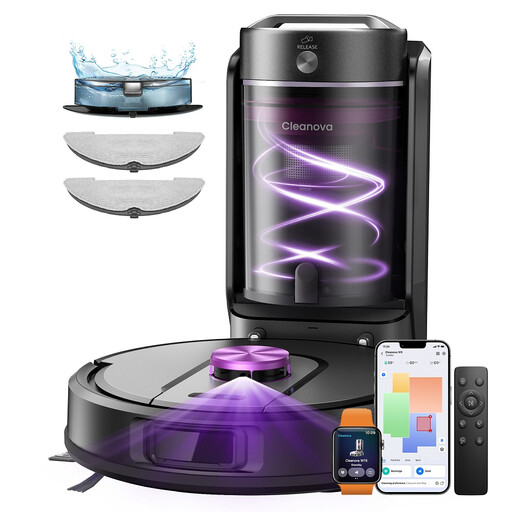
Why This Fits Their Persona: This model offers essential core features like precise LiDAR navigation and a self-emptying station at a very accessible price point. It's a great choice for anyone who wants to try the convenience of automation without a large investment.
It bypasses the cost trap of expensive dust bags with its bagless multi-cyclone station. It also relies on precise LiDAR navigation instead of the unreliable random navigation often found in this price range.
Bagless 4-liter self-emptying station for up to 90 days of autonomous operation. The 10,000 Pa suction power, combined with systematic navigation, is effective on hard floors and carpets.
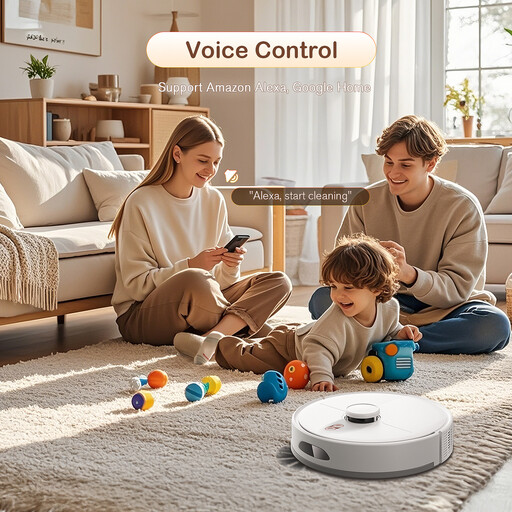
Why This Fits Their Persona: This model is specifically designed for the challenges of pet-owning households. The anti-tangle brush and special pet grooming kit for hair removal make it a practical solution for the daily flood of pet hair.
It directly addresses the problem of tangled brushes with an anti-tangle roller that actively cuts hair. The station's AllergenLock bag securely traps allergens instead of releasing them back into the air during emptying.
Includes a pet grooming accessory for direct hair removal. The self-emptying station holds dirt for up to 10 weeks and uses an E12 filtration system that, according to the manufacturer, traps 99.7% of pet dander.
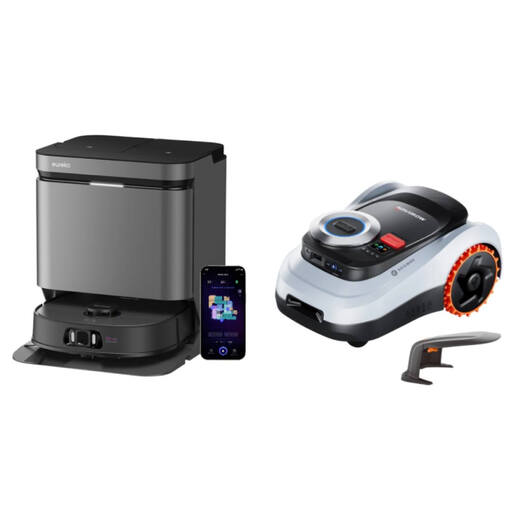
Why This Fits Their Persona: For users seeking a comprehensive and largely maintenance-free, all-in-one solution. The combination of high suction power, intelligent edge cleaning, and a fully automatic cleaning station with a hot water feature offers the highest level of convenience and cleaning quality.
This model doesn't just deliver a high suction power rating (16,200 Pa), but combines it with ScrubExtend technology for precise edge cleaning. The station provides true convenience by hygienically washing and drying the mops with 75°C (167°F) hot water.
Extendable mop pads for seamless edge and corner cleaning. The fully automatic base station washes the mops with 75°C (167°F) hot water, dries them, and empties the dustbin.
We've compiled a full, up-to-date list of products that fully meet these strict selection criteria and all UK/EU safety regulations.
The frequency depends on the model and usage. The dust bag or bin in the station needs to be emptied or replaced every 30 to 90 days, depending on its size and the amount of dirt collected. Fresh and dirty water tanks for the mopping function require more frequent attention, often after every one or two cleaning runs. It is recommended to wipe down the station itself and its sensors with a dry cloth monthly to ensure smooth operation.
Yes, this is one of the major advantages of LiDAR technology. Unlike camera-based systems (VSLAM), which rely on sufficient ambient light, LiDAR uses its own non-hazardous laser to scan the environment. This makes it independent of lighting conditions and allows for reliable navigation at any time of day or night.
Most modern robot vacuums can complete a cleaning cycle that has already started or been scheduled even without an active Wi-Fi connection. They use the locally stored map for navigation. However, functions that require app interaction—such as starting a new clean remotely, adjusting no-go zones in real-time, or tracking progress—will only be available once the connection is restored. Some models also come with a remote control that allows for basic operation without Wi-Fi.