
Lieferung heute & morgen

Qualitätsgarantie

Willkommens-Angebote freischalten: KOSTENLOSE Lieferung | Bis zu 80 % RABATT | Kostenlose 30-Tage-JoyPlus-Testphase
App herunterladen
A robot vacuum and mop that empties, cleans, and dries itself sounds like the ultimate household convenience. The market is flooded with models promising complete autonomy. In practice, however, many devices turn out to be high-maintenance and deliver subpar results. Before you invest, it's crucial to understand the common pitfalls that often only become apparent after the purchase.
This guide reveals the three most common traps and explains which technical features you need to look for to find a device that truly delivers on its promises.
Many devices look impressive on paper but fail at basic, everyday challenges. These three issues most frequently lead to disappointment:
To avoid these problems, don't be swayed by marketing buzzwords; instead, focus on verifiable technical specifications. Three parameters are of central importance here.
A modern station can do much more than just empty the robot's dustbin. Look for the following features that make a crucial difference:
Cleaning effectiveness depends directly on the mechanics. Here are two important features:
High suction power, measured in Pascals (Pa), is especially important for carpets to remove deep-seated dirt. Values around 10,000 Pa or higher are a good indicator here. However, navigation technology is at least as important. Laser-based navigation (e.g., LiDAR) enables precise room mapping, systematic cleaning, and reliable obstacle detection.
Based on the criteria above, we have curated a selection of devices suitable for different user profiles and their specific requirements.

Why This Fits Their Persona: Ideal for tech-savvy users and busy households seeking a nearly hands-free cleaning solution. This model handles vacuuming, mopping, self-cleaning, and maintenance.
The OMNI station with 75°C hot water mop washing and hot-air drying prevents unhygienic mopping. The ZeroTangle 3.0 technology counteracts hair tangles, and TruEdge 2.0 ensures clean edge-to-edge cleaning.
The fully automatic all-in-one OMNI station, which manages the entire cleaning and maintenance process. High suction power of 25,000 Pa, according to the manufacturer.
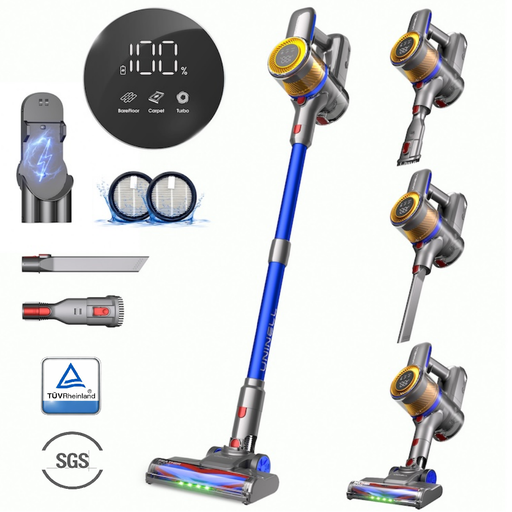
Why This Fits Their Persona: A complementary tool for pet owners who need a powerful, flexible solution for quick clean-ups on upholstery, car seats, or stairs where a robot can't reach.
This device focuses on one task: powerfully removing hair and dirt. The Anti-Tangle V-Roller brush is specifically designed to prevent hair tangles—a direct solution to the most common maintenance issue.
High power (450W motor) in a lightweight, cordless format. The green dust-detection LEDs make invisible dirt visible on hard floors.
We have compiled a complete, up-to-date list of products that fully meet these strict selection criteria and all relevant safety standards.
The frequency depends heavily on the size of your home, the number of pets, and the general amount of dirt. With average use in a pet-free household, a 3-litre dust bag can last for 6 to 8 weeks. In homes with pets, a replacement may be needed every 3 to 4 weeks. Most devices will notify you via an app when the bag is full.
Yes, most modern robot vacuums and mops are suitable for sealed hardwood floors. It is important that the device offers adjustable water flow to ensure the floor does not get too wet. Models with a feature that automatically lifts the mop on carpets are also beneficial to avoid accidentally dampening rugs. Always check the recommendations of your flooring manufacturer.
Pascals (Pa) is the unit of measurement for the negative pressure a vacuum cleaner can generate. A higher Pa value theoretically means stronger suction power. While values over 2,500 Pa are sufficient for hard floors, values of 5,000 Pa or more are recommended for deep-cleaning carpets. However, note that the actual cleaning performance also depends on the brush design, navigation, and the device's seals.