
Lieferung heute & morgen

Qualitätsgarantie

Willkommens-Angebote freischalten: KOSTENLOSE Lieferung | Bis zu 80 % RABATT | Kostenlose 30-Tage-JoyPlus-Testphase
App herunterladen
The idea of a home that practically cleans itself is appealing. A robot vacuum and mop with an auto-empty station promises just that: an autonomous helper that vacuums, mops, and then empties and cleans itself. However, the market is flooded with devices whose performance claims often fall short in practice. Before you invest, it's crucial to understand the common pitfalls that can lead to disappointment.
This guide will help you objectively evaluate technical features and find a model that truly meets your needs.
Many devices advertise impressive features, but the devil is in the details. Watch out for these three common weaknesses:
To avoid these pitfalls, you should closely examine three core technical parameters. These determine the actual cleaning performance and the degree of autonomy.
Suction power, measured in Pascals (Pa), is a metric for the negative pressure the motor generates. A robot vacuum with high suction power is especially important for homes with carpets and for picking up pet hair.
The brush system is equally important. Rubberised or bristle-free main brushes are less prone to getting tangled with long hair. Look for models with "anti-tangle" technology to minimise maintenance.
The type of navigation determines how efficiently and systematically the robot cleans your rooms.
The station is the heart of a fully automated system. Check which of these functions are integrated:
Based on the criteria above, we have compiled a selection of devices suitable for different needs and households.
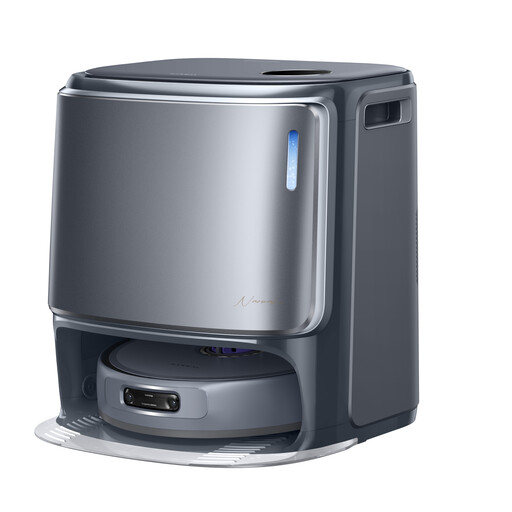
Why This Fits Their Persona: This model is aimed at users who demand the highest level of automation and cleaning performance. It combines very high suction power with advanced AI navigation and a fully-featured station that reduces maintenance to an absolute minimum.
The dual RGB cameras with an AI chip avoid the "chaotic navigator" pitfall by reliably recognising over 200 objects. The station with hot water mop washing and drying provides a true deep clean and bypasses the "superficial mopping" problem.
18,000 Pa suction power for deep cleaning; station with hot water mop washing; advanced robot vacuum edge cleaning via an extendable mop.
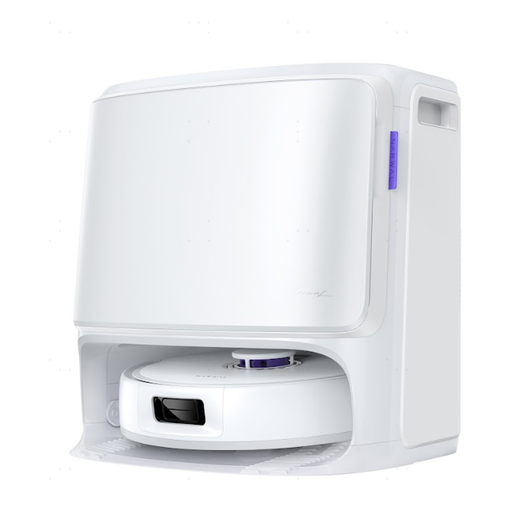
Why This Fits Their Persona: For pet owners, high suction power and a low-maintenance brush system are crucial. This model is specifically designed to pick up pet hair and long human hair without the brushes constantly getting tangled.
The dual anti-tangle brush system actively counteracts the problem of clogged brushes, a common annoyance for conventional robots in homes with pets. This significantly reduces manual maintenance.
11,000 Pa suction power; special dual anti-tangle brush system; triangular mop for precise corner cleaning.
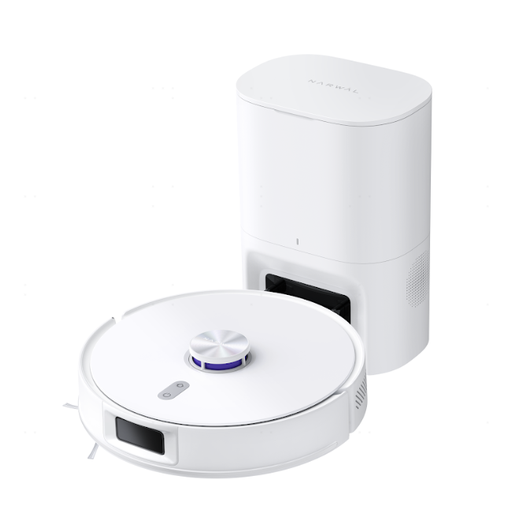
Why This Fits Their Persona: This device offers the core features of a robot vacuum and mop with an auto-empty station at a more accessible price point. It's a solid choice for users looking to enter the world of automated cleaning without needing premium features like hot water washing.
It provides true automatic dust extraction with a large 3.5-litre bag, eliminating the need to empty the small robot bin daily. The mopping function with 8N of downward pressure is more effective than a passively dragged cloth, thus avoiding the "superficial mopping" issue.
Solid 8,000 Pa suction power; automatic dust-emptying station with up to 180 days of capacity; precise LDS Laser Navigation.
We have compiled a complete, up-to-date list of products that fully meet these strict selection criteria and comply with UK safety regulations.
1. How often does the auto-empty station of a robot vacuum need to be emptied? The frequency depends on the volume of the dust bag in the station and the level of dirt in your home. For most modern devices with bag volumes between 2.5 and 3.5 litres, the bag only needs to be changed every 60 to 180 days. In households with pets or multiple people, this interval may be shorter.
2. Do robot vacuums with a mopping function also work on carpets? Yes, modern devices are designed for this. They feature carpet detection using ultrasonic sensors. When the robot moves onto a carpet, it automatically lifts its mop pads (usually by 10-12 mm) to avoid getting the carpet wet. At the same time, the suction power is often increased to deep-clean the carpet.
3. Is laser navigation (LDS/LiDAR) really necessary? For efficient and complete cleaning, laser navigation is highly recommended. Unlike simpler gyroscopic systems, LDS robots create a precise map of your home. This not only allows for systematic cleaning but also enables app features like setting up no-go zones, cleaning specific rooms, or tracking cleaning progress in real-time. This makes the automated vacuum significantly more reliable and user-friendly.