
Lieferung heute & morgen

Qualitätsgarantie

Willkommens-Angebote freischalten: KOSTENLOSE Lieferung | Bis zu 80 % RABATT | Kostenlose 30-Tage-JoyPlus-Testphase
App herunterladen
A robot vacuum with mopping and a self-emptying station promises the ultimate household convenience: fully automated vacuuming, mopping, and a dock that handles emptying and maintenance. But the market is flooded with marketing claims that often fail to deliver in practice. Many buyers quickly discover their expensive device misses corners, gets stuck on simple obstacles, or that the cleaning station itself becomes a high-maintenance chore.
This guide, created by your Joybuy Product Recommendation Officer, helps you cut through the noise. We'll highlight the three most common pitfalls and show you which technical features truly matter, ensuring your investment pays off in the long run.
The 3 Most Common Pitfalls When Buying:
To avoid a bad purchase, you should focus on verifiable technical specifications that have a direct impact on daily use.
Navigation is the robot's brain. While LiDAR (Light Detection and Ranging) sensors enable fast and precise room mapping, they have limitations when it comes to detecting flat or unpredictable objects. For households with children or pets, additional AI-powered camera recognition is crucial. These systems can actively identify and navigate around objects like cables, shoes, or pet waste instead of dragging them around.
A modern docking station is a complex system. Look for the following features that make the difference between convenience and frustration:
Most homes have mixed flooring. A crucial feature for robot vacuums for carpets and hard floors is the ability to automatically lift the mops when a carpet is detected. A lift height of at least 7 mm is necessary to prevent low-pile carpets from getting wet. Models without this feature require manual intervention or setting up no-mop zones, which severely limits the degree of automation.
Instead of making a one-size-fits-all recommendation, we have selected models tailored to specific user profiles and their needs.
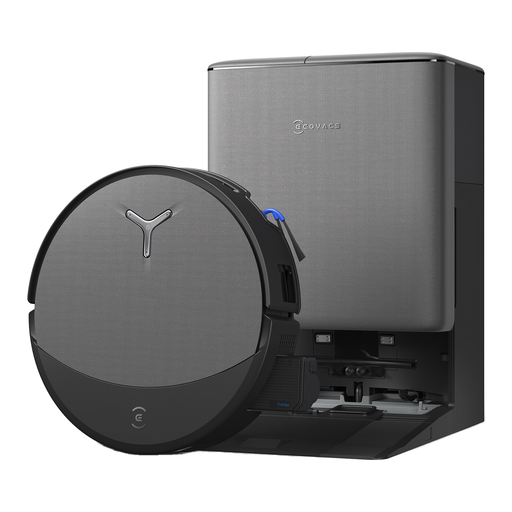
Why This Fits Their Persona: Ideal for users who want maximum automation and minimal manual intervention. The combination of high suction power, advanced obstacle avoidance, and a fully-featured station covers all aspects of floor cleaning in demanding households.
The AIVI 3D 4.0 navigation combines LiDAR with an AI camera for precise detection of small objects. The TruEdge 3.0 technology ensures thorough edge cleaning, while the OMNI station hygienically cleans and dries the mop.
Very high suction power of 30,000 Pa according to manufacturer specifications. The TruePass Adaptive 4WD system overcomes thresholds up to 24 mm. The ZeroTangle 4.0 system minimises hair tangling.
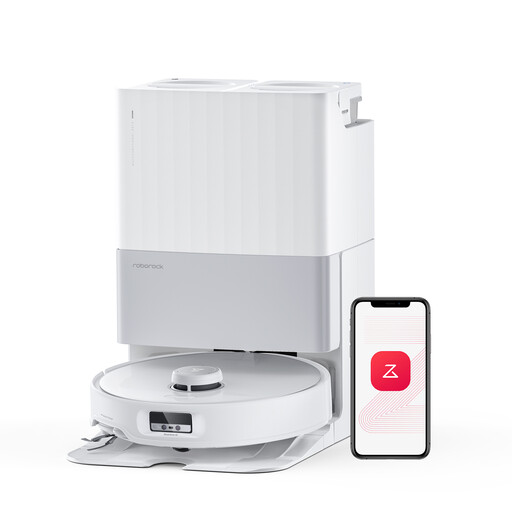
Why This Fits Their Persona: For pet owners and families, hygiene and effective hair removal are top priorities. This model addresses these points precisely with its hot water mop washing and a special design for edge cleaning, where pet hair often accumulates.
The FlexiArm Design actively extends the mop to overcome the typical weakness of round robots in edge cleaning. The station washes the mops with 75°C hot water, meeting the hygiene demands of pet-friendly homes.
The dual anti-tangle system is designed for picking up pet hair. The suction power of 18,500 Pa is sufficient for most use cases, including carpets. Voice command control ("Hello Rocky") adds to the convenience.
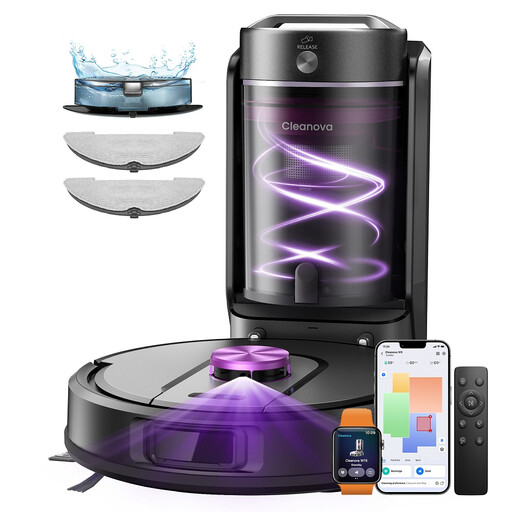
Why This Fits Their Persona: For users seeking the convenience of a self-emptying station and a combined mopping function, but who don't want to pay the premium for features like hot water washing. A solid all-rounder for getting started with automated cleaning.
The bagless self-emptying station with multi-cyclone technology avoids recurring costs for consumables. Navigation is based on proven 360° Laser (LiDAR), ensuring reliable and systematic cleaning.
Excellent value for a set that includes a self-emptying station. The suction power of 10,000 Pa is sufficient for hard floors and most carpets. Supports saving up to 5 maps, ideal for multi-story homes.
We have compiled a complete, real-time updated list of products that fully meet these strict selection criteria and all relevant safety standards.
Maintenance intervals depend heavily on the model and usage. For stations with dust bags, the bag needs to be changed every 30 to 90 days, depending on household size and dirt levels. Bagless stations require manual emptying of the collection bin. The fresh and dirty water tanks for the mopping function typically need to be refilled or emptied after a few cleaning cycles. Many modern stations also feature a self-cleaning function, which further reduces maintenance.
Yes, modern combination devices are specifically designed for mixed flooring. The key feature is automatic carpet detection. When the robot detects a carpet, it lifts its mopping pads and simultaneously increases suction power to pull deep-seated dirt from the fibres. This prevents the carpet from getting wet while ensuring a thorough vacuum.
Three factors are crucial here: high, consistent suction power; a brush design that minimises hair tangling (often marketed as 'anti-tangle'); and an efficient filtration system that removes allergens from the air. Some models also offer special rubber brushes instead of bristles, as hair is less likely to get caught in them. A station with automatic emptying is also a major advantage, as the robot's small dustbin would fill up quickly with heavy pet hair.