
Lieferung heute & morgen

Qualitätsgarantie

Willkommens-Angebote freischalten: KOSTENLOSE Lieferung | Bis zu 80 % RABATT | Kostenlose 30-Tage-JoyPlus-Testphase
App herunterladen
A consistently clean home without the daily chore of vacuuming and mopping—that's the dream of many households. Modern robot vacuums with a mopping function promise just that: automated and thorough floor cleaning. But the market is vast, and the technological differences are significant. This article serves as a guide. It outlines objective selection criteria and presents a selection of models to help you make an informed purchasing decision.
To find the right device for your needs, you should compare a few technical features. The following three points are particularly important for cleaning performance and ease of use.
Suction power, measured in Pascals (Pa), is a key indicator of cleaning performance, especially on carpets and for picking up coarse debris. A high suction power is particularly relevant for pet owners looking to effectively use robot vacuums for pet hair. Also, pay attention to the brush system. Models with dual rubber brushes or special anti-tangle systems reduce maintenance effort, as hair is less likely to get caught in them.
The robot's ability to move through your home systematically and without collisions depends on its navigation. LiDAR (Laser Distance Sensors) create precise maps of your rooms and work reliably even in the dark. Camera-based systems, often combined with AI algorithms, can also detect and navigate around smaller objects like cables or toys. Precise navigation is the foundation for complete cleaning coverage.
The docking station has long been more than just a charging base. Basic models offer a robot vacuum with an auto-empty station that automatically empties the robot's dustbin. More advanced all-in-one stations handle all the maintenance: they refill the robot's water tank, wash the mop pads—sometimes with hot water—and then dry them with hot air. Such a self-cleaning robot vacuum significantly minimises manual effort and ensures a consistently high level of hygiene.
Based on the criteria mentioned, we have compiled a selection of models with different technological focuses. The information is based on data provided by the respective manufacturers.
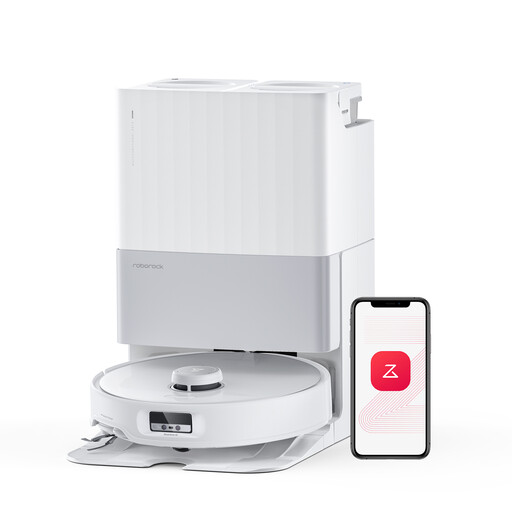
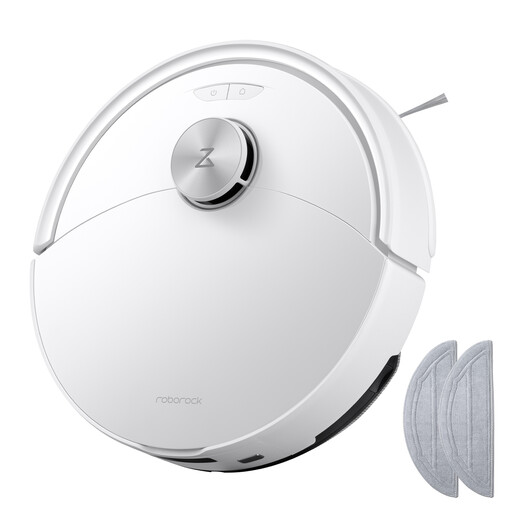
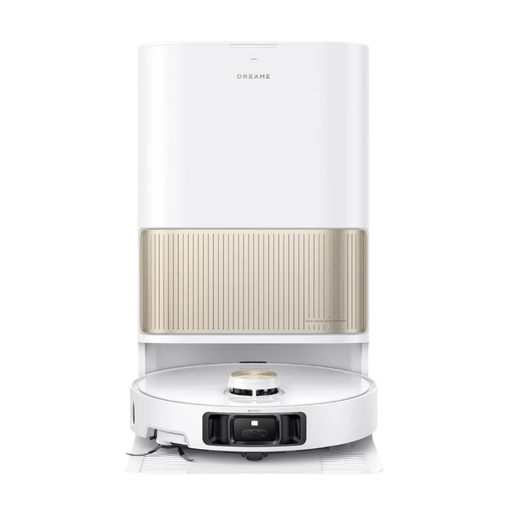
Our product range is constantly expanding. Discover more products and offers in our White Rock category.
The effectiveness of the mopping function has improved significantly in recent years. Many current models, like the ones presented here, use rotating mop pads that are pressed against the floor with pressure to tackle even dried-on stains. Features like hot-water mop cleaning in the station further contribute to hygiene. For daily maintenance cleaning of hard floors, the performance of modern devices is generally very satisfactory. However, manual mopping for very stubborn messes may still be necessary from time to time.
Yes, many models are specifically designed as robot vacuums for pet hair. The crucial factors here are high suction power to reliably remove hair from carpets and hard floors, and a brush system that minimises hair tangles. Rubber brushes (instead of bristles) are often advantageous here. Good obstacle detection is also useful for navigating around pet toys or food bowls.
Both brands, Roborock and Dreame, are among the leading providers in the robot vacuum sector and offer models in the mid-to-high-end price range. The differences are often in the details and technological focuses. For example, Roborock's Qrevo Edge focuses on edge cleaning with an extendable mop, while Dreame's L40S Pro Ultra advertises particularly high suction power and obstacle traversal. A direct comparison of the technical specification sheets, such as suction power (Pa), battery capacity, and the functions of the cleaning station, is most helpful for making a purchasing decision.
By the Joybuy Product Recommendation Officer