
Lieferung heute & morgen

Qualitätsgarantie

Willkommens-Angebote freischalten: KOSTENLOSE Lieferung | Bis zu 80 % RABATT | Kostenlose 30-Tage-JoyPlus-Testphase
App herunterladen
The search for a suitable robot vacuum and mop with an auto-empty station can quickly become overwhelming. Manufacturers advertise ever-higher suction power figures and fully automated features. However, not every advertised feature actually leads to a cleaner home in practice. Many devices turn out to be a poor investment because they fail at basic, everyday challenges. This guide will help you see through marketing promises and make an informed decision.
Before you invest, you should be aware of the most common shortcomings that only become apparent after a few weeks of using many models.
To avoid the pitfalls mentioned above, you should focus on verifiable technical parameters that directly impact user convenience and cleaning quality.
Precise orientation in a room is the foundation for efficient cleaning. A robot vacuum with laser navigation (LiDAR) permanently scans its surroundings with a laser and creates an exact map of your home. This method works reliably in all lighting conditions, even in complete darkness. Using the corresponding smart vacuum with app control, you can then set up virtual no-go zones or have it clean specific rooms on demand. Camera-based systems are often less accurate, require sufficient light, and raise privacy concerns for some users.
A modern station should do more than just empty dust. Look for the following convenience features that define the level of automation:
A vacuum with strong suction power is important, but the brush design is equally crucial. For households with pets, a main brush made of solid rubber or with silicone fins is a good choice, as hair is less likely to get tangled than with bristle brushes. Another key feature is automatic carpet detection: when the robot moves onto a carpet, it should lift its mop and automatically increase suction power to remove deep-seated dirt.
Instead of making a one-size-fits-all recommendation, we have identified models tailored to specific user profiles and their requirements.
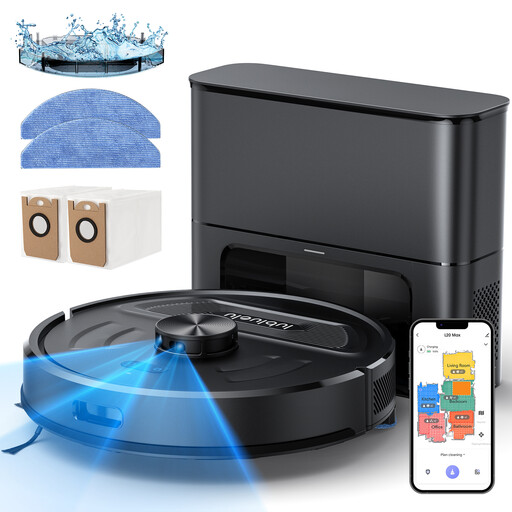
Why This Fits Their Persona: This model offers the core functions of a modern robot vacuum and mop—vacuuming, mopping, and an auto-empty station—at an accessible price point. It's ideal for users who want to experience the convenience of automation without paying for premium features like hot water washing.
The device relies on proven laser navigation for reliable mapping, thus avoiding the inaccuracies of camera-based systems. The auto-empty station reduces daily maintenance (Pitfall 3) to a minimum.
4000 Pa suction power combined with LiDAR navigation and the ability to save up to 5 maps provides a solid overall package for apartments and multi-story homes.
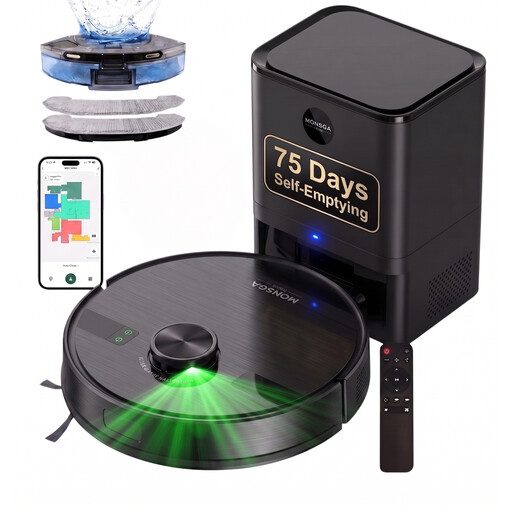
Why This Fits Their Persona: For households with pets and children, high and consistent suction power is crucial. With 9000 Pa of suction, this model is specifically designed to effectively remove pet hair, litter, and everyday dirt from hard floors and carpets.
It counters the suction power trap (Pitfall 1) with an objectively high value that is necessary in practice for the demanding task of pet hair removal. The large 4.0-liter auto-empty station reduces the frequency of bag changes, minimizing maintenance.
The combination of 9000 Pa suction power, a long 180-minute runtime, and a large auto-empty station makes it a robust solution for large living spaces and demanding cleaning tasks.
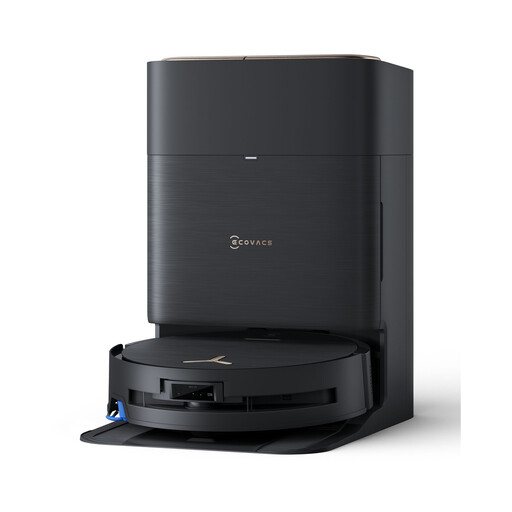
Why This Fits Their Persona: This device is aimed at users seeking maximum automation and cleaning performance. With features like hot-water mop washing, hot-air drying, and dynamic edge cleaning, manual effort is reduced to an absolute minimum.
It solves the problem of poor edge cleaning (Pitfall 2) with its TruEdge 2.0 technology, which actively extends the mop. The fully-featured OMNI station with hot water washing and drying significantly minimizes maintenance (Pitfall 3).
The combination of 16,600 Pa suction power, OZMO roller mop, intelligent stain detection (AI Stain Detection 2.0), and the advanced OMNI station offers a comprehensive cleaning system.
We have compiled a complete, up-to-date list of products that fully meet these strict selection criteria and German safety regulations.
The required suction power depends on your flooring and living situation.
The maintenance effort varies depending on the station's features. For basic models with only an auto-empty function, you just need to change the dust bag every 60-90 days. For all-in-one stations, the following tasks are added:
Modern, high-quality robot vacuum and mop combos feature carpet detection using ultrasonic sensors. As soon as the robot detects a carpet, it automatically lifts its mopping pads to prevent the carpet from getting wet. When choosing a device, you should definitely look for this feature if you have both hard floors and carpets in your home. The app also often allows you to set the robot to avoid carpets entirely when in mopping mode.