
Lieferung heute & morgen

Qualitätsgarantie

Willkommens-Angebote freischalten: KOSTENLOSE Lieferung | Bis zu 80 % RABATT | Kostenlose 30-Tage-JoyPlus-Testphase
App herunterladen
A robot vacuum cleaner with a mopping function can make everyday floor care much easier. However, models vary considerably in their navigation, mopping system, maintenance requirements and carpet detection. If you focus only on a high Pa rating or terms such as ‘intelligent’ and ‘self-cleaning’, you may end up paying for features that offer little benefit in your home.
The Pascal rating describes the maximum suction pressure, but on its own it says little about actual cleaning performance. Brush design, airflow, filters, carpet detection and suction adjustment all play a part. If you’re looking for a robot vacuum cleaner for pet hair, make sure it also has a main or side brush designed to resist tangles.
An automatic station can empty dust, wash mop rollers and dry them with warm air. However, consumables such as dust bags, filters and mop pads still need to be checked and regularly replaced or cleaned. Depending on how often you use the robot, you may also need to empty the dirty water tank by hand.
Cables, small objects, toys and loose fabrics can disrupt cleaning, even when a robot has cameras, LiDAR or 3D sensors. Before its first clean, clear its route and put away anything fragile. If you have pets, check how the model handles food bowls, toys and potential messes.
When choosing a robot vacuum cleaner with a mopping function, consider several specifications:
A basic mop attachment spreads moisture across the floor, while roller or rotating mop systems actively clean it. Look out for:
Hot water cleaning at, for example, 75 °C or 100 °C is a technical feature of the station. It shouldn’t automatically be taken to imply any medical or therapeutic benefit.
Laser navigation, structured light systems and cameras with obstacle detection can be useful in homes with awkward layouts. Also check:
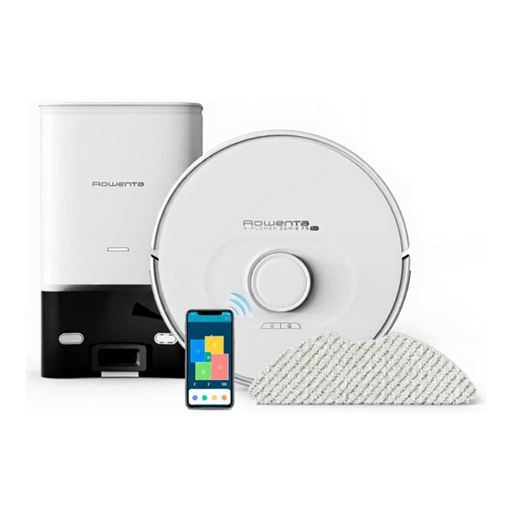
Why it suits this type of household: This model combines vacuuming and mopping with laser navigation, app control and an auto-empty station. It has a stated runtime of up to 120 minutes.
The product details list automatic docking at the base and two dust bags, with a total station capacity of 4.1 l. However, the water tank and mop pads still need to be maintained by hand.
Laser navigation, a stated noise level of 65 dB and up to two hours of battery life.
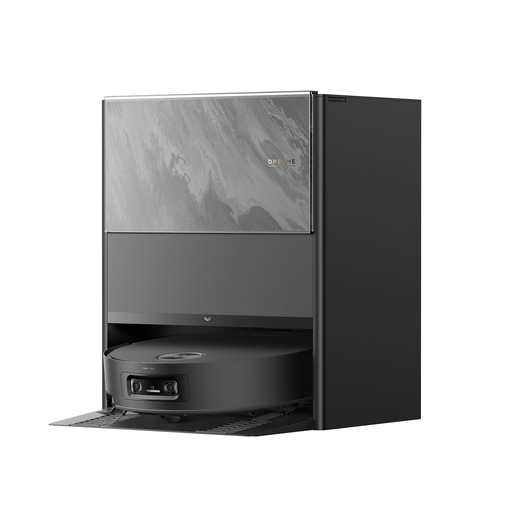
Why it suits this type of household: This model is designed for households looking to combine automated mopping, obstacle clearance and minimal day-to-day intervention.
According to the product details, the station cleans the mop roller with water heated to 100 °C, then dries it with hot air. The robot detects dirt and can run an additional clean.
Stated suction power of 25,000 Pa, D-ToF LiDAR navigation and a chassis designed to clear obstacles up to 6 cm high.
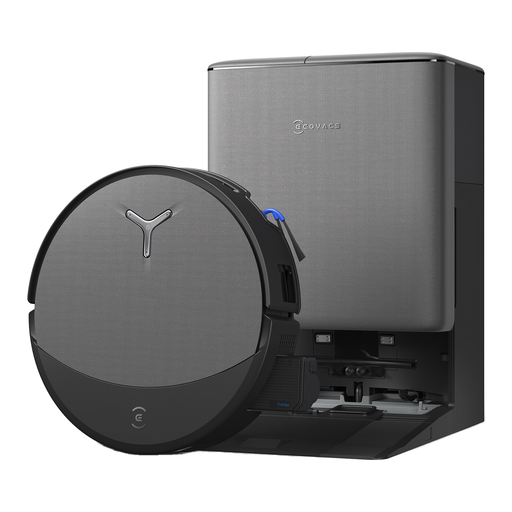
Why it suits this type of household: For larger homes with different floor types, key considerations include a stated runtime of up to 350 minutes, automatic station maintenance and an adaptive drive system.
According to the product description, ZeroTangle 4.0 is designed to reduce hair tangles. The station takes care of the mop rollers and cleans the dirty water tank.
Stated suction power of up to 30,000 Pa, OZMO ROLLER 3.0, AIVI 3D navigation and TruePass 4WD for thresholds up to 24 mm.
We’ve put together a complete, regularly updated list of products that meet these strict selection criteria and fully comply with the safety regulations in force in the EU.
Even a self-cleaning robot vacuum needs regular care. At the very least, check:
If you have pets, you may need to carry out maintenance more often. A station reduces the amount of work you need to do by hand, but it doesn’t eliminate it altogether. You should also check whether replacement brushes, filters and mop pads will remain available, and which cleaning products the manufacturer approves.
Place the station on a flat, hard surface and leave the clearance specified by the manufacturer. Remove cables and small objects, fully charge the robot, then use the app to create a map of your home. Set up no-go zones and mark carpeted areas before creating your first automatic schedule.
Its lifespan depends on the battery, brushes, filters, sensors and how well it’s maintained. There’s no single lifespan that applies to every model. Regular cleaning, suitable cleaning products and replacing worn parts in good time can help keep it working properly. The warranty and service terms from the manufacturer are the best guide.
As well as electricity, you’ll need to budget for dust bags, filters, brushes, mop pads and, where applicable, cleaning solution. Models with a large station may mean less frequent intervention, but they still need consumables. So compare not just the purchase price, but also the availability and cost of replacement parts.