
Lieferung heute & morgen

Qualitätsgarantie

Willkommens-Angebote freischalten: KOSTENLOSE Lieferung | Bis zu 80 % RABATT | Kostenlose 30-Tage-JoyPlus-Testphase
App herunterladen
The search for a suitable robot vacuum and mop with a self-empty station can quickly become overwhelming. Manufacturers advertise ever-increasing suction power figures and a multitude of "intelligent" functions. However, not every innovation provides real value in practice. Some supposed premium features turn out to be marketing traps, leading to frustration and unnecessary expense. As your Joybuy Product Recommendation Officer, I'll help you identify these pitfalls and make an informed decision.
Before making a purchase, it's important to critically question three common marketing promises that often fail to deliver:
To avoid a poor investment, you should focus on three core aspects that significantly determine a device's performance and convenience.
A robot's ability to orient itself precisely in your home is fundamental. Look for the following technologies:
A truly useful station should do more than just empty the dustbin. A mopping robot with self-cleaning should offer the following features:
The mechanical cleaning performance is just as important as suction power.
Based on the criteria above, we have identified several models that are particularly well-suited for different user profiles and living situations in the UK.
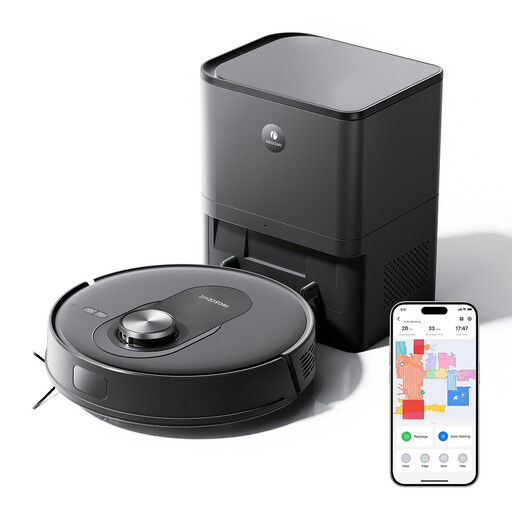
Why this model is a good fit: This device offers a complete automation package—vacuuming, mopping, and a self-empty station—at a very accessible price point. It's ideal for users looking to enter the world of fully automated floor cleaning without investing in premium features like hot-water washing.
Instead of relying on unreliable bump sensors, the Q8 Max uses precise 360° LiDAR navigation for systematic cleaning and mapping. The self-empty station reduces maintenance to a minimum.
Offers a solid overall package for larger living spaces with 5000 Pa of suction power and a long battery life of up to 200 minutes.
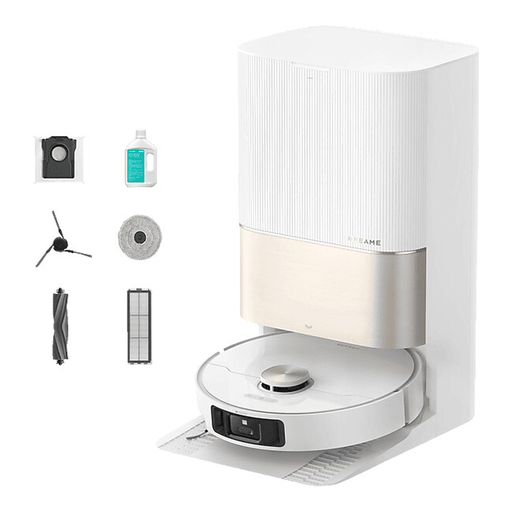
Why this model is a good fit: Ideal for users who want near-perfect cleaning coverage with minimal manual intervention. Its extendable brushes and mops clean corners and edges that other models often miss, making it a comprehensive solution for complex floor plans.
The station cleans the mops with 70°C hot water and then dries them, effectively preventing mould and odour buildup—a common problem with simpler systems.
The combination of an extendable side brush and MopExtend RoboSwing technology ensures superior edge cleaning. Its OmniDirt technology detects the level of dirt and adjusts the cleaning accordingly.
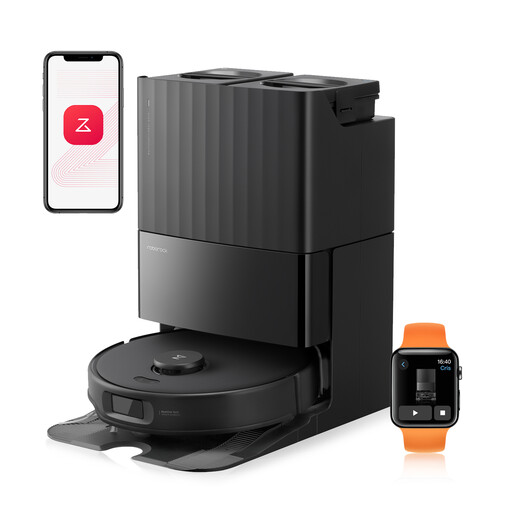
Why this model is a good fit: Designed for households with high levels of dirt, especially from pets. The dual anti-tangle system and very high suction power effectively pick up pet hair, while the FlexiArm design ensures thorough cleaning along edges and around furniture legs.
The dual anti-tangle system actively prevents hair from getting stuck in the brushes. This eliminates the most common maintenance task for robot vacuums in pet-owning households and ensures consistently high cleaning performance.
A very high suction power of 18,500 Pa according to the manufacturer, combined with hot water mop washing (75°C) and the FlexiArm design for thorough edge cleaning.
We've compiled a complete, up-to-date list of products that fully meet these strict selection criteria.
1. How often do I need to maintain the station of a self-cleaning robot vacuum? The maintenance is low, but not zero. The dust bag in the station needs to be replaced approximately every 60 to 120 days, depending on the model and usage frequency. The fresh water tank needs to be refilled regularly, and the dirty water tank emptied, typically after a few cleaning cycles. It is also recommended to clean the robot's sensors and the station's cleaning tray with a damp cloth about once a month to ensure optimal performance.
2. Do robot vacuums with a mopping function also work on carpets? Yes, modern devices are designed for this. They use sensors to detect carpets. Upon detection, they either automatically lift their mopping pads (typically by 10-12 mm) to avoid wetting the carpet, or they return to the station to completely detach the mops before starting to vacuum the carpet. In the app, you can also set up no-mop zones for particularly sensitive or high-pile carpets.
3. Is high suction power (Pa) always the most important criterion? No. A high Pascal number is a good indicator of motor power, but the actual cleaning performance depends on a combination of several factors. These include the design of the main brush (rubber rollers are often better for pet hair and hard floors), the sealing of the suction channel, and the efficiency of the navigation. A robot that systematically covers an area multiple times can achieve a better result with less suction power than a more powerful but imprecisely navigating model.