
Lieferung heute & morgen

Qualitätsgarantie

Willkommens-Angebote freischalten: KOSTENLOSE Lieferung | Bis zu 80 % RABATT | Kostenlose 30-Tage-JoyPlus-Testphase
App herunterladen
A robot vacuum with mop function can make daily floor care much simpler. However, these devices differ greatly when it comes to navigation, maintenance requirements and mopping technology. High Pa values alone don't tell you much about whether a model is suitable for a home with carpets, pets or multiple floors.
Figures like 8,000, 18,000 or 25,000 Pa sound impressive. In practice, though, the brush design, airflow, filter condition and floor type all affect the result. A robot vacuum for pet hair, for example, needs an easily accessible main brush and, ideally, an anti-tangle feature. For carpets, an automatic suction boost is also useful.
An auto-empty station can empty the dustbin by itself. However, that says nothing about cleaning the mopping pads or changing the water. If you want as little manual work as possible, you should specifically look for a robot vacuum with automatic mop cleaning, drying and self-cleaning station. Models without these features will still need regular rinsing and drying of the pads.
A robot vacuum with LiDAR navigation usually creates structured maps and can target cleaning areas more precisely. Even so, you need to consider door thresholds, low furniture, cables and loose objects. Before buying, the robot's height, the stated threshold clearance and obstacle detection are more important than general promises about "intelligent" cleaning.
The Pa figure describes the negative pressure or suction power stated by the manufacturer. It is not a uniform quality benchmark across different brands. For a robot vacuum for carpets and hard floors, buyers should also pay attention to the following points:
A powerful robot vacuum can be useful on carpets, but on the highest setting it usually generates more noise and drains the battery faster.
Flat mopping pads are suitable for the regular care of smooth hard floors. Rotating pads or rollers can work with additional pressure. What matters is controllable water output, the ability to detect carpets, and a station that washes and dries the pads after the cleaning cycle.
The water volume should suit the floor. On sensitive wood or laminate surfaces, a low setting is advisable. Liquids, hot ash or flammable materials should not go into a robot vacuum unless this is expressly permitted for that particular device.
A robot vacuum with auto-empty station reduces the frequency of emptying the dustbin. For larger homes, battery capacity, automatic return to the station and resume cleaning are also relevant criteria. An app control should at least offer maps, no-go zones, schedules and room-specific cleaning modes.
Before buying, also check:
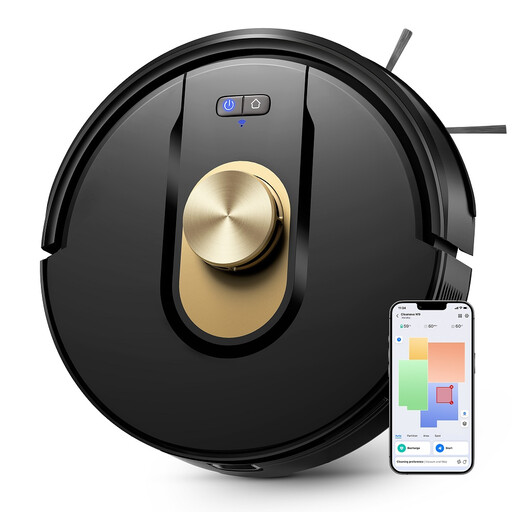
Why this product fits the profile: According to the product specs, the W9 offers LiDAR navigation, up to five maps, app control and a runtime of up to 150 minutes. That suits small to medium households with hard floors, carpets and clearly defined cleaning zones.
The three suction and three water levels allow you to adapt to different floors, rather than running permanently on the strongest mode. The stated support for no-go zones helps you protect sensitive areas.
8,000 Pa according to product specs, LiDAR mapping, app and voice control, plus automatic charging and resume function.
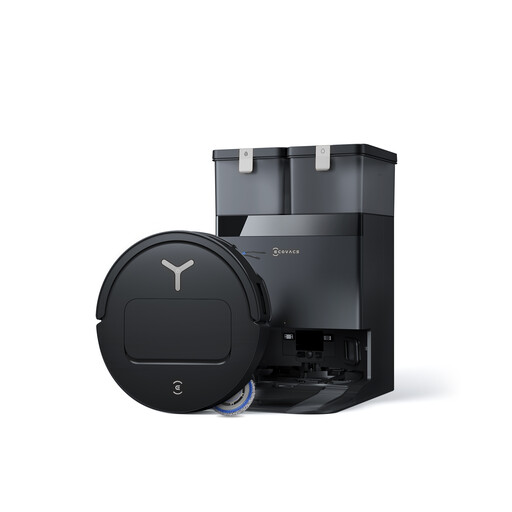
Why this product fits the profile: The combination of OMNI station, OZMO Turbo 2.0, automatic mop lifting and laser-based TrueMapping navigation is designed for larger homes with mixed floor coverings.
The 81 mm height should make it easier to clean under many low pieces of furniture. The automatic carpet strategy and the stated 9 mm mop lifting address the risk of wet carpets.
Up to 25,000 Pa according to product specs, OMNI station, ZeroTangle 3.0 and TrueDetect 3D obstacle detection.
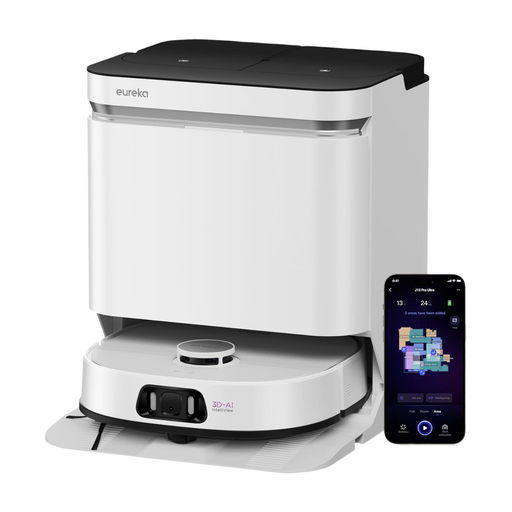
Why this product fits the profile: For households with pets and frequent cleaning needs, the manufacturer states a 16,200 Pa suction power, FlexiRazor anti-tangle technology and a station with hot water mop cleaning.
The automatic emptying, water refilling, and washing and drying of the mops reduce manual steps. The brush design is said by the manufacturer to be less prone to hair tangles.
75-degree hot water cleaning, 55-degree warm air drying, up to three hours runtime according to specs and app control.
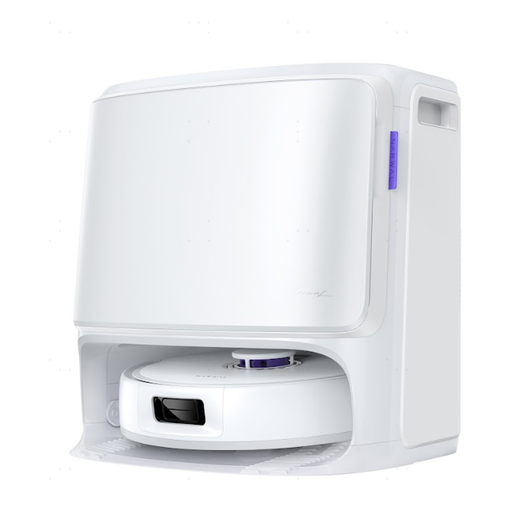
Why this product fits the profile: According to the product specs, the Freo X10 Pro combines 11,000 Pa, a combined washing, drying and emptying station, and a triangular mopping design for edges and corners.
The carpet detection with automatic mop lifting addresses different floor coverings. A 2.5-litre dust bag capacity can extend emptying intervals in a family home.
LDS laser navigation, structured obstacle detection, anti-tangle brushes and, according to product specs, up to 220 minutes of battery life.
We have put together a complete, regularly updated list of products that fully meet these strict selection criteria and the safety regulations in force in the EU.
Yes. Cables, small objects, clothing and fragile decorations should be removed. For the first mapping, it is also advisable to open the doors to the rooms you want to clean and place the station on a level surface with enough clearance around it.
The lifespan depends on use, maintenance and the availability of spare parts. Brushes, filters, mop pads and dust bags are consumable items. Regular cleaning of the sensors and brushes, as well as following the manufacturer's instructions, can help maintain functionality. The built-in battery must not be opened or replaced by yourself unless this is expressly permitted.
In addition to electricity consumption, you may need replacement filters, side and main brushes, mop pads, dust bags and possibly cleaning solution. With a self-cleaning station, there are also costs for water care and suitable consumables. So compare the accessory prices before buying and check whether the parts you need are permanently available.