
Lieferung heute & morgen

Qualitätsgarantie

Willkommens-Angebote freischalten: KOSTENLOSE Lieferung | Bis zu 80 % RABATT | Kostenlose 30-Tage-JoyPlus-Testphase
App herunterladen
A robot vacuum that not only vacuums but also mops and then empties itself promises to be a major convenience in any household. However, the market is flooded with marketing claims that often fail to deliver in practice. Many devices turn out to be a poor investment because crucial details were overlooked.
As your Joybuy Product Recommendation Officer, I'm here to help you separate the wheat from the chaff. In this guide, I'll reveal the three most common pitfalls to avoid when buying and highlight the technical features you truly need to look for to find a device that will genuinely simplify your daily life.
Manufacturers often advertise with impressive numbers and features. But not all that glitters is gold. Pay close attention to these three points to avoid disappointment.
To avoid these pitfalls, you should focus on three key parameters that determine actual cleaning performance and convenience.
The way a robot navigates determines its efficiency and thoroughness.
For reliable and complete cleaning, a model with LiDAR navigation is the far superior choice.
The mopping function is often the biggest weakness. Look for advanced systems.
A truly autonomous system minimizes your intervention.
Based on the criteria above, we have identified several models that offer a suitable solution for different user profiles.
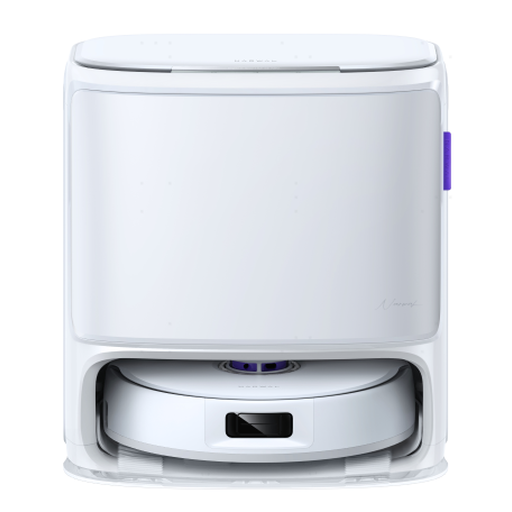
Why This Fits Their Persona: Ideal for users seeking maximum automation and minimal maintenance. Its high suction power and tangle-free system are perfect for pet owners, while the advanced mopping ensures spotless hard floors.
Addresses the edge-cleaning pitfall with dynamic mop extension and swinging motions. The station, featuring hot-water mop washing and drying, solves the problem of maintenance and hygiene.
15,000 Pa suction power, a tangle-free brush system, and a station that stores dust for up to 120 days.
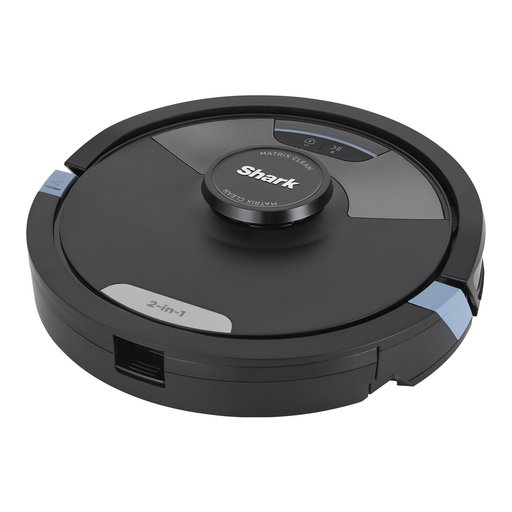
Why This Fits Their Persona: A balanced solution for homes with both hard floors and carpets. The device combines powerful suction with effective mopping technology and precise navigation, making it a solid choice for the typical family household.
The "Matrix Clean" system ensures systematic cleaning in a grid pattern, thus avoiding the pitfall of incomplete coverage. The bagless self-empty base, holding up to 60 days of debris, significantly reduces maintenance.
A combination of Sonic Mopping (scrubs up to 100 times per minute) and precise 360° LiDAR Navigation for a thorough clean.
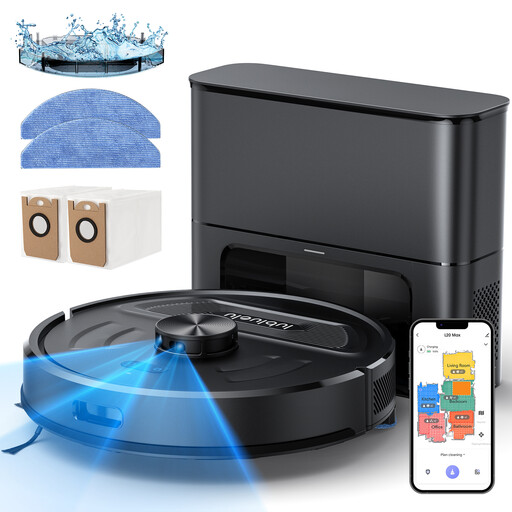
Why This Fits Their Persona: Offers the full feature set—vacuuming, mopping, and self-emptying—at an accessible price point. Ideal for users in apartments or for those who want to try the technology without a large initial investment.
The included self-empty station solves the core problem of high maintenance. Thanks to LiDAR navigation, it avoids the pitfall of inefficient, random cleaning patterns common in more affordable models.
A complete 3-in-1 system with a self-empty station and laser navigation, offering an attractive price-to-performance ratio.
If you're looking for a specialized solution just for mopping, we've compiled a complete, up-to-date list of products that meet our strict selection criteria.
The frequency depends on the size of the dust bag in the station and the level of dirt in your home. Most modern stations hold debris for 30 to 120 days. In households with pets or multiple people, you might need to empty it every 4 to 6 weeks, while in smaller, less frequented homes, it can last longer.
Yes, but only if the device has an automatic mop-lifting feature. Models with this function detect carpets, raise their mopping pads, and often simultaneously increase suction power for a deep clean. Devices without this feature should only be used on hard floors or require you to manually set up "no-mop zones" in the app.
The noise level is measured in decibels (dB). A quiet robot vacuum operates at around 55 to 65 dB during vacuuming mode, which is roughly the volume of a normal conversation. The self-empty station's operation is significantly louder (often over 80 dB), but it typically only lasts for 15 to 30 seconds. Many devices allow you to schedule the auto-emptying times so it doesn't happen at night or during work hours.