
Lieferung heute & morgen

Qualitätsgarantie

Willkommens-Angebote freischalten: KOSTENLOSE Lieferung | Bis zu 80 % RABATT | Kostenlose 30-Tage-JoyPlus-Testphase
App herunterladen
A robot vacuum that can sweep, mop, and empty itself promises to be a game-changer for household chores. However, the market is crowded, and not every model lives up to its advertising claims. Before making a purchase, it's crucial to understand the common pitfalls that often lead to disappointment and unnecessary expense. Many devices fail to handle basic, everyday challenges, from stray cables to varying floor types.
This guide will help you separate the wheat from the chaff. We focus on the technical features that truly matter and show you how to critically evaluate marketing promises.
The most advanced features are useless if the fundamentals aren't right. Pay close attention to these three problem areas where many models fall short:
To make an informed decision, focus on objective technical parameters rather than marketing buzzwords.
The type of navigation determines how efficiently and systematically a robot cleans your home.
The auto-empty dock automatically empties the robot's dustbin and is a key convenience feature.
A good robot mop with carpet detection is essential for homes with mixed flooring. Look for an automatic mop-lifting feature of at least 10 mm. This is the only way to ensure that even medium-pile carpets stay dry and clean. Simple systems without this function are of limited use for robot vacuums for carpets and hard floors.
Based on the objective criteria above, we have compiled a selection of models suited for specific user profiles.
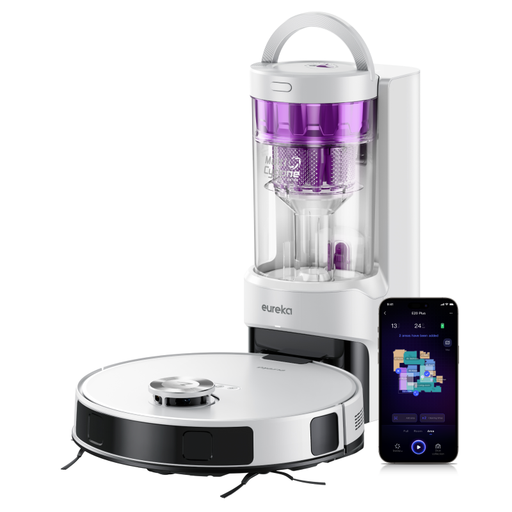
Why it's a match: The combination of high 8000 Pa suction power and a special anti-tangle brush makes this model a great choice as a robot vacuum for pet hair. The automatic 10 mm mop lift reliably protects carpets from getting wet.
The DuoDetect AI obstacle avoidance accurately identifies even small objects, preventing it from getting stuck. The 10 mm mop lift effectively solves the problem of wet carpets.
The bagless auto-empty dock saves on running costs and is eco-friendly. The anti-tangle system significantly reduces maintenance.
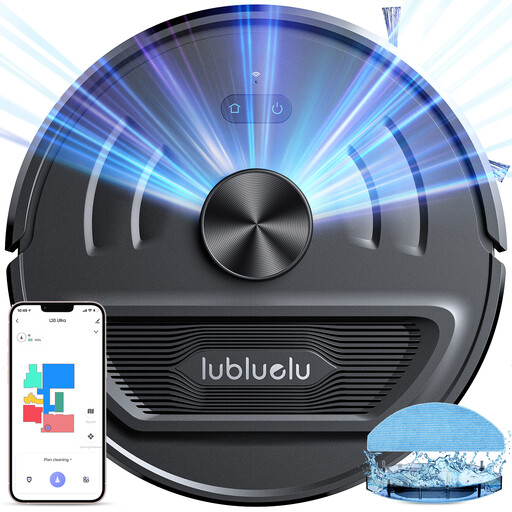
Why it's a match: This model offers a solid 3-in-1 solution with reliable laser navigation and app control. It's a great choice for users looking for basic but effective automation for their home.
The model focuses on the core function of reliable laser navigation. Instead of advertising exaggerated specs, it delivers consistent and systematic cleaning performance.
The ability to save up to 5 maps is ideal for multi-level homes. Its quiet operation at 55 dB (according to the manufacturer) is barely disruptive to daily life.
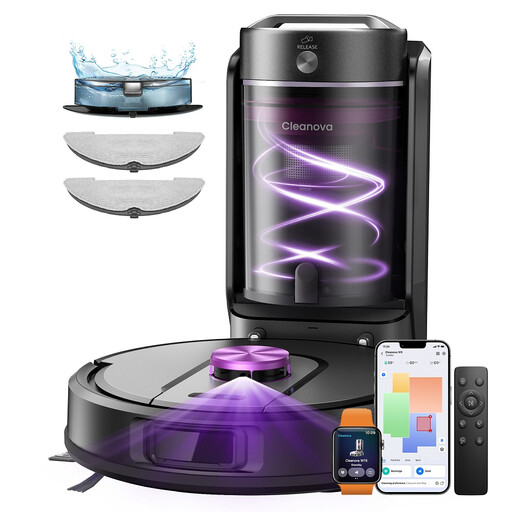
Why it's a match: With a long 180-minute battery life and a bagless station that can go up to 90 days without emptying (according to the manufacturer), this model is designed for large living spaces and minimises manual effort.
The combination of high suction power (10000 Pa) and precise LiDAR navigation ensures a thorough and efficient clean, rather than relying on a single marketing spec.
The innovative bagless multi-cyclonic station hygienically empties the dustbin and avoids recurring costs. The recharge-and-resume function is ideal for large areas.
We have compiled a complete, up-to-date list of products that fully meet these strict selection criteria and safety standards.
The frequency depends on the size of your home, the number of pets, and the general amount of dirt. On average, the collection bin of a bagless station needs to be emptied every 45 to 90 days. It is recommended to clean the bin and the station's filters with a dry cloth every two to three months to ensure optimal suction performance.
That depends on the technology used. Models that primarily rely on LDS LiDAR can navigate flawlessly even in complete darkness, as lasers are not dependent on ambient light. In contrast, robots that additionally or exclusively use cameras (VSLAM) for orientation require a certain level of ambient light to function reliably.
When used correctly, the risk is low. Look for models with a precisely adjustable water flow level in the app. For sensitive floors like unsealed hardwood or laminate, the lowest water setting should be selected. A robot with an automatic mop-lifting feature is an added advantage, as it prevents the damp cloth from sitting stationary on the floor when the robot docks or pauses.