
Lieferung heute & morgen

Qualitätsgarantie

Willkommens-Angebote freischalten: KOSTENLOSE Lieferung | Bis zu 80 % RABATT | Kostenlose 30-Tage-JoyPlus-Testphase
App herunterladen
A robot vacuum with a mopping function can make regular floor care easier. However, models vary considerably in their navigation, maintenance requirements and suitability for carpets. A high Pa rating or a large dock on its own tells you little about whether a model will suit your home.
Three common buying mistakes are particularly likely to lead to disappointment:
The Pa rating indicates the maximum suction pressure. Models with high suction power can pick up loose particles and pet hair, but performance ultimately depends on how the motor, main brush, filter and floor clearance work together.
For homes with pets, anti-hair-tangling technology and an easily accessible brush are worth looking for. On carpets, the robot vacuum should adjust its suction automatically and be able to lift its mop pads. Otherwise, moisture may be left on the carpet.
If you’re looking for a robot vacuum for pet hair, also check for:
Manufacturer ratings such as 8,000, 13,000 or 25,000 Pa are only useful for comparing models with similar designs. For example, according to the manufacturer, the ECOVACS DEEBOT T30C OMNI Gen2 reaches up to 25,000 Pa. This is a technical specification, not a blanket indication of cleaning performance on every type of floor.
A robot vacuum with laser navigation usually creates systematic maps and can manage rooms, no-go zones and cleaning sequences. This is particularly useful in homes with several rooms, carpets and tight spaces between furniture.
Check whether it offers:
Cameras, lasers and 3D sensors work differently from model to model. Before the first clean, pick up loose cables, small objects and delicate decorations. No smart robot vacuum can reliably detect every obstacle.
A robot mop can pick up fine dust and light dirt, but it won’t necessarily replace manual cleaning when dealing with dried-on or larger stains. Mopping systems vary, from rotating pads and vibrating mop plates to roller mops.
If you’re considering a self-cleaning dock, check the following:
A robot vacuum with an auto-empty dock reduces the need for daily emptying, but it doesn’t make maintenance unnecessary. Filters, sensors, brushes, water tanks and the cleaning tray still need care as directed by the manufacturer.
The models below are matched to specific use cases. Technical specifications are taken from the relevant product details and should not be treated as independent performance test results.
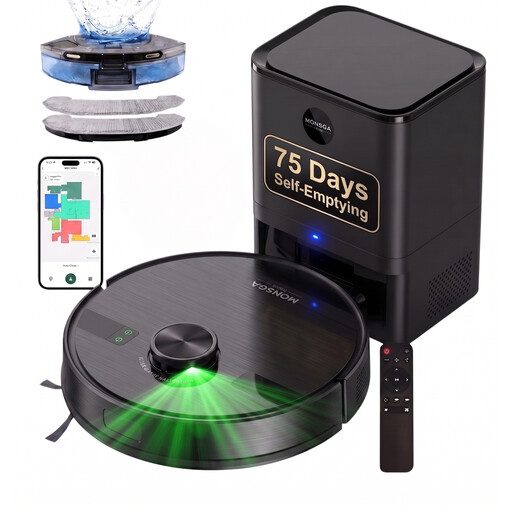
Why this product suits this type of home: This model combines 9,000 Pa suction with LiDAR navigation, app, remote and voice control. Its stated runtime of up to 180 minutes should be ample for many homes with hard floors and carpets.
LiDAR mapping helps reduce unplanned routes. You’ll still need to pick up cables and loose objects before starting a clean.
4.0-litre self-emptying dock, 9,000 Pa suction and up to 180 minutes of runtime, according to the product details.

Why this product suits this type of home: This model is aimed at homes with mixed flooring, where you want a feature-rich dock, laser navigation and mop pads that lift automatically on carpets.
The mop-lifting function keeps mopping separate from carpet cleaning. According to the manufacturer, the dock handles dust emptying, mop washing and drying.
25,000 Pa, TrueMapping 2.0, up to 180 minutes of runtime and 75-degree water washing, according to the product description.
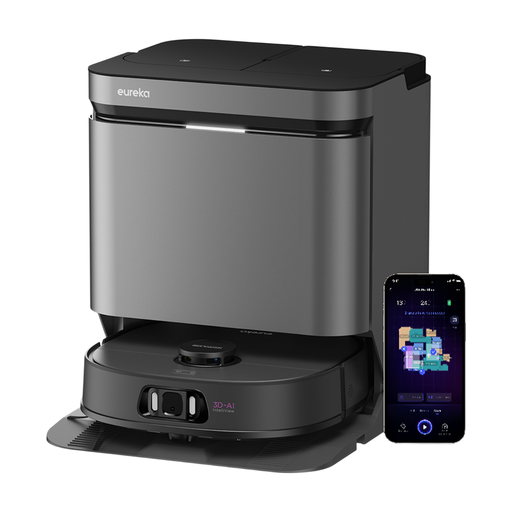
Why this product suits this type of home: For pet hair and frequent cleaning, this model offers 16,200 Pa, anti-wrap technology and a dock with hot-water cleaning, according to the product details.
The FlexiRazor technology is designed to reduce hair tangles. The brush and filter still need regular checks.
16,200 Pa, edge cleaning with an extendable mopping system and 75-degree mop washing, according to the manufacturer.
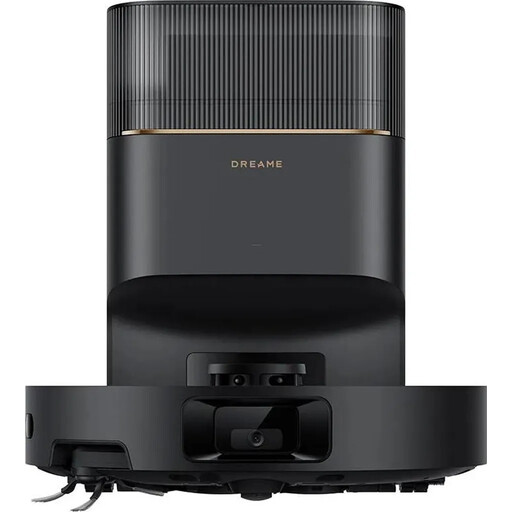
Why this product suits this type of home: The 5-litre dust bag and stated runtime of up to 260 minutes when vacuuming, or 285 minutes in combined mode, make it a good fit for larger areas.
The dust bag’s capacity means you won’t need to empty it as often. The mop pad still needs cleaning and drying after use.
13,000 Pa, a 5-litre dust bag, app control, 3D obstacle detection and coverage of up to 250 m², according to the product details.
We’ve put together a complete, regularly updated list of products that meet these strict selection criteria and fully comply with the safety regulations in force in the EU.
As well as the purchase price, you’ll need to budget for ongoing costs such as:
A bagged model may be more hygienic and convenient to empty. A bagless system, on the other hand, cuts down on disposable bags but requires you to clean the dust container. Before buying, check that accessories are available in Germany and that the app is compatible with your smartphone.
Many models detect carpets and lift their mop pads. However, how well they work depends on carpet pile height, sensors and software. If you have deep-pile carpets, set up a no-go zone in the app.
It depends on the amount of pet hair and dust, as well as how often you use it. Check the brushes and filters regularly. Dirty-water tanks usually need emptying much more often than dust bags. Always follow the instructions in the relevant user manual.
An auto-empty dock can reduce daily effort for families, busy professionals and pet owners. It’s particularly worthwhile if you use the robot frequently or have a larger home. If you only need to clean small rooms, a more compact model without a large dock may be more economical.