
Lieferung heute & morgen

Qualitätsgarantie

Willkommens-Angebote freischalten: KOSTENLOSE Lieferung | Bis zu 80 % RABATT | Kostenlose 30-Tage-JoyPlus-Testphase
App herunterladen
A robot vacuum and mop can make everyday floor care much easier. But not every model will automatically mean less work. Many buying decisions go wrong because of unsuitable cleaning modes, water tanks that are too small or a docking station that takes up more space than expected.
As Joybuy Product Recommendation Officer, I assess product information against clear criteria and match it to different household needs. The key isn’t the longest possible feature list, but the right combination of navigation, suction power, mopping system and maintenance requirements.
Figures such as 10,000, 16,000 or 25,000 Pa describe maximum suction power under certain conditions. On their own, they don’t show how well a robot cleans edges, carpet fibres or pet hair. Brush design, airflow, filters and automatic power adjustment also affect the results.
So, if you’re looking for a robot vacuum for pet hair, also check for anti-tangle brushes, an easily removable main brush and accessible hair removal.
A basic cloth can pick up a light film of dust, but it won’t replace every manual mop. Check whether the robot recognises carpets, can lift the mop and lets you adjust the water flow and cleaning zones in the app. A cloth that stays damp can be a problem on delicate floors or under furniture.
A robot vacuum with an auto-empty station means you won’t need to empty it every day, but it does need a power socket, enough clearance and regular maintenance. Stations with water tanks also need fresh water topped up and the dirty water tank emptied. Before buying, check the station’s dimensions and recommended clearances.
Laser navigation typically creates a structured map of your home and supports virtual walls, no-go zones and room-by-room cleaning. Saving multiple maps is especially useful in homes with more than one floor. Good navigation doesn’t mean you can skip tidying up, though: remove cables, small objects and fragile decorations before a cleaning run.
Look for:
For robot vacuums for carpets and hard floors, multiple suction settings and automatic carpet detection are useful. A lower setting is often enough on hard floors, while carpets may need a more powerful setting. Always consider maximum suction figures alongside brush design, the filter and dustbin capacity.
The robot’s height also matters: low-profile models can reach under low sofas or cupboards, while a laser turret can increase the overall height.
A robot mop should lift the mop when it detects a carpet, or let you exclude carpeted areas in the app. For more automation, docking stations may offer features such as automatic mop washing, drying, dust emptying and, in some cases, automatic detergent dispensing.
However, “self-cleaning robot vacuum” doesn’t mean there’s no maintenance involved. Filters, brushes, sensors, water tanks and the cleaning tray still need to be checked according to the manufacturer’s instructions.
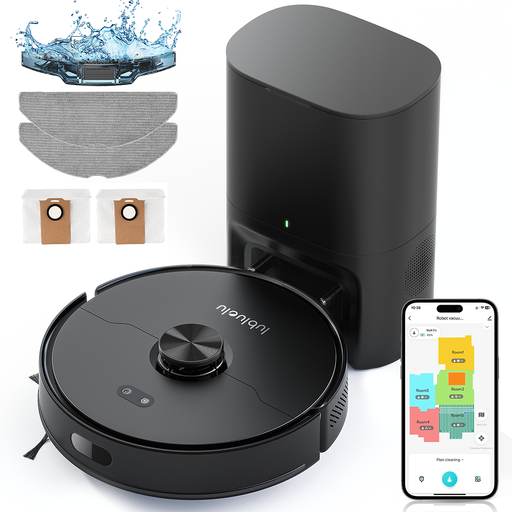
Why this product suits this household: This model combines vacuuming, mopping, laser navigation and app control with a stated suction power of 4,000 Pa. It’s a good fit for households looking for a straightforward set of essential features.
The mapping feature supports room layouts and virtual boundaries, so you can set specific areas for mopping.
5 map storage slots, a stated operating noise level of 55 dB and app control.
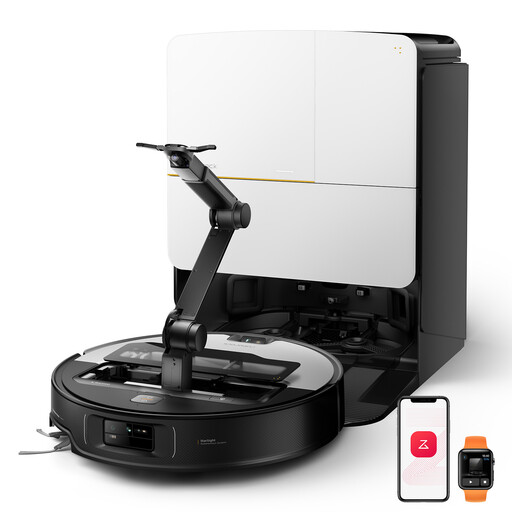
Why this product suits this household: According to the product information, this model is 7.98 cm tall and offers 22,000 Pa suction power, AI-powered navigation and hot-water mop washing.
Its stated low profile addresses a common issue with low furniture, though you should still check the clearance around the station and in your rooms.
22,000 Pa according to the product information, hot-water mop washing and an adaptive chassis.
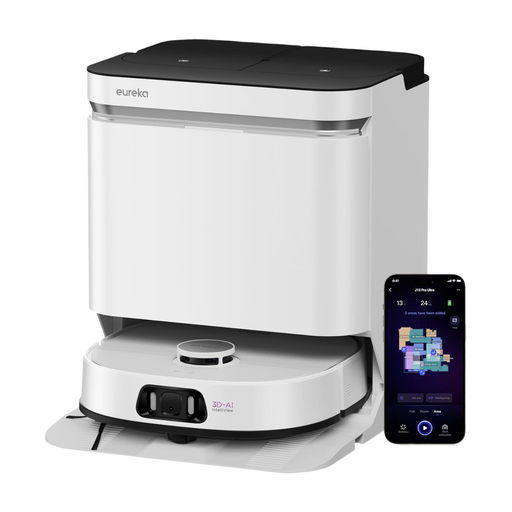
Why this product suits this household: For homes with pets and frequent cleaning needs, the manufacturer lists 16,200 Pa, FlexiRazor anti-tangle technology, and a station with automatic emptying, mop washing and drying.
The anti-tangle design and maintenance features are intended to tackle common problems caused by long hair and frequent emptying.
Mop washing at 75°C according to the product information, automatic dust emptying and app control.
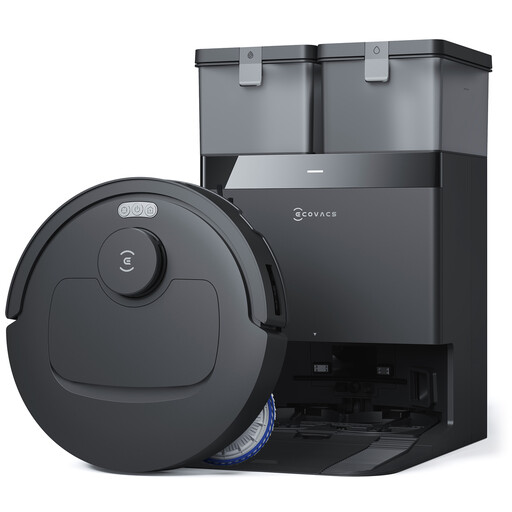
Why this product suits this household: The product information lists 25,000 Pa, laser-based TrueMapping navigation, four suction settings and automatic mop lifting on carpets.
The mop-lifting feature and adjustable carpet cleaning reduce the risk of dampening carpeted floors while mopping.
OMNI station with automatic dust emptying, 75°C mop washing and up to 180 minutes of runtime according to the product information.
We’ve put together a complete, regularly updated list of products that meet these strict selection criteria and fully comply with the safety regulations in force in the EU.
To help your robot vacuum work reliably, you should:
Its lifespan depends on how often you use it, as well as the battery, brushes, filters and upkeep. Regularly cleaning the sensors and brushes can help prevent operating problems. Batteries and wear parts aren’t equally easy to replace on every model, so check spare-part availability and warranty terms before buying.
As well as electricity, you may need to budget for dust bags, filters, mops, brushes and cleaning products. A bagless system can do away with dust bags, while stations with automatic mop washing use more water and may need a specialist cleaning product.
Yes, as long as the model is designed for carpets. Look for carpet detection, automatic suction adjustment and, ideally, a mop-lifting feature or a no-go zone in the app. Also check the stated threshold clearance and the height of the robot.