
Lieferung heute & morgen

Qualitätsgarantie

Willkommens-Angebote freischalten: KOSTENLOSE Lieferung | Bis zu 80 % RABATT | Kostenlose 30-Tage-JoyPlus-Testphase
App herunterladen
A robot vacuum that not only vacuums and mops but also empties and cleans itself promises a high degree of convenience. However, the market is filled with devices whose marketing promises often suggest more than the technology delivers in daily use. Many buyers soon find that their supposedly autonomous helper requires constant manual intervention or that its cleaning performance leaves much to be desired.
As a Joybuy Product Recommendation Officer, my job is to guide you through the maze of technical specifications. This guide focuses on the crucial features that distinguish a reliable robot vacuum and mop with a station from a high-maintenance one, helping you to avoid common purchasing pitfalls.
Disappointment after buying an expensive device often stems from overlooked weaknesses that are rarely mentioned in advertisements. Pay special attention to these three points:
To make an informed decision, it's important to understand the technical specifications that significantly determine a device's performance and autonomy.
The type of navigation determines how efficiently and systematically a robot cleans your living space.
A multifunctional station is the centrepiece of a modern system. A robot vacuum and mop with a self-empty station should do more than just empty dust.
Cleaning performance depends on suction power and the design of the brushes.
Based on the criteria above, we have identified several models that are well-suited for different user profiles and their specific requirements.
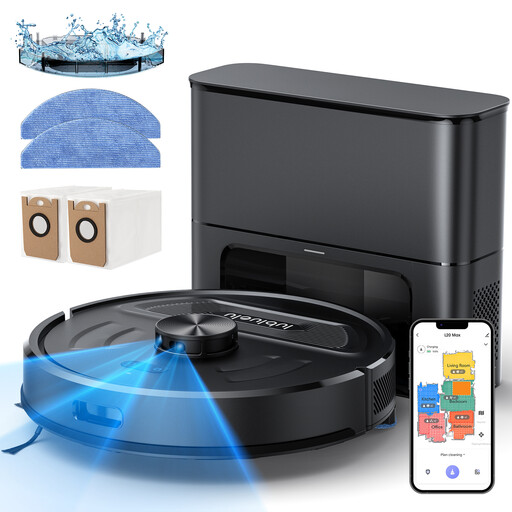
Why This Fits Their Persona: This model offers the core features of a modern system—vacuuming, mopping, and a self-empty station—at an accessible price point. It's ideal for users seeking solid basic automation without the premium add-ons of more expensive devices.
Thanks to its LiDAR navigation, it avoids the trap of inadequate obstacle detection and cleans systematically rather than chaotically. The mapping is precise and allows for setting no-go zones.
Delivers a solid 4,000 Pa of suction power, effective for hard floors and low-pile carpets. The app control allows for saving up to 5 maps, which is practical for multi-story homes.
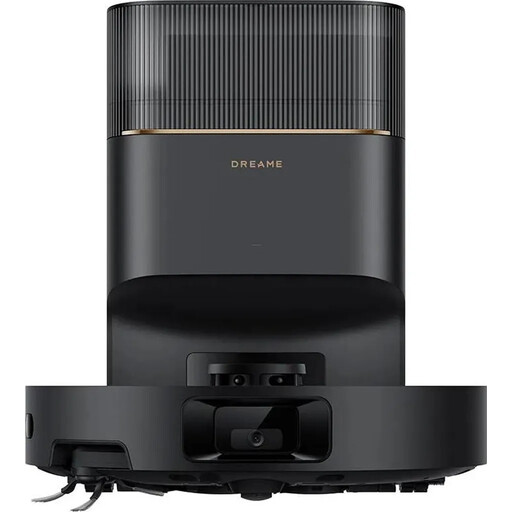
Why This Fits Their Persona: For households with pets, high suction power and a low-maintenance brush are crucial. This model combines very high suction power with a brush specifically designed to prevent hair tangles.
The HyperStream Detangling DuoBrush minimises hair tangles, according to the manufacturer, solving the problem of constant brush cleaning. The large 5-litre dust bag minimises contact with allergens.
The Vormax suction power of up to 13,000 Pa is exceptionally high, effectively removing pet hair and fine dust from carpets. The 3D structured light obstacle detection reliably navigates around scattered toys.
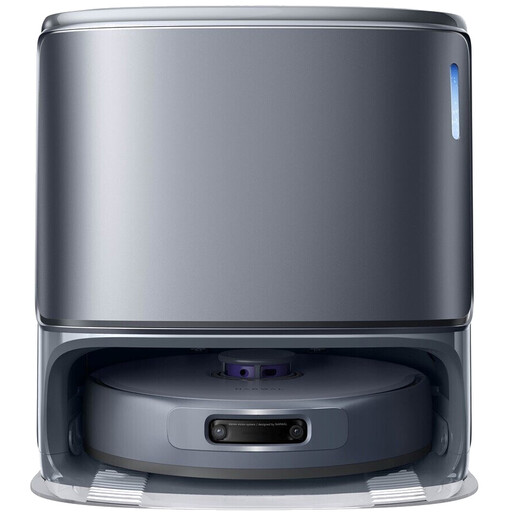
Why This Fits Their Persona: Those looking for a nearly fully autonomous cleaning solution that also tackles stubborn problems like corner and edge cleaning will find a suitable device here. It is designed for users who value maximum automation and cleaning precision.
It solves the edge-cleaning problem with an extendable mop that reaches corners and baseboards. The station bypasses the "self-cleaning" trap by washing the mops with hot water and then drying them.
The combination of 18,000 Pa suction power, advanced AI obstacle detection with dual RGB cameras, and a fully automatic cleaning station offers a high degree of autonomy and cleaning quality.
We have compiled a complete, up-to-date list of products that fully meet these strict selection criteria and all relevant safety regulations.
1. How often do you need to empty/change the dust bag or water tanks in a station? This depends heavily on the model and usage. For dust collection, manufacturers advertise intervals from 60 up to 150 days before the bag in the station is full. The fresh and dirty water tanks generally need to be refilled or emptied more frequently, often after every one or two complete cleaning cycles of an average-sized home.
2. Can a robot vacuum and mop detect and avoid carpets? Yes, most modern models have ultrasonic sensors for carpet detection. When the robot moves onto a carpet, it automatically lifts its mop pads to avoid getting the carpet wet. At the same time, the suction power is often increased to remove more deeply embedded dirt from the fibres.
3. Is LiDAR navigation really necessary? For structured, efficient, and reliable cleaning, LiDAR navigation is currently the leading technology. It enables precise mapping that works even in the dark and gives the user full control over cleaning areas and no-go zones via an app. Models without LiDAR (e.g., with only a gyroscope) often clean more chaotically, take longer, and get stuck more frequently, which severely limits the degree of automation.