
Lieferung heute & morgen

Qualitätsgarantie

Willkommens-Angebote freischalten: KOSTENLOSE Lieferung | Bis zu 80 % RABATT | Kostenlose 30-Tage-JoyPlus-Testphase
App herunterladen
A robot vacuum with a mopping function promises to be a significant time-saver in any household. However, the market is flooded with devices whose marketing promises often don't align with their real-world performance. Many buyers quickly find that their new gadget causes more problems than it solves. As your Joybuy Product Recommendation Officer, I'll help you identify the typical pitfalls and make an informed decision based on facts, not advertising slogans.
Before you invest, you should be aware of the three most common issues that lead to disappointment. These are often not immediately apparent from the technical spec sheets.
To avoid the problems mentioned above, you should check three core parameters. These determine the efficiency and reliability of your future household helper.
Navigation is the robot's brain. There are fundamental differences here:
A good vacuum mop must do more than just glide damply across the floor.
High suction power is only effective in combination with the right hardware. Look for a main brush, ideally made of rubber or a combination of bristles and rubber, to pick up hair without constant tangling. For maximum convenience, consider a robot vacuum with a self-empty station. This station automatically empties the robot's dustbin, so you don't have to worry about it for weeks. This is a significant advantage, especially in households with pets or for allergy sufferers.
Based on the criteria above, we have compiled a selection of devices suitable for different user profiles and their specific requirements.
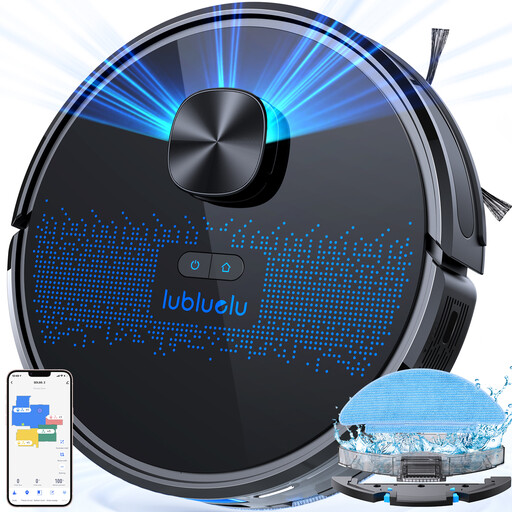
Why This Fits Their Persona: This model provides a solid foundation for automated cleaning without breaking the bank. It is ideal for users in apartments or smaller houses who want to upgrade from unreliable navigation to a precise system.
It avoids the inadequate navigation trap by using precise LiDAR technology. Instead of chaotic paths, it cleans systematically and efficiently.
Stores up to 5 maps, making it suitable for multi-story living areas. The 4000 Pa suction power is sufficient for hard floors and low-pile carpets.
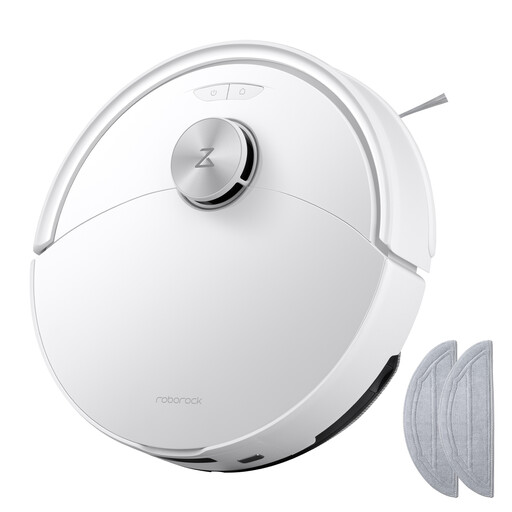
Why This Fits Their Persona: For pet owners and households with high standards of cleanliness. The combination of extreme suction power and intelligent hair removal features makes it a powerful solution for demanding environments.
It debunks the "high suction power" illusion by combining its manufacturer-stated 10,000 Pa suction power with a dual anti-tangle system. This ensures the power actually reaches the floor.
The automatic lifting of the mop on carpets allows for seamless cleaning of hard floors and carpets in a single run. The dual brush system minimises manual maintenance.
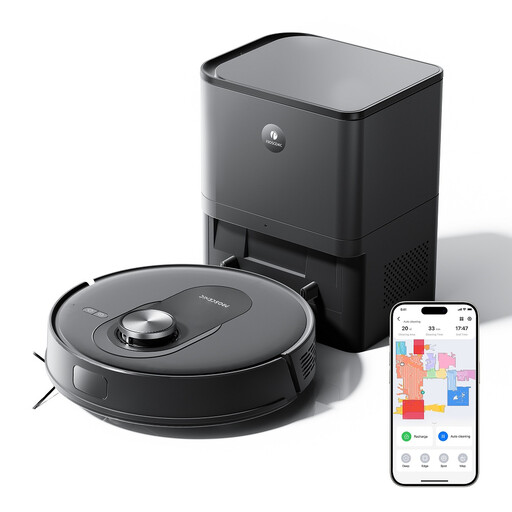
Why This Fits Their Persona: Perfect for busy people in large apartments or houses who are looking for a "set-it-and-forget-it" solution. The self-empty station and long battery life reduce maintenance to an absolute minimum.
This model solves the problem of constant maintenance. The automatic self-empty station provides up to 60 days of autonomous operation, according to the manufacturer, ensuring the robot works truly independently.
The combination of LiDAR navigation, high suction power (8000 Pa according to the manufacturer), and a battery life of up to 200 minutes enables efficient cleaning of large areas (up to 230 m?) in one go.
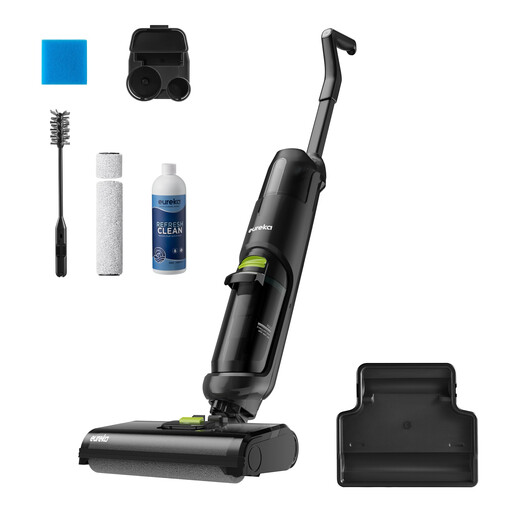
Why This Fits Their Persona: For users seeking a manual yet highly efficient solution for deep cleaning hard floors. This cordless vacuum with mopping function is ideal for tackling sticky messes or spills with precision.
It solves the problem of ineffective mopping by using a two-tank system. Dirty water is immediately vacuumed up and kept separate, so you're always cleaning with fresh water—unlike a conventional mop.
Combines vacuuming and mopping in one step, saving time. The automatic self-cleaning function of the brush roll ensures easy and hygienic maintenance after use.
We have compiled a complete, up-to-date list of products that fully meet these strict selection criteria and German safety regulations.
1. Can a robot vacuum with a mopping function also clean carpets? Yes, many modern devices feature carpet detection. When the robot moves onto a carpet, it stops the water supply and automatically lifts the mopping module. At the same time, the suction power is often increased to remove deep-seated dirt from the fibres. Check the product details for this feature if you have both hard floors and carpets.
2. How often does the dust bag in a self-empty station need to be replaced? The frequency depends on the size of your home, the number of occupants, and the presence of pets. Manufacturer specifications often range from 30 to 60 days. In an average household, changing it every 4 to 8 weeks is a realistic estimate. Most apps will notify you when the bag is full.
3. Is LiDAR navigation really necessary? For simple, open-plan layouts without many obstacles, a model with gyroscope navigation may be sufficient. However, if your home has multiple rooms, a lot of furniture, or several floors, LiDAR navigation is highly recommended. It enables significantly faster, more systematic, and more reliable cleaning and allows the use of features like no-go zones and room-specific cleaning.