
Lieferung heute & morgen

Qualitätsgarantie

Willkommens-Angebote freischalten: KOSTENLOSE Lieferung | Bis zu 80 % RABATT | Kostenlose 30-Tage-JoyPlus-Testphase
App herunterladen
A robot vacuum and mop with an auto-empty dock promises the ultimate in-home autonomy and cleanliness. However, the market is flooded with technical promises that don't always hold up in practice. Before you invest a significant amount of money, it's crucial to understand the common pitfalls that often lead to disappointment and a costly mistake. This guide will help you evaluate the key features and make an informed decision.
Manufacturers' marketing messages often focus on impressive numbers and features. But this is precisely where the most expensive problems hide, only becoming apparent during daily use.
To avoid the pitfalls mentioned above, you should focus your attention on three core parameters. These determine the actual performance and convenience in everyday life.
Instead of being guided by raw Pascal numbers, examine the entire cleaning system. High suction power is only effective if the brushes reliably transport dirt to the suction channel. For households with pets, a robot vacuum for pet hair equipped with a special anti-tangle brush is a necessary feature. Such brushes often have a V-shape design or integrated combs that prevent long hairs from wrapping around the bristles and impairing cleaning performance. A bagless robot vacuum with an auto-empty dock that is also bagless further reduces running costs and waste.
Navigation technology is critical for reliable and efficient cleaning.
A modern mopping robot with carpet detection must do more than just dampen a cloth. The decisive feature is an automatic lifting function for the mopping module. As soon as the device detects a carpet, it should lift the mop pad by at least 7 to 10 millimetres. This is the only way to ensure that even medium- to high-pile carpets stay dry and clean. Models without this feature or with an insufficient lift height are unsuitable for homes with mixed flooring. A water flow rate that can be adjusted via app-controlled robot vacuum is also an important factor for protecting delicate floors like hardwood.
Based on the criteria above, we have analysed products that offer a well-thought-out solution for typical everyday challenges.
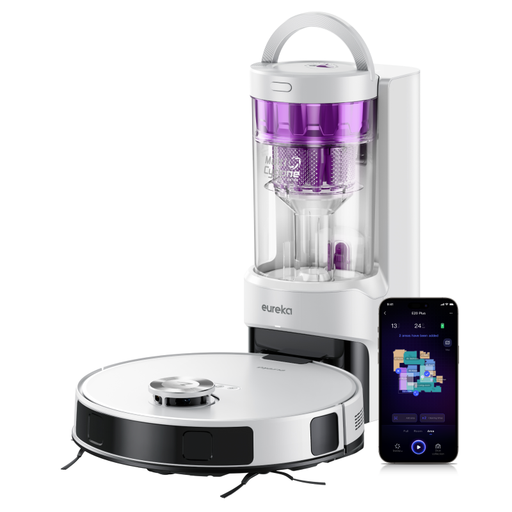
Why this model is a good fit: This device is designed for complex living environments. It combines high suction power with a special anti-tangle system, making it ideal for pet owners. The mopping function with a 10 mm lift solves the problem of wet carpets in households with mixed flooring.
The model avoids the "mopping trap" with an automatic 10 mm mop lift, which reliably protects carpets from moisture. The "suction power trap" is addressed by the anti-tangle system with a special side and main brush, which, according to the manufacturer, ensures over 99% hair pickup and makes effective use of the high Pa rating.
The bagless auto-empty dock saves on running costs and is more environmentally friendly. Another advantage is the PSD sensor for precise edge cleaning, which, according to the manufacturer, improves efficiency along baseboards by 30% compared to devices without this sensor.
We have compiled a complete, up-to-date list of products that fully meet these strict selection criteria and German safety regulations.
The frequency largely depends on the amount of dirt, the size of your home, and the presence of pets. With average use in a typical household, the dustbin of a bagless station, like the one used in the EUREKA E20 Plus, needs to be emptied approximately every 45 to 60 days. This offers a significant convenience boost over models without a station.
Yes, that is one of the major advantages of LDS LiDAR technology. Since it uses laser beams to measure the environment, it is completely independent of lighting conditions. Unlike purely camera-based systems, which can lose precision at dusk or in the dark, a LiDAR robot navigates reliably and efficiently around the clock.
With high-quality devices, this concern is generally unfounded. Look for models where the water output can be adjusted in multiple levels via app control. For sealed hardwood or laminate, it is advisable to start with the lowest water level. The automatic mop-lifting feature on carpets also prevents moisture from being distributed in unsuitable areas.