
Lieferung heute & morgen

Qualitätsgarantie

Willkommens-Angebote freischalten: KOSTENLOSE Lieferung | Bis zu 80 % RABATT | Kostenlose 30-Tage-JoyPlus-Testphase
App herunterladen
A single device that vacuums, mops, and then empties itself—the idea of a fully automated cleaning system is a tempting prospect for many households. These combination devices promise to be a significant time-saver and ensure consistently clean floors. However, the market is crowded, and not every model lives up to its advertising claims. Before you make a decision, it's crucial to understand the common pitfalls that can lead to unsatisfactory cleaning performance and, ultimately, a poor investment.
Even the most advanced features are of little use if the fundamental design is flawed. A wealth of user experiences shows that certain weaknesses can quickly diminish the initial excitement.
To avoid the problems mentioned above, you should focus on a few core technical features when making your selection. These largely determine the efficiency, reliability, and day-to-day convenience of your device.
Navigation technology is the robot's brain. While basic models use a random pattern (gyroscope navigation), cleaning some areas multiple times while missing others entirely, devices with Robot Vacuums with Laser Navigation (LiDAR) offer a decisive advantage.
A Robot Vacuum with High Suction Power is a good foundation, but the design of the brush roll is just as important. For households with pets, a Robot Vacuum for Pet Hair featuring a rubberized, tangle-free main brush is a smart choice. This design prevents long hairs from wrapping around the brush and compromising cleaning performance.
For mixed flooring, automatic carpet detection is a useful feature. When the Robot Vacuum for Carpets approaches a rug, it automatically increases suction power to pull deep-seated dirt from the fibres. Upon leaving the carpet, the power is reduced again to conserve energy.
A modern Vacuum and Mop Combo should do more than just drag a cloth behind it. Look for active mopping systems that use pressure or movement. Some models can even lift their mop pad when they encounter a carpet to avoid getting it wet.
The Self-Emptying Robot Vacuum with a reliable dock completes the automation package. Check the capacity of the dust bag or container in the station. A volume that lasts for 30 to 60 days is a good benchmark for average households.
Based on the criteria above, we have identified a few models that represent a considered choice for specific user profiles.
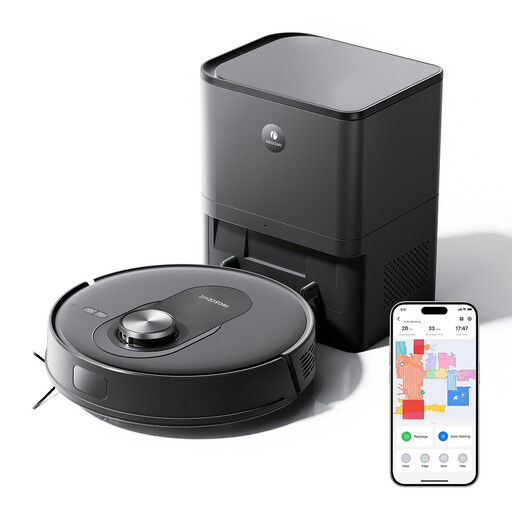
Why This Fits Their Persona: This model is built for performance. With a high suction power of 8,000 Pa according to the manufacturer and a self-empty station that can operate for up to 60 days without manual intervention, it is ideally suited for large living areas and the challenges of pet hair.
The combination of high suction power and LiDAR navigation ensures effective dirt pickup, rather than relying solely on a high Pascal rating. The station is designed for a long period of autonomous operation.
360° LiDAR navigation for precise mapping and obstacle avoidance. The self-empty station offers up to 60 days of autonomous operation.
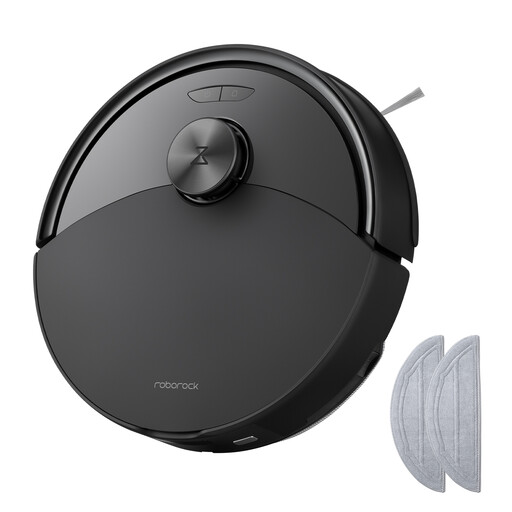
Why This Fits Their Persona: This set is aimed at users who value advanced technology and seamless integration. The automatic lifting function of the mop pad is ideal for homes with mixed flooring (hard floors and carpets), as the robot can clean both in a single run.
The liftable mopping module solves the problem of wet carpets and bypasses the limitations of passive mopping systems. The dual brush system is specifically designed to prevent hair tangles.
Auto-Lifting Mopping for cleaning hard floors and carpets in one go. According to the manufacturer, it has a very high suction power of 10,000 Pa and a dual anti-tangle brush system.
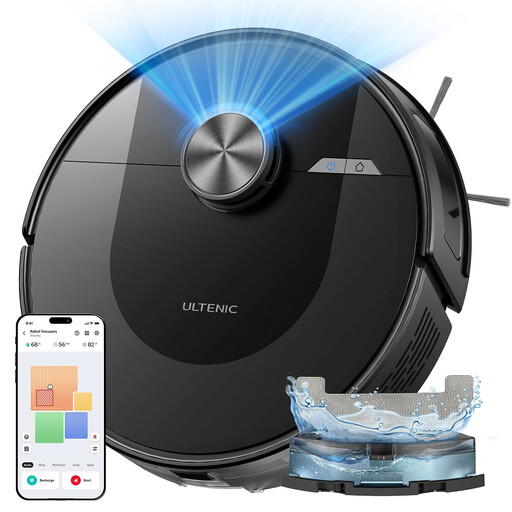
Why This Fits Their Persona: For users who want the benefits of precise LiDAR navigation and app control but can do without a self-empty station. This model offers advanced navigation features that are not a given in its price range.
This model avoids the trap of expensive yet inefficient random navigation. It relies on precise LiDAR technology, providing a solid foundation for systematic cleaning without the added cost of a self-empty station.
Precise LiDAR navigation with storage for up to 5 maps and 10 no-go zones. It offers a good suction power of 5,000 Pa (manufacturer's specification) for hard floors and carpets.
We have compiled a complete, real-time list of products that fully satisfy these strict selection criteria and UK safety regulations.
The frequency heavily depends on the size of your living area, the number of pets, and the general amount of dirt. For most models with a station rated for 30 to 60 days, this means a replacement every 1 to 2 months in an average household.
Yes, LiDAR (Light Detection and Ranging) technology works independently of ambient light. The sensor emits its own laser beams, invisible to the human eye, and measures their reflection to create a map. Therefore, the robot can navigate precisely even at night or in darkened rooms.
Models without intelligent carpet detection can indeed get carpets wet. Therefore, look for devices that automatically deactivate their mopping function on carpets. High-quality models lift their mop pad as soon as they detect a carpet and only resume mopping on hard floors. Alternatively, you can set "no-mop" zones for your carpets in the app.