
Lieferung heute & morgen

Qualitätsgarantie

Willkommens-Angebote freischalten: KOSTENLOSE Lieferung | Bis zu 80 % RABATT | Kostenlose 30-Tage-JoyPlus-Testphase
App herunterladen
The dream of a consistently clean home without the daily chore of vacuuming and mopping is a goal for many. Modern cleaning robots make this a reality. A robot vacuum with mopping and a self-emptying station not only takes over floor cleaning but also significantly minimizes maintenance. These devices navigate autonomously, clean both hard floors and carpets, and, after the job is done, handle emptying their own dustbins and cleaning their mop pads.
This article serves as a guide to help you choose the right model in 2026. We'll highlight the key technical features and present a selection of devices that cater to various needs.
Selecting the right model depends on your individual needs and your home's layout. Three key aspects should be considered in your decision.
A robot's ability to move efficiently and safely through your home is fundamental. Modern devices use advanced technologies for this:
The effectiveness of the cleaning is determined by the combination of suction power and the mopping system.
The station is the heart of the automation. Its range of functions determines how little manual intervention is required.
Based on the criteria above, we have compiled a selection of models that stand out for their technical specifications and feature sets.
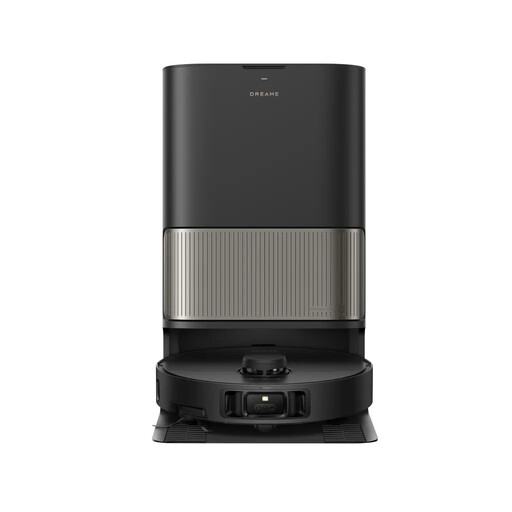
The Dreame L40s Pro Ultra is a feature-packed model designed for maximum automation and cleaning performance.
Why this model stands out: The combination of a very high suction power of 19,000 Pa and the "Dual Flex Arm" system, which features an extendable mop, allows for thorough cleaning right into the corners. According to the manufacturer, the station cleans the mops with 75°C hot water and then dries them, ensuring a high level of hygiene. The 3DAdapt Obstacle Avoidance is designed to recognise over 180 different types of objects.
Pros:
Who is this model for? For users seeking a nearly fully autonomous cleaning solution for large and complex living spaces, who value maximum cleaning performance and hygiene, especially in households with pets.
View the Dreame L40s Pro Ultra
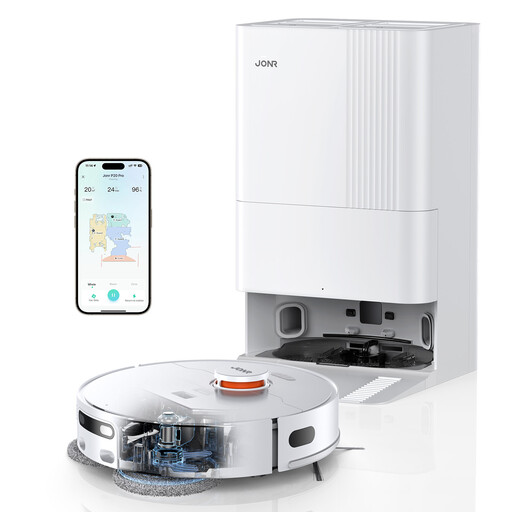
The JONR T5 Pro offers a solid set of features, focusing on essential automation functions at an attractive price-to-performance ratio.
Why this model stands out: This model combines a strong suction power of 8,150 Pa with an all-in-one base station that not only empties the dustbin but also washes and hot-air dries the mop pads. It uses precise laser navigation, and a special anti-tangle side brush is designed to reduce hair entanglement.
Pros:
Who is this model for? For budget-conscious buyers who don't want to compromise on the core functions of a fully automatic station, like mop washing and drying, and are looking for a reliable solution for medium to large homes.
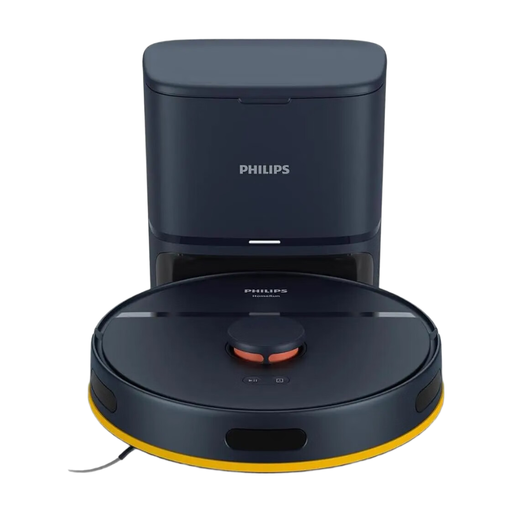
The Philips HomeRun 2000 Series Aqua focuses on the essential functions of vacuuming, mopping, and self-emptying in a compact design.
Why this model stands out: This model's auto-empty station is particularly compact, blending discreetly into your living space. The robot uses LDS laser navigation for systematic cleaning and automatically increases suction power on carpets (Carpet Boost). The mopping function is handled by a manually attached mopping pad.
Pros:
Who is this model for? For users who want a reliable vacuuming function with automatic emptying from a well-known brand and only need a basic mopping function occasionally. Ideal for homes where space for a large station is limited.
View the Philips HomeRun 2000 Series
The technology behind cleaning robots is constantly evolving. If the models presented here don't perfectly match your requirements, you might find the right device in our broader selection.
Discover More Models in the Vacuums & Mops Category
1. How often do you need to empty a robot vacuum with a self-emptying station? Depending on the model, household size, and amount of debris (e.g., from pets), the dust bag in the station typically only needs to be changed every 70 to 100 days. The device's app will notify you when a replacement is needed.
2. Can robot vacuums with a mopping function clean carpets? Yes. Modern devices automatically detect carpets. They will either lift their mop pads to keep the carpet dry or avoid it entirely when in mopping mode. At the same time, many models increase their suction power on carpets to better remove deep-seated dirt.
3. How good is obstacle avoidance on modern robot vacuums? Obstacle avoidance has improved significantly. While basic models only detect large obstacles like walls and furniture, advanced systems with cameras and 3D light scanners can also identify and navigate around low-profile objects like cables, socks, or pet waste. However, reliability heavily depends on the specific model and lighting conditions.