
Lieferung heute & morgen

Qualitätsgarantie

Willkommens-Angebote freischalten: KOSTENLOSE Lieferung | Bis zu 80 % RABATT | Kostenlose 30-Tage-JoyPlus-Testphase
App herunterladen
A robot vacuum with mop and self-emptying station can take much of the effort out of your daily floor care. However, models vary considerably in their navigation, mopping system, maintenance requirements and carpet detection. Families, pet owners and busy professionals in particular should look beyond a high Pa rating or bold claims of “maintenance-free” cleaning.
Our selection is based on clear product information and the typical needs of households in the UK.
A figure such as 8,000, 16,000 or 25,000 Pa describes theoretical suction power. On its own, it says little about how well a robot vacuum cleaner lifts pet hair from carpets. Brush design, airflow, carpet detection and the robot’s actual cleaning route all affect the results.
An anti-tangle system is particularly useful for long hair. Even so, you should check the main brush, side brush and filter regularly.
A self-emptying station can automatically empty the dust container. Depending on the model, an all-in-one station may also wash and dry the mop pads, refill the water or dispense cleaning solution.
You should still check:
Automatic dust emptying cuts down on daily chores, but it doesn’t replace routine maintenance.
A robot mop should be able to detect carpets and lift the mop or avoid carpeted areas. Mop-lifting height is a useful specification to check. For delicate or deep-pile carpets, it’s also worth setting up a no-go zone in the app.
A robot mop with hot-water cleaning also needs a suitable place to sit. Stations that use water heated to up to 75 °C and warm air should be positioned securely, kept dry and placed out of children’s reach.
A robot vacuum with LiDAR navigation uses a laser to create a digital map and can manage rooms, no-go zones and cleaning sequences. If you live in a home with multiple floors, being able to save several maps is useful. Some models support up to five maps.
Additional obstacle-detection sensors can help the robot navigate around furniture, cables, toys and pet bowls. However, not every model reliably detects small objects. Before its first run, pick up cables, socks and fragile items.
For homes with pets or lots of carpets, these features matter more than the Pa rating alone:
A robot vacuum for pet hair should ideally allow you to schedule several cleaning runs a week. In larger homes, battery life, automatic returns to the station and the ability to resume cleaning after charging are also important.
A simple damp cloth is best suited to light dirt. Depending on their design, rotating mops, vibrating pads or roller mops can maintain greater contact with the floor. However, that doesn’t guarantee the same cleaning results on every type of flooring.
Look for:
Advertised run times and maintenance intervals depend on the area cleaned, suction setting, floor type and how often you use the robot.
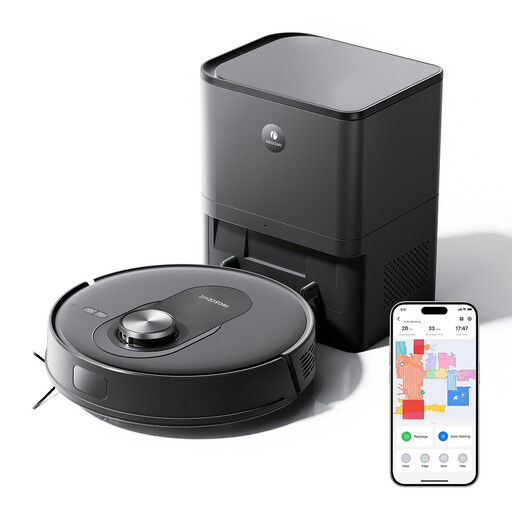
Why it suits this household: According to the product information, this model combines 8,000 Pa suction power, LiDAR navigation, app control and a run time of up to 200 minutes. It’s a good option if you’re looking for key features for hard floors, carpets and pet hair.
The mapping feature lets you set no-go zones to avoid carpets or delicate areas. The self-emptying station means you won’t have to empty the dust container by hand as often.
8,000 Pa, support for up to five maps according to the product description, and voice control via selected systems.
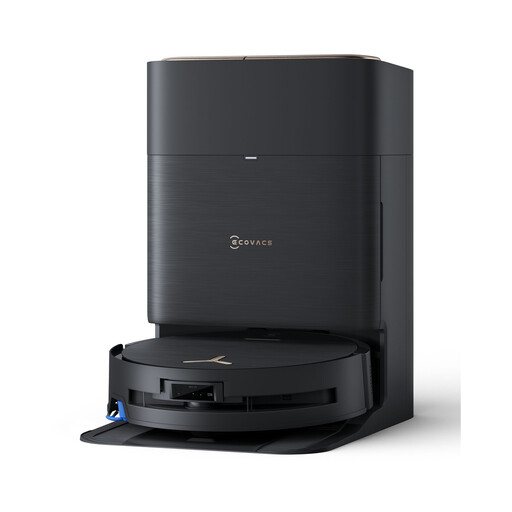
Why it suits this household: According to the product description, this model features OZMO roller-mop technology, 16,600 Pa suction power, automatic mop cleaning and hot-air drying in the OMNI station.
According to the manufacturer, the Triple-Lift system separates dry and wet cleaning, allowing the mop to lift when the robot reaches a carpet.
Hot-water mop washing at temperatures between 40 and 75 °C, according to the product information, plus automatic dust emptying.
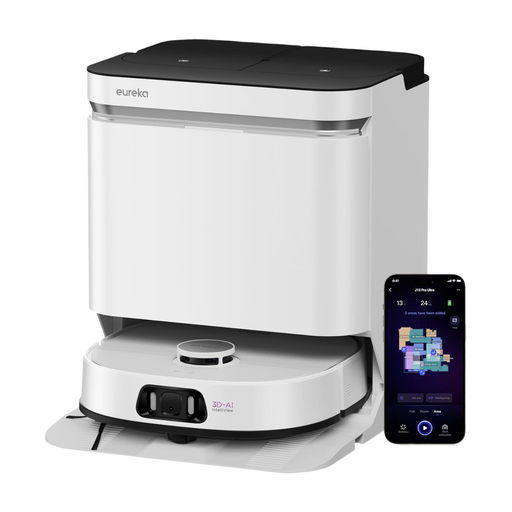
Why it suits this household: According to the product information, this model is designed for homes with pet hair and heavy cleaning needs. Its listed features include 16,200 Pa, FlexiRazor anti-tangle technology, 75 °C mop washing and a self-cleaning base station.
The anti-tangle design aims to reduce hair build-up around the brush. You’ll still need to check the filter and dust container.
Automatic emptying, washing and drying of the mop pads, according to the product description.
We’ve put together a complete, regularly updated list of products that meet these strict selection criteria and the safety regulations in force in the EU.
Once you’ve positioned the station, place it on a level surface with enough clear space around it. Fully charge the robot, connect it to the app and let it create a map before its first clean. You can then name rooms, set cleaning times and create no-go zones.
For reliable performance:
It depends on the size of the dust container, the floor area, the amount of pet hair and how often you clean. Manufacturer claims such as “up to 60 or 90 days” should be treated as estimates. If you have several pets, the container may fill up much sooner.
Yes, as long as the model can detect carpets and lift the mop or avoid the area. For deep-pile or delicate carpets, check the maximum carpet height supported and supervise the robot during its first test run.
As well as electricity, you may need to buy dust bags, filters, brushes, mop pads and cleaning solution. Bagless stations save you the cost of dust bags, but their collection containers need regular cleaning. Check that replacement parts are available before you buy.