
Lieferung heute & morgen

Qualitätsgarantie

Willkommens-Angebote freischalten: KOSTENLOSE Lieferung | Bis zu 80 % RABATT | Kostenlose 30-Tage-JoyPlus-Testphase
App herunterladen
Regularly cleaning your floors can take up a significant portion of your weekly chores. The effort required to keep floors simultaneously clean and dust-free is especially high in households with children, pets, or an active lifestyle. A robot vacuum with a mopping function and a self-emptying station is designed to largely automate this process. These devices not only handle vacuuming and mopping but also take care of their own maintenance by emptying dust, cleaning mop pads, and refilling fresh water.
This article serves as a guide. It explains important technical features to consider when making your selection and presents a curated list of models with varying functionalities to help you make an informed decision.
By the Joybuy Product Recommendation Officer, July 18, 2026
Selecting the right device depends on your individual needs and living situation. The following criteria will help you objectively compare the functionality of different models.
The type of navigation determines how efficiently and systematically a robot cleans your living spaces. A robot vacuum with laser navigation (LDS, LiDAR) creates precise maps of its surroundings, enabling structured cleaning in straight, efficient paths. This technology also works reliably in low-light conditions. Supplementary cameras and AI-powered software can further improve the detection of smaller obstacles like cables, shoes, or toys, minimizing collisions. For homes with complex floor plans or a lot of furniture, precise navigation is crucial.
The cleaning performance of a robot vacuum and mop is determined by two main components: its suction power, measured in Pascals (Pa), and its brush and mopping system. High suction power is particularly important for carpets and for picking up pet hair. Rubberized main brushes can reduce hair tangles.
The key convenience factor in premium models is the multifunctional station. A self-cleaning mopping robot offers the following features:
A modern automatic vacuum cleaner is controlled via a smartphone app. A robot vacuum with app control should offer an intuitive user interface that allows you to create cleaning schedules, set up virtual no-go zones, and adjust cleaning intensity for individual rooms. The ability to save multiple maps for different floors is an important feature for multi-story homes. Compatibility with voice assistants like Amazon Alexa or Google Assistant further enhances user convenience.
Here is a selection of devices that focus on different aspects of automation, performance, and functionality.
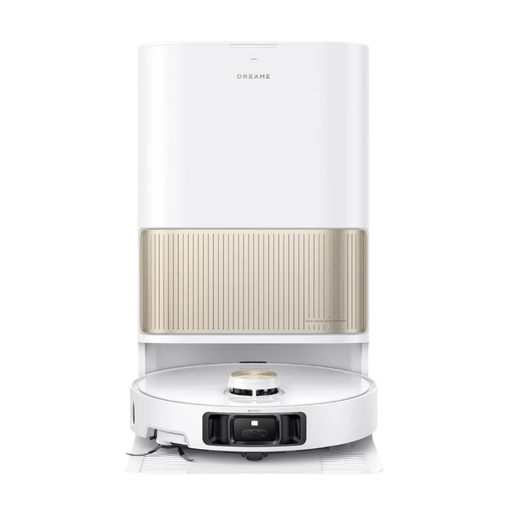
Why this model stands out: The DREAME L40S Pro Ultra is a system designed for a very high degree of automation. Its multifunctional station handles nearly all maintenance tasks: it empties dust, washes the mop pads with 75°C hot water, dries them with hot air, and refills the robot's water tank. The combination of laser and AI-powered vision navigation allows for precise mapping and obstacle detection.
Pros:
Who is it for? This model is aimed at users seeking a comprehensive, low-maintenance cleaning solution for demanding households with various floor types and high thresholds.
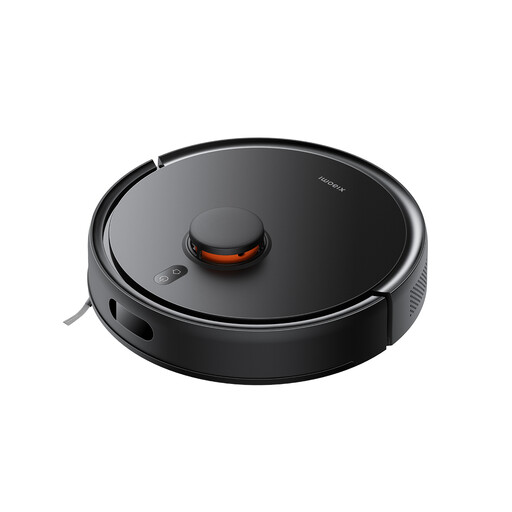
Why this model stands out: The Xiaomi Robot Vacuum S20 focuses on the core functions of vacuuming and mopping with precise navigation. It uses proven LDS laser navigation for fast and accurate mapping of living spaces. Unlike models with a fully automated cleaning station, the S20 comes with a charging-only dock. Maintenance, such as emptying the dustbin and cleaning the mop pad, is done manually.
Pros:
Who is it for? The S20 is an option for users looking for a reliable robot vacuum with a mopping function and precise navigation, but who can or prefer to do without a fully automated cleaning station.
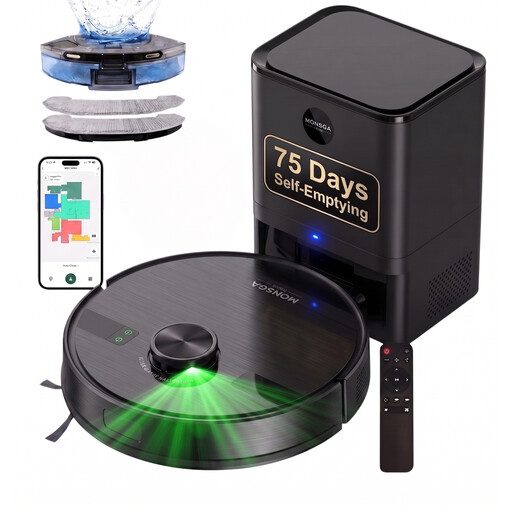
Why this model stands out: The monsga MS1 MAX offers a combination of powerful suction and a self-empty station for automatic dust disposal. With 9,000 Pa of suction power, it is designed to remove dirt and pet hair from various surfaces. The station features a 4-litre dust bag, significantly reducing the frequency of manual emptying.
Pros:
Who is it for? This model is suitable for users who value powerful suction and the convenience of automatic dust emptying, especially in larger homes or households with pets.
The models presented here represent just a fraction of the available technologies and features. If you are looking for other devices with different specifications or for other applications, you can find a wider selection in our main category.
Explore our entire range of vacuuming devices.
The frequency depends on the size of the dust bag in the station (usually 2.5 to 4 litres), the size of the household, the presence of pets, and the cleaning frequency. On average, the bag in the station needs to be changed every 30 to 75 days.
They are primarily designed for hard floors such as tile, laminate, vinyl, and sealed hardwood. Modern devices automatically detect carpets and either lift their mop pads or avoid the area entirely when in mopping mode. For sensitive or unsealed wooden floors, the manufacturer's instructions should be followed carefully.
Models with high suction power (5,000 Pa and above) and special rubber brushes are generally very effective at picking up pet hair. The rubber fins prevent long hairs from getting tangled. A self-empty station is particularly advantageous here, as the robot's small dustbin, which fills up quickly with hair, is automatically emptied after each cleaning cycle.