
Lieferung heute & morgen

Qualitätsgarantie

Willkommens-Angebote freischalten: KOSTENLOSE Lieferung | Bis zu 80 % RABATT | Kostenlose 30-Tage-JoyPlus-Testphase
App herunterladen
A robot vacuum with mop and self-emptying station is designed to reduce the effort involved in keeping your home clean. In practice, however, models vary considerably in their navigation, hair pickup, mopping technology and maintenance requirements. Households with pets, several rooms or carpets should look beyond the advertised Pascal rating.
Ratings such as 8,000, 12,000 or 20,000 Pa describe the maximum suction pressure under certain conditions. On their own, they don’t tell you how well a robot picks up pet hair or fine dust. These factors matter too:
A robot vacuum with high suction power can perform impressively on hard floors, while brush design and navigation become more important on deep-pile carpets.
A self-emptying station automatically empties the dust container. All-in-one stations also wash and dry the mop pads. Even so, depending on the model, you’ll still need to:
When choosing a robot vacuum with self-emptying, check whether the station uses bags or is bagless. A 2-litre container can help reduce the ongoing cost of dust bags, while a bagged system keeps more dust contained when you empty it.
If you have a mix of carpets and hard floors, look for automatic mop lifting. Depending on the design, the robot will either raise the mopping module or avoid designated carpet zones altogether. Without this feature, a damp pad could wet your carpets.
For pet owners, the Pa rating isn’t the only thing that matters. Anti-tangle systems with specially shaped main and side brushes can reduce the amount of maintenance needed. Regular checks are still advisable, especially if you or your pets have long hair.
A robot vacuum for pet hair should also have a suitably sized dust container or a self-emptying station. With lots of fur around, the container can fill much faster than it would with ordinary household dust.
A robot vacuum with LiDAR navigation uses a laser to map rooms and plan systematic cleaning routes. This is particularly useful in larger homes, multi-storey properties and rooms with lots of furniture. Sensors for stairs, carpets and obstacles complement the navigation system.
Structured light or 3D sensors can detect cables, toys and slippers. Even so, you should pick up loose items before starting the robot. No sensor can replace preparing the floor safely.
For larger homes, battery capacity, automatic return to the station and resuming cleaning are all important. Useful app features include:
Also check whether the model only supports 2.4 GHz Wi-Fi. This is a practical setup consideration if you have several devices in your smart home.
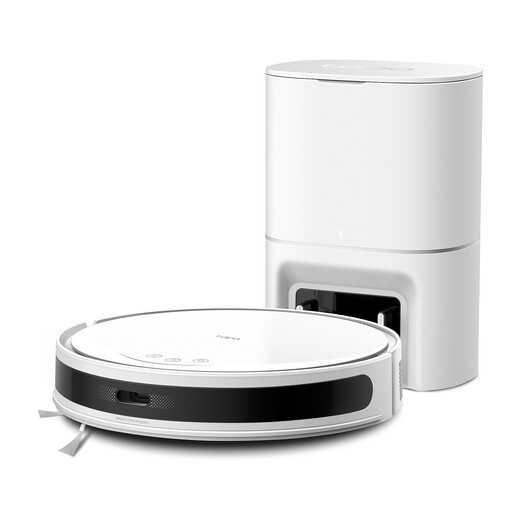
Why it suits this profile: At just 83 mm tall, this compact robot combines mopping, automatic dust emptying and MagSlim LiDAR navigation.
Its navigation creates systematic maps, and you can manually define carpet areas in mopping mode.
5,300 Pa suction power, a 3-litre dust bag, app and voice control, plus automatic charging and resume functions.
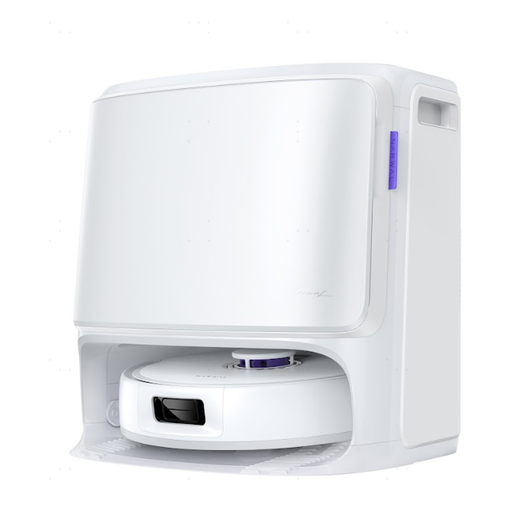
Why it suits this profile: The integrated station takes care of dust collection, mop-pad washing and drying. This model is designed for homes with pets and a mix of floor types.
The dual-brush design is intended to reduce hair tangles, while an ultrasonic sensor detects carpets and lifts the mop.
11,000 Pa suction power, a stated runtime of 220 minutes, a 2.5-litre dust bag and laser navigation.
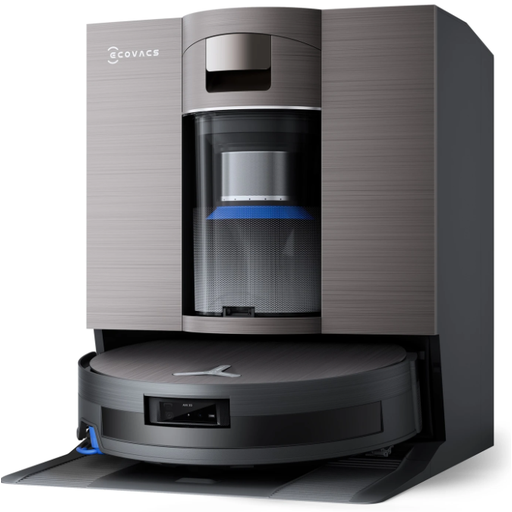
Why it suits this profile: This model is designed for larger homes and for anyone looking for a high level of automation when it comes to mopping, drying and dust collection.
The station is bagless, and according to the product specifications, the 4WD design can clear thresholds up to 2.4 cm high.
Stated suction power of 19,500 Pa, a bagless 1.6-litre station, 75°C mop washing, and app or voice control.
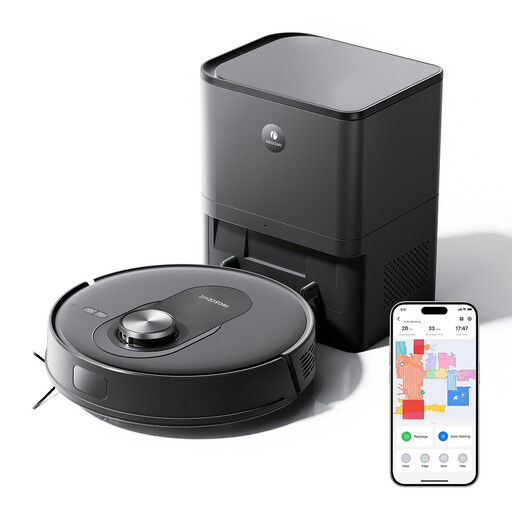
Why it suits this profile: LiDAR mapping, support for up to five floor maps and a stated runtime of up to 200 minutes make it well suited to cleaning larger homes.
Map and zone features let you target specific areas, while the station automatically empties the dust container.
8,000 Pa suction power, a HEPA filter, 3-litre capacity, and app and voice control via 2.4 GHz Wi-Fi.
We’ve put together a complete, regularly updated list of products that meet these strict selection criteria and fully comply with the safety regulations in force in the EU.
It depends on the size of your home, how much dust there is and whether you have pets. Brushes and sensors should be checked regularly. Mop pads, filters and water tanks also need attention, depending on how often you use the robot. A self-emptying station mainly saves you from having to empty the dust container every day.
Yes, as long as the model can detect carpets and automatically lift the mop, or lets you manage carpet zones in the app. For deep-pile carpets, also check the stated ground clearance, brush design and maximum threshold height.
You may need to pay for dust bags, filters, side and main brushes, mop pads and cleaning products. Bagless stations don’t need dust bags, but may require more effort to clean the collection container. Before buying, check the prices and availability of genuine replacement parts.