
Lieferung heute & morgen

Qualitätsgarantie

Willkommens-Angebote freischalten: KOSTENLOSE Lieferung | Bis zu 80 % RABATT | Kostenlose 30-Tage-JoyPlus-Testphase
App herunterladen
A robot vacuum with a mopping function promises to be a significant help around the house: clean floors without you having to lift a finger. But the market is filled with models whose marketing promises often suggest more than the technology can deliver. Many buyers quickly find that their device gets stuck on cables, misses corners, or that the mopping function is little more than a damp wipe.
As a Joybuy Product Recommendation Officer, I analyse product data and user feedback to help you separate the wheat from the chaff. This guide focuses on the technical pitfalls and crucial features to ensure your investment pays off in the long run.
Before we dive into recommended features, it's important to understand the most common reasons for dissatisfaction. These three points often lead to costly mistakes.
Manufacturers often advertise extremely high Pascal (Pa) values as a measure of suction power. While a high Pa value is a good foundation, it alone does not guarantee a thorough clean. The actual cleaning performance depends just as much on the main brush's construction, the air duct design, and the robot's ability to effectively channel dirt to the suction inlet. A device with a well-designed, tangle-free brush and 8,000 Pa can achieve better results in practice than a poorly designed model with a supposed 12,000 Pa.
Many budget-friendly models only feature a passive mopping function. This involves dragging a damp cloth across the floor without any pressure or movement. While this may remove light dust, it's ineffective against dried-on stains or sticky messes. Effective robot mops use active systems, such as:
Navigation technology is the robot's brain and determines how efficiently and completely your home is cleaned. Basic models based on gyroscope sensors often follow uncoordinated paths, get stuck on furniture, and struggle to find their charging station. A modern robot vacuum with navigation should have more advanced systems to ensure a structured cleaning process.
To avoid the pitfalls mentioned above, you should focus on the following three technical parameters when making your choice.
The most precise method for mapping and navigation is LDS (Laser Distance Sensor), also known as LiDAR. A laser turret scans the surroundings and creates an exact map of your rooms. This enables systematic cleaning in straight lines and a reliable return to the station.
For real-time obstacle detection, 3D technology (e.g., structured light or a camera) is also crucial. Such systems reliably detect low-profile objects like cables, shoes, or toys and navigate around them instead of getting stuck.
For households with pets or long-haired individuals, a tangle-free main brush is essential. Models with all-rubber fins or special anti-hair designs significantly reduce maintenance. A robot vacuum for pet hair should definitely have this feature.
If you have both hard floors and carpets, an automatic mop-lifting function is a must-have. When the robot detects a carpet, it automatically lifts its mopping pads. This ensures the robot vacuum for carpets doesn't get them wet, allowing cleaning to be completed in a single run without manual intervention. A lift height of at least 7 mm is sufficient for most low- and medium-pile carpets.
A robot vacuum with an auto-empty station already offers a high level of convenience by automatically emptying the robot's dustbin. However, modern all-in-one stations go far beyond this, redefining autonomy. Look for the following features:
Based on the criteria above, we have selected a few models from our range that are suitable for specific user profiles.
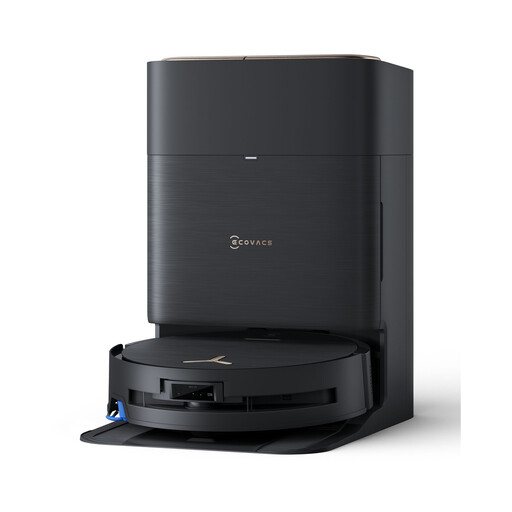
Why This Fits Their Persona: Ideal for busy professionals and families looking for a nearly maintenance-free cleaning solution. The all-in-one station fully handles washing, drying, and emptying.
The OMNI station with hot-water mop washing and hot-air drying goes far beyond the passive "Wet Wipe Syndrome." The AIVI 3D 3.0 navigation reliably prevents it from getting stuck.
OZMO Roller Mop: A rotating roller mop that removes stubborn stains with high pressure (3,700 Pa). TruEdge 2.0: The mop extends dynamically to clean edges with up to 1 mm accuracy.
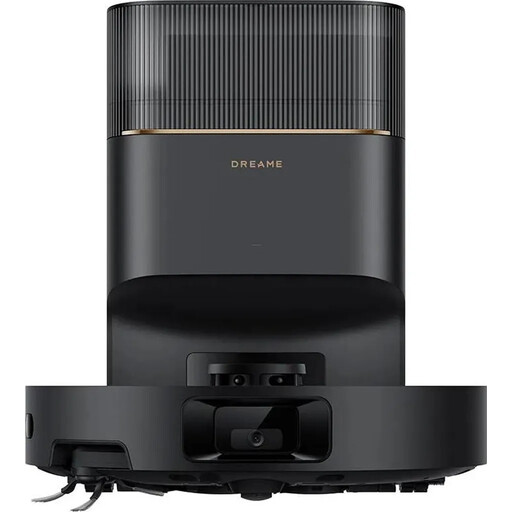
Why This Fits Their Persona: Designed for the challenges of pet hair. The high suction power and special brush design minimise maintenance, while the large dust bag requires less frequent changing.
The high suction power of 13,000 Pa is combined here with the HyperStream Detangling DuoBrush, which the manufacturer claims is 100% tangle-free, thus avoiding the Pascal Trap.
Up to 150 days without emptying: The 5-litre dust bag in the station collects dirt and hair for months. 3D Structured Light Navigation: Reliably detects and avoids obstacles like pet toys.
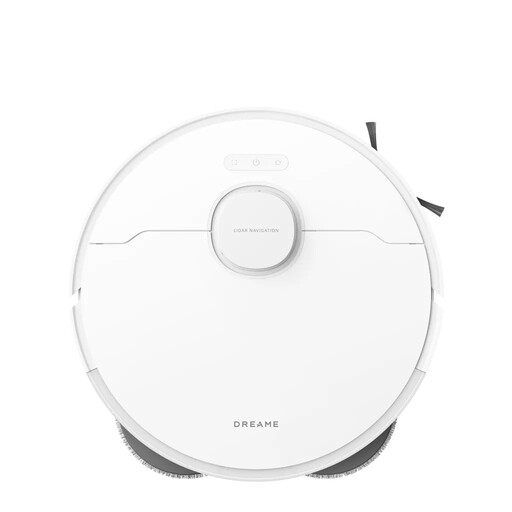
Why This Fits Their Persona: A powerful option for users who need effective vacuuming and mopping on mixed floor types but can do without a fully automatic cleaning station.
The DuoScrub mopping system with two rotating mops actively scrubs the floor, making it significantly more effective than passive systems. The automatic mop-lifting feature prevents wet carpets.
7 mm Mop Lift: Automatically lifts the mopping pads on carpets to keep them dry. 13,000 Pa Suction Power: Ensures a deep clean on carpets and removes stubborn dirt.
We have compiled a complete, up-to-date list of products that fully meet these strict selection criteria and safety regulations.
This largely depends on the model and your usage. For a robot vacuum with an auto-empty station, the dust bag in the station needs to be changed approximately every 60 to 150 days, depending on household size and the amount of dirt (e.g., from pets). For all-in-one stations, the fresh water tank must be filled and the dirty water tank emptied, typically after cleaning about 100-200 m?.
Modern devices with active, rotating, or vibrating mops and hot-water cleaning come very close to manual mopping and can replace it for regular maintenance cleaning. They effectively remove everyday dirt and light stains. For very stubborn, dried-on grime or in hard-to-reach corners, occasional manual touch-ups may still be necessary.
As mentioned earlier, the Pascal value is only part of the equation. High suction power is primarily relevant for deep-cleaning carpets to pull fine dust and allergens from the fibres. On hard floors, the design of the brush that picks up the dirt is often more important than an extremely high Pa value. Look for a balanced overall package of suction power, brush technology, and intelligent navigation.