
Lieferung heute & morgen

Qualitätsgarantie

Willkommens-Angebote freischalten: KOSTENLOSE Lieferung | Bis zu 80 % RABATT | Kostenlose 30-Tage-JoyPlus-Testphase
App herunterladen
A robot vacuum with mopping and a fully automatic cleaning station promises the ultimate in household convenience. However, the market is flooded with devices whose marketing promises often fall short in practice. Many users discover after purchase that the supposed automation involves unexpected manual effort. This guide highlights which technical features are truly crucial and how you can avoid the typical pitfalls when buying.
Before you make a purchasing decision, it's important to know the most common problems that can arise with devices that include a cleaning station. These issues often lead to expensive technology being left unused.
To avoid the problems mentioned above, you should pay attention to specific technical parameters when making your selection. These define the difference between a gimmick and a true home assistant.
A truly advanced station offers more than just dust extraction. Look for the following functions that minimise maintenance:
Sheer suction power, measured in Pascals (Pa), is only part of the equation. For a thorough clean, especially with pet hair, the design of the brushes and the ability to clean edges are critical.
For households with both hard floors and carpets, the robot's ability to adapt its cleaning method is essential.
Based on the criteria above, we have identified a few models that offer specific solutions for demanding households.

Why This Fits Their Persona: Ideal for tech-savvy users and large households seeking a nearly hands-free cleaning solution. The combination of an advanced station and intelligent edge cleaning minimises any manual intervention.
The OMNI station with 75°C Hot Water Mop Washing and hot air drying prevents odour build-up. The TruEdge 2.0 Edge Cleaning with its extendable mop solves the problem of uncleaned borders.
The ZeroTangle 3.0 anti-tangle technology is especially suitable for households with pets. The fully automatic station handles washing, drying, emptying, and refilling.
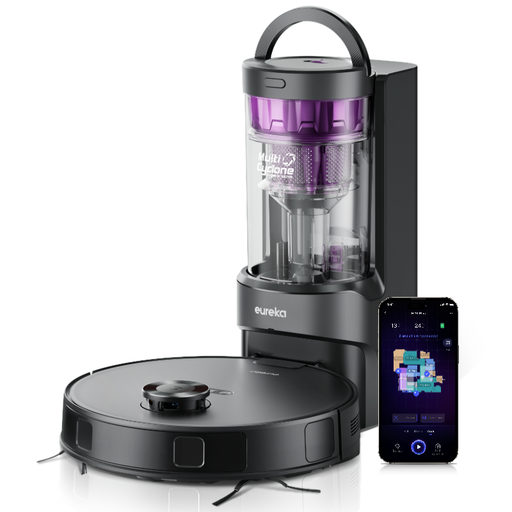
Why This Fits Their Persona: Suitable for users who want powerful and reliable automation for mixed floor types and value a good price-to-performance ratio on core features.
The smart 10 mm mop lift reliably prevents carpets from getting wet when the robot passes over them. The bagless auto-empty station reduces running costs and maintenance.
The DuoDetect AI 3D Obstacle Avoidance ensures reliable navigation even in complex environments. The high suction power of 8000 Pa (according to the manufacturer) is effective on pet hair and carpets.
We've compiled a full, up-to-date list of products that fully meet these strict selection criteria and German safety regulations.
Maintenance intervals depend heavily on the model and frequency of use. With a self-cleaning robot vacuum featuring a fully automatic station, you typically need to refill the fresh water tank and empty the dirty water tank every 45 to 60 days. The dust bag in the station often holds several weeks' worth of dirt. Manual cleaning of the station itself (e.g., the washing basin) is rarely required with high-quality devices, perhaps only every few months.
The function is most effective on low- to medium-pile carpets. A lifting height of 10 mm or more, as found in the recommended models, is usually sufficient to avoid contact. With very high-pile or shaggy carpets, some light contact may still occur. In such cases, it is advisable to set up a "No-Mop Zone" in the app for these specific areas.
Ongoing costs are an important factor. For models with bagless stations, the cost of dust bags is eliminated. The consumables that need to be replaced periodically include:
Investing in a model with durable, washable components and a bagless station can significantly reduce follow-up costs.