
Lieferung heute & morgen

Qualitätsgarantie

Willkommens-Angebote freischalten: KOSTENLOSE Lieferung | Bis zu 80 % RABATT | Kostenlose 30-Tage-JoyPlus-Testphase
App herunterladen
A robot vacuum cleaner with mopping function can make daily floor care much simpler. However, robot vacuum-mop combos differ significantly in navigation, maintenance, carpet detection and docking station features. If you only focus on a high Pa rating or a long battery life, you might overlook important limitations in everyday use.
Figures like 10,000 or 30,000 Pa describe the maximum suction performance under certain conditions. They don't automatically tell you how well a robot reaches corners, carpet fibres or pet hair. Just as important are:
A robot vacuum for pet hair should therefore not only have high suction power, but also a brush that is easy to clean.
A robot vacuum with an auto-empty station reduces the need to empty the bin manually. However, the water tank, dirty water tank, filter, sensors and mopping pads still require regular care. With a self-cleaning station, additional parts such as the cleaning tray, drying channels and water filter come into play.
Before buying, you should clarify:
Most robot vacuum-mop combos are designed for sealed hard floors such as tiles, laminate or parquet. On carpets, the mop pad must be lifted, or the carpet must be marked as a no-go zone on the map. A robot that simply wipes with a damp cloth also doesn't replace manual deep cleaning of stubborn stains.
A robot vacuum with LiDAR navigation uses laser sensors to create a map of the room and can plan cleaning routes systematically. This is especially helpful in homes with multiple rooms, larger floor areas and several storeys. Look for:
However, LiDAR is no substitute for a tidy floor. Loose cables, small objects and fragile items should be removed before the first cleaning run.
The stated battery life depends on the selected suction mode, the floor type and the mopping function. A model that runs for 150 minutes in Eco mode may run significantly shorter in Max mode. For larger homes, breakpoint cleaning, automatic recharging and a saved room map are practical features.
The advertised square metre coverage should be taken as a guide. Furniture, carpets, thresholds and frequent obstacles reduce the actual area cleaned.
With a basic mopping function, a mop cloth is dampened. More convenient are systems with rotating or continuously rinsed mopping rollers. A robot vacuum with a self-cleaning station can, depending on its features, wash the mop pads, dry them, empty the dustbin and provide fresh water.
Also check:
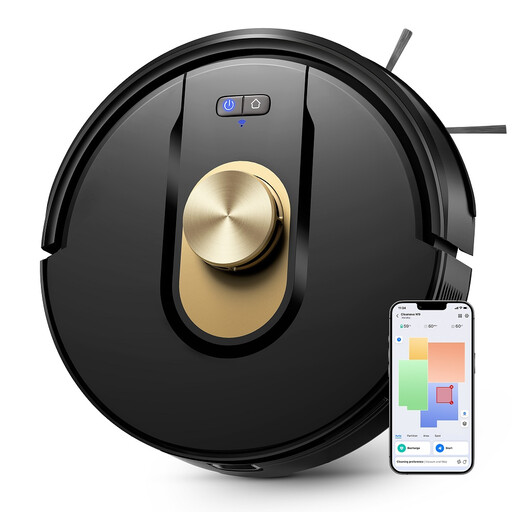
Why this product fits the profile: According to the product specifications, the W9 combines 8,000 Pa suction power, LiDAR navigation, up to five maps and a battery life of up to 150 minutes. This makes it suitable for flats with hard floors, carpets and individual cleaning zones.
The app supports room division, schedules and up to 15 no-go zones. Three suction and three water levels help you tailor the cleaning to your floor type.
LiDAR mapping, app and voice control, plus automatic charging and resume function.
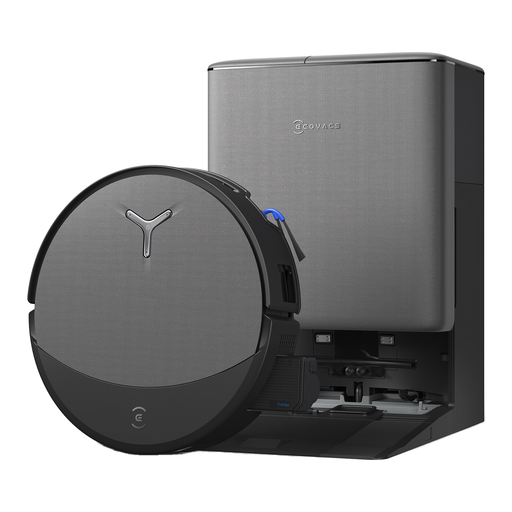
Why this product fits the profile: According to the product data, this model offers up to 30,000 Pa suction power, OZMO roller mopping technology, AIVI 3D navigation and an OMNI station with fresh and dirty water cleaning.
According to the manufacturer, the station takes care of cleaning the mopping system and the dirty water tank. Carpet detection and mop lifting are relevant for mixed floor types.
Up to 350 minutes battery life, 24 mm threshold clearance and automatic station maintenance according to the product description.
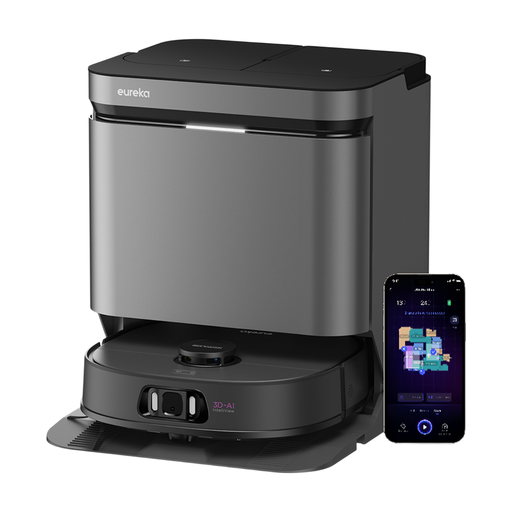
Why this product fits the profile: For households with pets and frequent cleaning needs, the product description mentions 16,200 Pa, anti-tangle technology and a station with hot water cleaning and warm air drying.
According to the manufacturer, the FlexiRazor construction is designed to reduce hair tangling. The station handles emptying, washing and drying the mop pads.
Combination of hot water mop washing, drying, obstacle detection and edge cleaning according to the product specifications.
We've put together a complete, regularly updated list of products that fully meet these strict selection criteria and the safety regulations in force in the EU.
Place the charging station on a level surface and leave enough space in front of and beside the station. Remove loose cables and small objects. Then fully charge the robot, connect it to the app and start an initial mapping run. Depending on the model, only a 2.4 GHz Wi-Fi network may be supported.
The lifespan depends on usage, battery, brushes, filters and maintenance. Regularly cleaning the sensors and brushes, as well as replacing wear parts in good time, can help support reliable operation. The battery is a consumable item and may lose capacity after several years.
In addition to electricity consumption, costs can arise for filters, side brushes, main brushes, mop pads, cleaning solution and dust bags. With a bagless auto-empty station, you avoid the regular purchase of dust bags. Before buying, check which consumables are available for your specific model and how often the manufacturer recommends replacing them.