
Lieferung heute & morgen

Qualitätsgarantie

Willkommens-Angebote freischalten: KOSTENLOSE Lieferung | Bis zu 80 % RABATT | Kostenlose 30-Tage-JoyPlus-Testphase
App herunterladen
A robot vacuum cleaner with a mopping function should do more in daily life than just pick up dust. It needs to distinguish between carpets and hard floors, tackle pet hair, detect obstacles, and require as little maintenance as possible after cleaning. At the same time, big numbers on product pages don’t automatically mean you’re getting the right device.
Buying mistakes often come from three marketing traps:
Suction power is usually given in Pa (Pascals). This value is a technical measurement of the negative pressure, but it’s not the only quality benchmark. For households with pets, you should also consider:
A robot vacuum for pet hair should be checked regularly, even if the manufacturer mentions an anti-tangle technology. According to the manufacturer, the Eureka J15 Pro Ultra uses FlexiRazor technology, which is said to reduce hair tangles by 99%. This claim is based on the product description and doesn’t replace checking your own home situation.
A robot vacuum with laser navigation creates a digital map using LiDAR or LDS sensors. This is particularly useful in large flats, across multiple rooms, or on different floors. Look out for:
App control is helpful if you want to clean individual rooms on a timer. Before the first run, you should remove loose cables, small objects and delicate decorations from the floor. Even good obstacle detection can’t always reliably detect very small or awkwardly placed objects in every situation.
With a vacuum and mop robot, how the mopping module works is crucial. Simple models drag a damp cloth across the floor. Comfort-oriented all-in-one robot vacuums can also wash the pads, dry them, refill fresh water and collect dirty water.
Check before you buy:
A self-cleaning station reduces daily effort, but it doesn’t make the robot completely maintenance-free. Filters, brushes, sensors, water tanks and the cleaning tray still need to be maintained according to the manufacturer’s instructions.
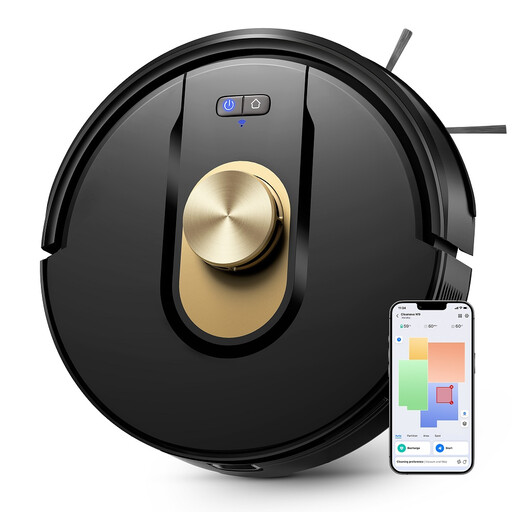
Why this product fits the profile: The W9 combines vacuuming and mopping with LiDAR navigation, app control and multiple maps. According to the product information, it offers up to 150 minutes of runtime and three suction and water levels.
The three suction and water levels allow adjustment for hard floors and carpets. No-go zones can be set via the app.
LiDAR mapping, up to five maps, app and voice control, plus a stated noise level of 50 dB in quiet mode.

Why this product fits the profile: This model combines a stated suction power of 25,000 Pa with an OMNI station, OZMO mopping technology and laser-based TrueMapping navigation.
According to the product description, the mopping module automatically lifts on carpets. The station washes the pads at up to 75 °C and dries them with warm air.
Up to 180 minutes of runtime, four suction levels, automatic dust emptying and ZeroTangle 3.0 technology according to the manufacturer.
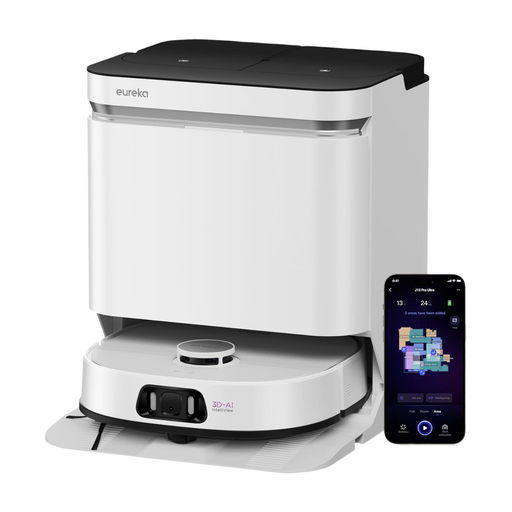
Why this product fits the profile: The J15 Pro Ultra is aimed at households with pet hair, large areas and frequent mopping needs. Manufacturer specifications mention 16,200 Pa, a self-cleaning station and up to 75 °C for pad washing.
The product description mentions an anti-tangle technology as well as automatic adjustment to dry and wet dirt. The station handles several maintenance steps.
Extendable mopping system for edge areas, app and voice control, plus a station with dust emptying, water filling and pad care according to the manufacturer.
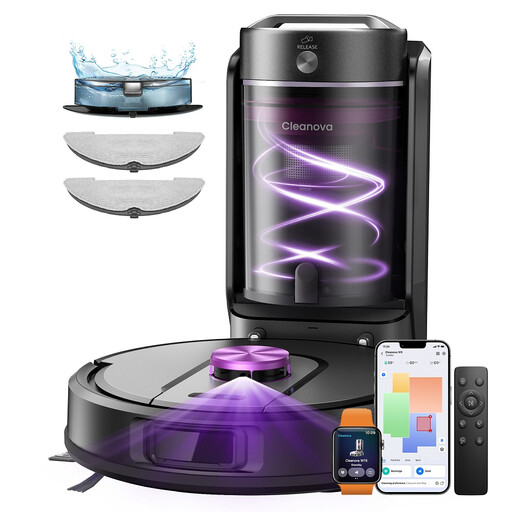
Why this product fits the profile: The W15 is designed as a 3-in-1 device with LiDAR navigation, a bagless 4-litre auto-empty station and a stated runtime of up to 180 minutes.
The app allows up to five maps as well as no-go zones. Three suction and three water levels help separate carpet and hard floor areas.
Stated 10,000 Pa suction power, 60 dB operating noise and automatic continuation of cleaning after recharging.
We’ve put together a complete, regularly updated list of products that fully meet these strict selection criteria and the safety regulations in force in the EU.
Alongside the purchase price, consumables and the effort involved also matter. Check whether the model needs dust bags or uses a bagless bin. With stations that have water tanks, regular tasks like refilling, emptying and cleaning also come into play.
For a longer service life, you should:
Yes, if the device detects carpets and automatically lifts the mopping module, or if carpeted areas can be excluded via the app. With high-pile carpets, you should also check the stated obstacle height and the device’s overall height.
The running costs depend on replacing filters, brushes and pads, cleaning solution and dust bags. Bagless stations can reduce the need for dust bags, but they still require regular cleaning of the bin and filters.
It’s not possible to give a fixed lifespan. It depends on the cleaning frequency, floor type, pet hair, maintenance and the availability of spare parts. So before you buy, check that brushes, filters, mop pads and a clear maintenance guide are available.