
Lieferung heute & morgen

Qualitätsgarantie

Willkommens-Angebote freischalten: KOSTENLOSE Lieferung | Bis zu 80 % RABATT | Kostenlose 30-Tage-JoyPlus-Testphase
App herunterladen
A robot vacuum cleaner with mopping function should do more than just pick up dust as part of your daily routine. Families, pet owners and busy professionals expect reliable navigation, smooth transitions between carpet and hard flooring, and as little maintenance as possible. In practice, however, some marketing claims can lead to the wrong purchase.
A quoted suction power of 10,000 or 25,000 Pa sounds impressive. But this figure alone doesn’t tell you how well a device picks up hair, dust or crumbs. Brush design, airflow, automatic power adjustment and suitability for your particular flooring are just as important.
A robot vacuum cleaner for pet hair should therefore also have a brush designed to reduce hair tangles, an easy-to-access filter and a dust container with enough capacity.
A dock can empty the dust container, wash the mop pads or dry them with warm air. You’ll still need to check the water tanks, dirty-water tank, filters, sensors and brushes regularly. Even a self-cleaning robot vacuum cleaner needs a suitable space and care in line with the manufacturer’s instructions.
A robot vacuum cleaner with LiDAR navigation can map rooms and plan systematic cleaning routes. However, it may not necessarily detect very small objects, cables or flat fabrics. Before its first run, remove cables, delicate objects and loose fabrics from the floor.
Several features are important when choosing a robot vacuum cleaner for carpets and hard floors:
A robot mop isn’t a substitute for cleaning larger spills by hand. These devices are designed for the dry and damp cleaning modes described in the product details, not for vacuuming up spilled liquids.
A robot vacuum cleaner with app control should at least let you view room maps, set schedules and no-go zones, and select individual rooms. LiDAR systems generally create a structured map of your home. Gyroscope-based models can also clean systematically, but depending on the model, their mapping features may be less detailed.
Also check Wi-Fi compatibility. Several of the devices featured here require 2.4 GHz Wi-Fi. A stable connection is needed for remote control, map management and voice assistants.
A robot vacuum cleaner with an auto-empty dock means you don’t have to empty the dust container as often. All-in-one docks add features such as mop washing, drying and, in some cases, automatic detergent dispensing. Before buying, check:
For families and pet owners, a large dust container can mean less frequent maintenance. The actual time between emptying depends on the size of your home, how dirty the floors get and how much pet hair there is.
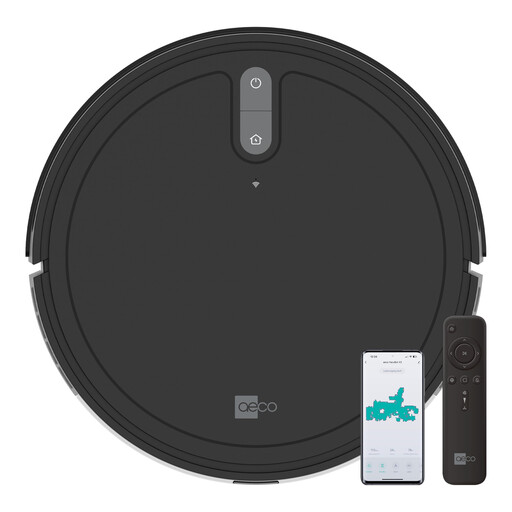
Why it suits this profile: According to the product description, this model offers three suction settings, automatic return to the charging dock, and app and remote control. It’s a good fit for households looking for basic automation without a feature-packed all-in-one dock.
You can adjust the suction power, rather than relying on a single maximum figure. The dust container holds 0.6 litres, according to the product details.
5000 Pa according to the product details, up to 190 minutes of runtime and a height of 7.7 cm.

Why it suits this profile: According to the product description, this model combines 25,000 Pa suction with laser navigation, automatic mop lifting on carpets and an OMNI dock that empties the dust container, washes the mop and dries it with warm air.
The mopping function works alongside carpet detection and mop lifting. The dock takes care of several maintenance tasks, but you’ll still need to refill and empty the water tanks.
Laser navigation, four suction settings and a dock that washes the mop at 75-°C, according to the product details.
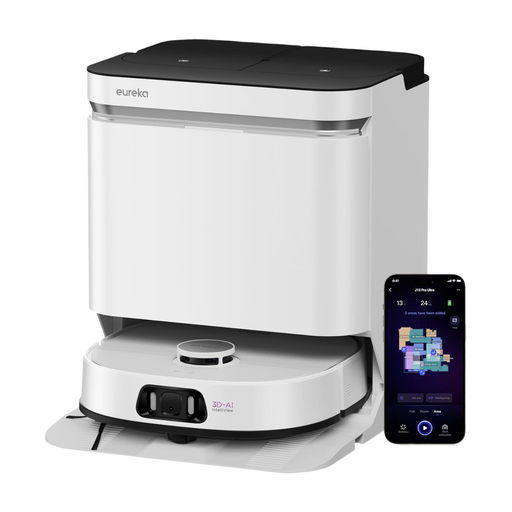
Why it suits this profile: According to the product description, this model is designed for homes that need frequent cleaning and have pets. Features include 16,200 Pa suction, anti-tangle technology, liquid detection and a dock that automatically manages dust and water.
The choice isn’t based on suction power alone: hair management, dirt detection and easy-to-access maintenance points are also taken into account.
Mop washing at 75-°C, warm-air drying at 55-°C and an anti-tangle function designed for pet hair, according to the product details.
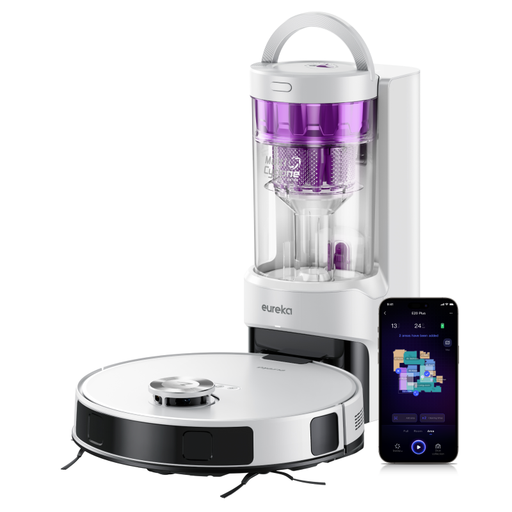
Why it suits this profile: According to the product details, the E20 Plus combines 8,000 Pa suction, LiDAR mapping, 3D obstacle detection, app and voice control, and a bagless dock.
The automatic 10 mm mop lift is useful in homes with carpets. The bagless dust container means you won’t need disposable dust bags, but you will have to empty it regularly.
Up to 180 minutes of runtime, a 2-litre dust container in the dock and a 10 mm mop lift, according to the product description.
We’ve put together a complete, regularly updated list of products that meet these strict selection criteria and fully comply with the safety regulations in force in the EU.
Place the charging dock on a flat, dry surface, leaving enough room for the robot to return to it. Fully charge the device, install the companion app and connect it to 2.4 GHz Wi-Fi if required. Remove cables and small objects before creating the first map. You can then set up rooms, schedules and no-mop zones.
Its lifespan depends on the battery, brushes, filters, sensor care and how often you use it. Regularly removing hair, cleaning the sensors and replacing worn parts when needed all help keep it running smoothly. The battery is a consumable part; check with the manufacturer before buying to find out whether it can be replaced.
As well as electricity, you may need to pay for dust bags, filters, mop pads, brushes and cleaning products. Bagless docks avoid the need for dust bags, but you’ll have to empty them by hand. Docks that wash mop pads also use water and, where applicable, approved cleaning products. The actual cost depends on how often you clean, the size of your home and the price of replacement parts.