
Lieferung heute & morgen

Qualitätsgarantie

Willkommens-Angebote freischalten: KOSTENLOSE Lieferung | Bis zu 80 % RABATT | Kostenlose 30-Tage-JoyPlus-Testphase
App herunterladen
A robot vacuum with mopping function and self-emptying station is designed to save time in everyday life. In practice, however, its usefulness depends less on long lists of features than on the right technical details. Families, pet owners and working people in particular should check before buying whether the navigation, dust emptying, battery life and maintenance requirements suit their home.
The specification “robot vacuum 10000 Pa” describes the maximum suction power under certain conditions. On its own, it does not indicate how effectively the robot will pick up hair, crumbs or dust from a carpet. The brush design, suction levels, cleaning route and the ability to manage carpeted areas in the app are just as important.
With a conventional station that uses dust bags, replacement bags create ongoing costs. A bagless robot vacuum can reduce this expense, but it still requires care. The dust container, filters, main brush and side brushes need to be cleaned regularly. Even a large station container must be emptied when it is full.
Most household devices mop using a damp cloth. Dried-on stains or heavy soiling may therefore still require manual cleaning. Before buying, you should be clear about whether you expect simple daily maintenance cleaning or more intensive floor care.
A robot vacuum with LiDAR navigation surveys rooms using lasers and can create maps from the results. This makes systematic cleaning and setting up no-go zones easier. According to the product specifications, the Vactidy W15 supports up to five maps and up to 15 no-go zones or virtual walls. This is particularly relevant for homes with multiple floors or different living areas.
It is also important to check whether rooms can be named, cleaning sequences set and individual zones started separately. An app alone is not a mark of quality; the specific map-management features are what matter.
A self-emptying station with a large container reduces how often you need to empty it manually. According to the manufacturer, the Vactidy W15 has a 4-litre bagless station. The stated capacity of up to 90 days is an estimate and depends on the amount of dirt, the size of the home and how often the robot is used.
In homes with pets or several occupants, the container should be checked more frequently. Filters and brushes remain wear parts regardless of the station system and should be cleaned according to the care instructions or replaced when necessary.
A stated 180-minute runtime can be helpful in larger homes. However, the actual coverage is affected by the suction level, the amount of carpet, obstacles and the layout of the rooms. For a home of up to 200 m², the manufacturer provides corresponding product specifications for the W15; these should be understood as maximum or laboratory values.
Noise levels may also be important for families. The W15 is described as producing up to 60 dB in quiet mode. Three suction modes allow you to adapt cleaning to hard floors, carpets or more heavily soiled areas. A robot vacuum for carpets and hard floors should also have suitable carpet detection or, at the very least, flexible cleaning planning.
The following selection categorises the Vactidy W15 according to different usage scenarios. The information is based on the available product data and does not replace checking the latest technical documentation before buying.
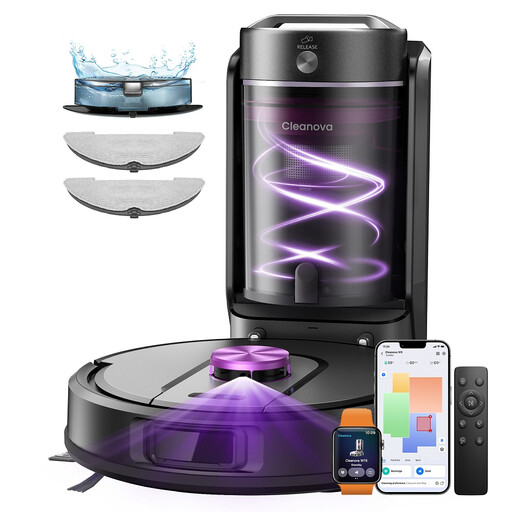
Why this product suits this profile: Automatic dust emptying, app control and three suction levels combine several popular features in one device.
The bagless 4-litre station avoids the need to regularly buy replacement dust bags. Filters and brushes still need to be considered as part of ongoing maintenance.
10000 Pa according to the product specifications, LiDAR navigation and automatic dust emptying.
Why this product suits this profile: The map features are ideal for users who want to organise rooms, floors and restricted areas individually.
LiDAR mapping does not completely eliminate random navigation, but it provides a structured basis for room and zone plans.
Up to five maps, up to 15 restricted zones, plus app, Alexa, Google Assistant and Siri control according to the product description.
Why this product suits this profile: The stated suction power, long runtime and combined vacuuming, sweeping and mopping function are designed for regular cleaning.
Three suction levels let you adapt cleaning to your preferred noise level and the amount of dirt. The mopping function should nevertheless be regarded as maintenance cleaning.
Up to 180 minutes of runtime according to the product specifications, a 300-ml dust container, a 200-ml water tank and automatic charging and resume functions.
We have put together a complete, regularly updated list of products that fully meet these strict selection criteria and the safety regulations applicable in the EU.
Before the first cleaning cycle, remove cables, small objects and loose carpet fringes. According to the product specifications, the charging station needs approximately one metre of clear space on either side and two metres in front so that the robot can reliably move away from and return to the station.
For reliable everyday use, the following routine is recommended:
Consumption depends on how often the robot needs to charge, the suction level, the area being cleaned and the number of automatic emptying cycles. When calculating running costs, you should consider not only electricity but also filters, brushes, mop pads and, where applicable, dust bags. With a bagless system, there is no need to regularly buy station dust bags.
A robot vacuum for pet hair can pick up loose hair and dirt. However, performance depends on the carpet pile, the amount of hair, the brush and the suction level. If you have pets that shed heavily, the brush will need cleaning more frequently. The 10000 Pa specification for the Vactidy W15 is a manufacturer’s claim and is not a guarantee of performance on every carpet material.
Service life is affected by operating hours, maintenance, moisture, brush wear and battery usage. Regularly cleaning the sensors, filters and brushes helps maintain the intended functions. Before buying, you should also check the availability of replacement parts, warranty terms and the manufacturer’s guidance.